Taking lambs, sheep and goats to the abattoir
To take lambs, sheep or goats to the abattoir, check each animal is correctly tagged and complete a movement document before you set off: through the Livestock Information Service in England or EIDCymru in Wales. The document includes the food chain information. Animals over 12 months old, or with a permanent incisor through the gum, have their spinal cord removed, so the carcase is usually split.
Lamb, hogget or mutton
What you call the animal matters less than its age and teeth, because those decide how the abattoir handles it.
- Lamb usually means a young sheep killed in its first season, before it is 12 months old.
- Hogget is a lamb kept on into the next season, sometimes sold as old-season lamb. Depending on when it was born and when it’s killed, a hogget can be under or over 12 months.
- Mutton comes from an older sheep, usually a cull ewe or a wether.
Hogget and mutton aren’t defined in the slaughter rules, and people use the words in slightly different ways. As a guide to size, the UK average carcase in September 2026 was 20.5 kg for clean sheep and 27.3 kg for ewes and rams (Defra).
To find somewhere to take them, start with the abattoirs that take sheep and our guide to booking private kill.
The 12-month rule: spinal cord removal
In sheep and goats over 12 months old, or with at least one permanent incisor through the gum, the skull (including the brain and eyes) and the spinal cord are specified risk material (SRM). They have to be removed and destroyed. Under 12 months, nothing is SRM (FSA Manual for Official Controls, chapter 2.7).
The abattoir decides which animals are over the line. It may judge a batch of spring lambs on sight, check teeth after slaughter, or treat all older sheep, such as ewes, as over 12 months.
To take out the spinal cord, the carcase is split down the backbone, or sent unsplit to a cutting plant that’s authorised to remove it. For you, that means:
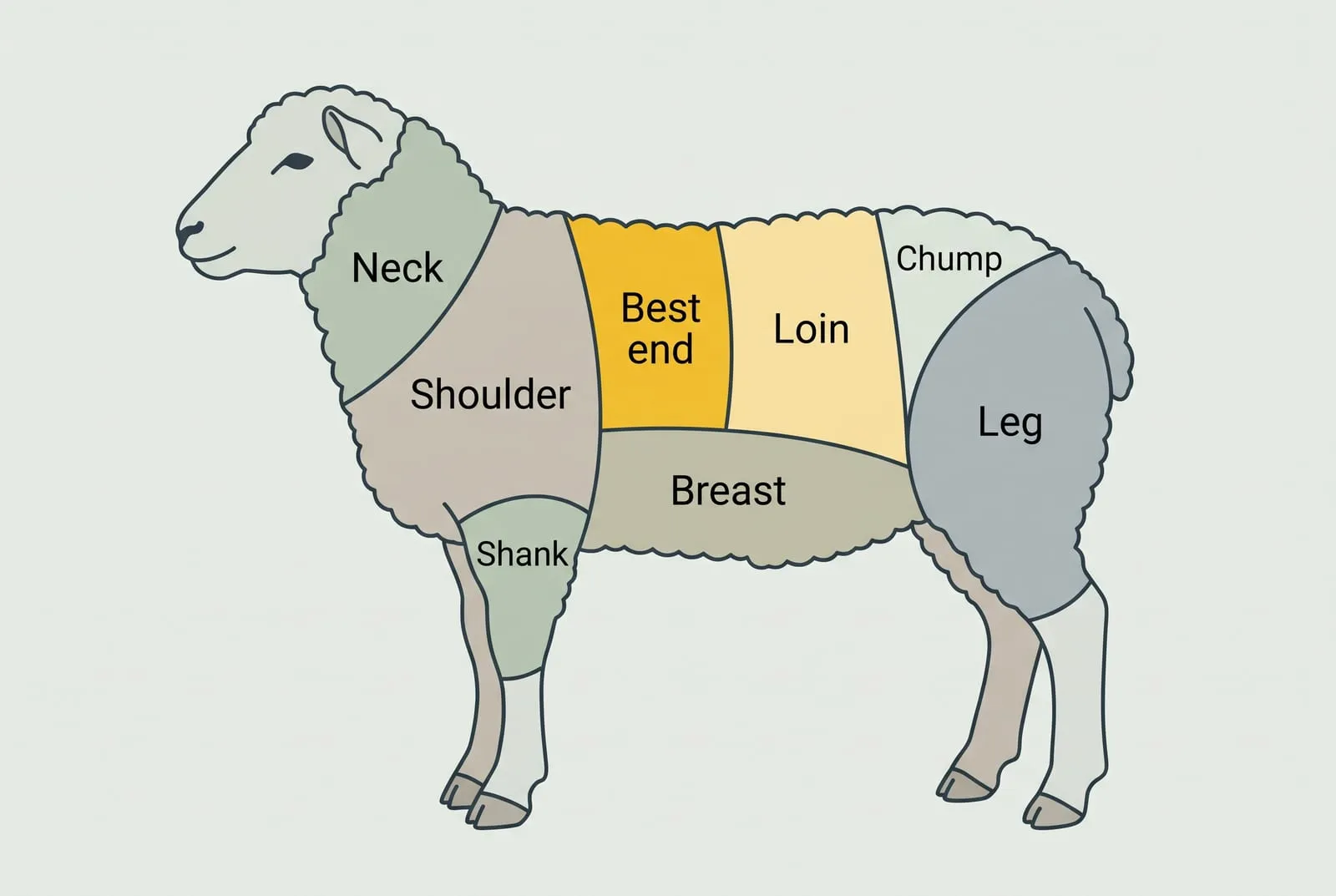
- loin chops come from each half, so there’s no whole saddle or double (Barnsley) chops on the bone
- the head of an older sheep stays at the abattoir
- it may cost more: the 2026 price list for the University of Bristol’s Langford abattoir, for example, charges £30 for a sheep and £35 for a sheep or goat over 12 months
If you want a whole lamb carcase with the head back, get lambs in before 12 months, and check the teeth of any that are close. One permanent incisor through the gum is enough to count. Abattoirs may simply remove SRM from every ewe, so for a cull ewe private kill, expect a split carcase.
Ear tags
| England | Wales | |
|---|---|---|
| Lamb going for slaughter before 12 months | One yellow EID slaughter tag showing UK and your flock mark, or two adult tags | One electronic slaughter tag, or full EID |
| Sheep over 12 months | Two adult tags, one of them electronic | Full EID: two identifiers, one electronic |
| Goats | EID optional. A kid for slaughter before 12 months can have one slaughter tag, EID or visual | EID optional. A kid for slaughter before 12 months needs one ear tag |
Sources: gov.uk guidance on tagging sheep and tagging goats, and the Welsh sheep and goat keepers guidance.
- Tag lambs within 6 months of birth if they’re reared indoors and 9 months if they’re outdoors, or before they leave the holding if that’s sooner.
- If you keep a lamb past 12 months, replace its slaughter tag with two adult tags, one electronic, before it reaches 12 months. In England you can only keep it on if it can be traced to its holding of birth. In Wales, a lamb on an electronic slaughter tag whose traceability can’t be proved must be killed before 12 months.
- Abattoirs check that any sheep over 12 months has two adult tags.
Reporting the move to the abattoir
| England | Wales | |
|---|---|---|
| System | Livestock Information Service (LIS) | EIDCymru |
| Paper form | LIS-1 | AML1 |
| Helpline | 03300 416 577 | 01970 636959 |
England. Report the move online through your LIS account or linked farm software, then print one copy of the LIS-1 movement document for whoever drives the animals and two for the abattoir, unless the abattoir reports online. On paper, the LIS-1 comes as four copies: keep one and give three to the driver, who keeps one and hands two to the abattoir. Paper forms come from markets, abattoirs and councils, or you can print one from the LIS website. Record the move in your holding register within 36 hours (gov.uk).
Wales. Report the move on EIDCymru or fill in the paper AML1, which travels with the animals. The AML1 also counts as the animal transport certificate for the journey.
In both countries the abattoir records the arrival within 3 days. The 6-day standstill doesn’t apply to moves direct to slaughter. If you’re crossing between England and Wales, ask the abattoir which movement document they need.
Food chain information and medicines
The movement document carries the food chain information (FCI) in both countries. On the Welsh AML1, for example, you declare that:
- the animals aren’t under movement restrictions for disease or public health reasons (a standstill doesn’t count)
- withdrawal periods have been observed for every medicine and treatment, on your holding and any previous ones
- to the best of your knowledge, they show no signs of disease that could affect the safety of the meat
- no test results suggest they’ve been exposed to anything that could make the meat unsafe
If you can’t sign all of these, fill in the additional information section and talk to the abattoir before you go. If the abattoir doesn’t receive FCI within 24 hours of the animals arriving, the meat is declared unfit.
There’s also a box for a Veterinary Attestation Number (VAN), a 20-digit number your vet gives you after an animal health visit. Without a VAN or membership of a farm assurance scheme, the official vet can’t sign the paperwork that allows meat and by-products from your animals to be exported to the EU. Ask your abattoir whether they need one.
On withdrawal periods:
- follow the meat withdrawal period on the label
- for a medicine prescribed off-label under the cascade, the minimum meat withdrawal is 1.5 times the longest meat withdrawal on the data sheet, 28 days if the product isn’t authorised for food-producing animals, or 1 day if its withdrawal is zero (Veterinary Medicines Regulations)
- keep medicine records for at least five years
Clean sheep
The FSA grades cattle and sheep into five cleanliness categories, from clean and dry to filthy and wet, and only the two cleanest can go to slaughter without further action (gov.uk). Dirty sheep may be held in the lairage, clipped or rejected, and the extra cost comes back to you. The FSA’s clean sheep guide advises:
- dag (crutch) lambs before they go onto finishing crops or diets
- if bellies need clipping, do it as close to slaughter as you can, then keep the sheep on clean, dry bedding
- don’t wash sheep before slaughter: wet fleeces spread bacteria
- keep sheep clean and dry for at least 24 hours before slaughter, and house them overnight to reduce gut fill
- sheep that are just wet or slightly dirty can often be housed to dry for a day or so, but filthy sheep may need partial shearing
- bed the trailer with clean straw, not sawdust, which sticks to fleeces
Long-fleeced breeds need extra attention, and dung on the fleece also lowers the value of the skin.
Transport
Anyone moving animals must make sure they’re fit to travel, plan the journey and keep it short, and give them enough space (gov.uk). If you’re a farmer taking your own sheep or goats less than 50 km from your holding in your own vehicle, only those general rules apply. Over 50 km you need a written journey record, called an animal transport certificate. Over 65 km you also need a type 1 transporter authorisation and a certificate of competence (gov.uk).
An animal isn’t fit to travel if it can’t walk unaided without pain, or has a severe open wound or a prolapse. Nor is a ewe in the last 10% of pregnancy, which Welsh Government guidance puts at about the last 15 days, or one that has lambed in the past week.
Clean and disinfect the trailer as soon as you reasonably can after unloading, and within 24 hours of the journey ending, using a Defra-approved disinfectant. Abattoirs normally have a wash-out area.
Bluetongue. As of November 2026 the whole of England and the whole of Wales are bluetongue restricted zones. You don’t need a specific licence or a pre-movement test to move animals within either country or between the two (gov.uk, gov.wales). In Wales, animals restricted because of BTV-8 can only go to slaughter under a specific licence. The position changes, so check before you travel.
Skins and what comes back
From a lamb under 12 months you can ask for the whole carcase, the head, and offal such as the liver, heart and kidneys. From older sheep and goats the carcase usually comes back split, and the head stays at the abattoir.
Raw skins from an abattoir are animal by-products. If you want a sheepskin or goatskin back, you must register with APHA on form AB117 as a keeper who gets hides and skins returned after slaughter (gov.uk), and you’ll need a tanner lined up. Ask whether the abattoir’s price assumes it keeps the skin.
Hanging lamb and mutton
Ask whether the abattoir hangs carcases before cutting, for how long, and whether it charges. If you want a particular hanging time for lamb, hogget or mutton, say so when you book, as it depends on chiller space. Our guide on how long to hang meat explains what hanging does, and a clear cutting list saves mistakes, especially with a split carcase.
Taking goats to slaughter
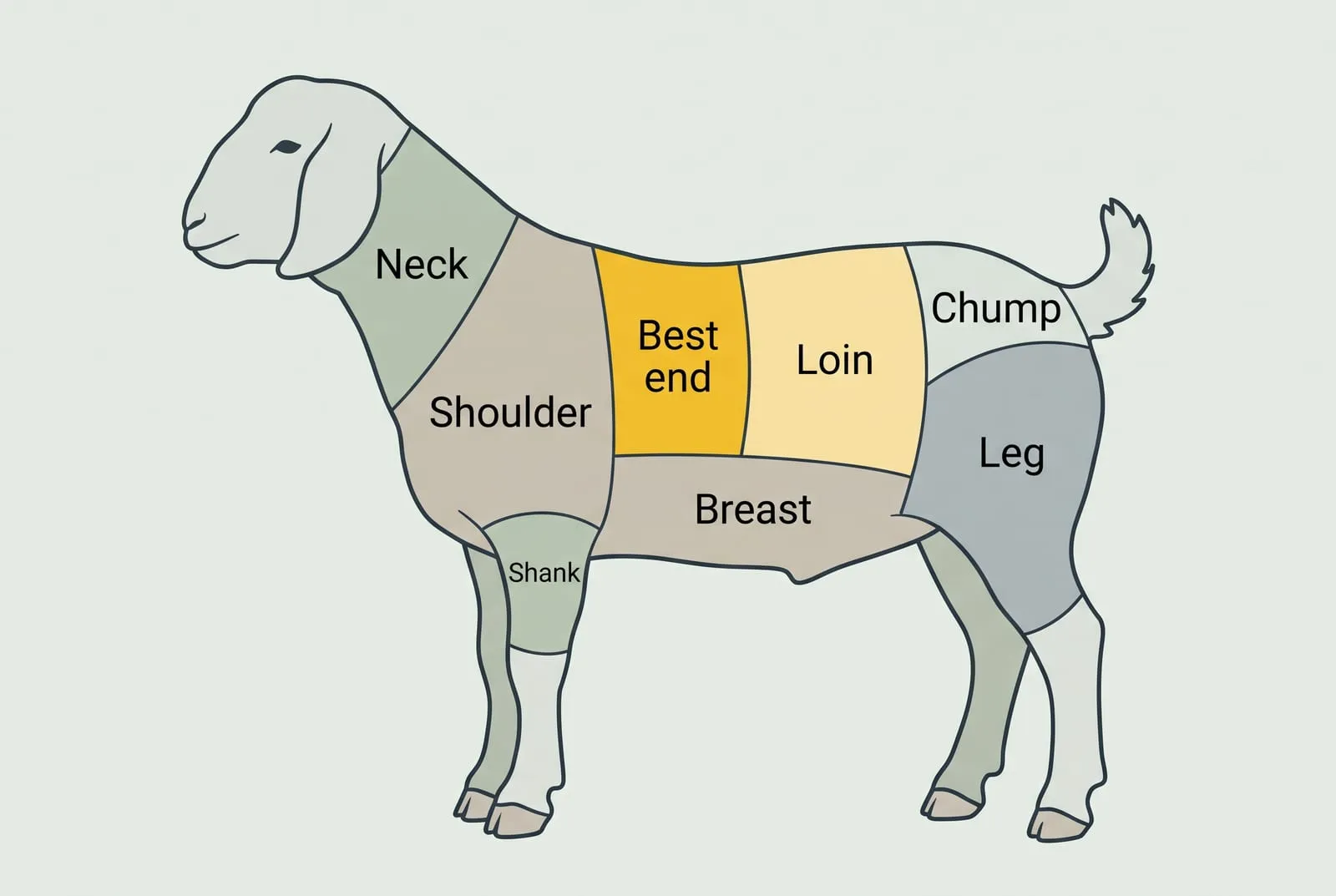
Not every abattoir takes goats, so look through the abattoirs that take goats and phone first. The paperwork is the same as for sheep: tags, an LIS-1 or AML1 with the food chain information, and the same 12-month rule for the skull and spinal cord. EID is optional for goats in both countries.
Check withdrawal periods carefully if your vet has used a sheep or cattle medicine on a goat. That counts as cascade use, so the withdrawal is longer: the FSA’s example is a 30-day cattle withdrawal that might become 45 days for goats.
Questions people ask
What is the difference between lamb, hogget and mutton?
Lamb comes from a sheep killed before 12 months old, hogget from last season's lamb kept on and killed later, and mutton from an older sheep such as a cull ewe. The slaughter rules don't use these names: they go by age and teeth.
Why are sheep over 12 months split at the abattoir?
In sheep and goats over 12 months old, or with a permanent incisor through the gum, the spinal cord is specified risk material and must be removed. The carcase is split down the backbone to take it out, so you can't have a whole saddle or double loin chops on the bone.
Do lambs need EID tags to go to slaughter?
Yes. In England a lamb going for slaughter before 12 months needs a single yellow EID slaughter tag or two adult tags, one of them electronic. In Wales the slaughter tag must be electronic.
How do I report moving sheep to the abattoir?
In England, report the move online through the Livestock Information Service or use a paper LIS-1, and send copies with the sheep. In Wales, use EIDCymru online or the paper AML1. The abattoir records the arrival within 3 days.
Do goats need EID tags?
No. Electronic identification is optional for goats in both England and Wales. A kid going for slaughter before 12 months can have a single slaughter tag showing UK and your herd mark.
Can I have the sheepskin back from the abattoir?
Ask the abattoir when you book. If you take a raw skin home, you must first register with APHA on form AB117 as a keeper who gets hides and skins back after slaughter.
Sources
- GOV.UK: Sheep and goat keepers: how to report animal movements
- GOV.UK: Abattoirs: report and record sheep and goat arrivals
- GOV.UK: Tag sheep with ear tags, pastern bands and boluses
- GOV.UK: Tag goats with ear tags, pastern bands and boluses
- GOV.UK: Moving sheep and goats: what keepers need to know
- Welsh Government: Sheep and goat movement document (AML1)
- Welsh Government: Sheep and goat keepers guidance 2021
- Welsh Government: 6 day standstill rule
- Food Standards Agency: Manual for Official Controls, chapter 2.7, specified risk material
- Food Standards Agency: Manual for Official Controls (chapters 2.1 and 2.2)
- Regulation (EC) No 999/2001, Annex V: specified risk material
- Veterinary Medicines Regulations 2013, Schedule 4: cascade withdrawal periods
- GOV.UK: Record keeping requirements for veterinary medicines
- GOV.UK: Cleaner cattle and sheep
- Food Standards Agency: Clean sheep for slaughter, a guide for producers
- GOV.UK: Animal welfare in transport
- GOV.UK: Transporting animals in Great Britain
- Regulation (EC) No 1/2005, Annex I Chapter I: fitness for transport
- Welsh Government: Welfare of animals during transport, advice for transporters of sheep
- Transport of Animals (Cleansing and Disinfection) (England) (No. 3) Order 2003, article 3
- GOV.UK: Bluetongue: latest situation
- Welsh Government: Bluetongue virus current restrictions
- GOV.UK: Animal by-product categories, site approval, hygiene and disposal
- Defra: Cattle, sheep and pig slaughter statistics, data to September 2026
- University of Bristol, Langford Abattoir: price list 2026
This guide is general information, not legal advice. Rules differ between England and Wales and change over time, so check with your abattoir, vet or local council if you're unsure.