Slow-cooked venison shoulder with red wine and juniper
A bone-in venison shoulder braised for 3½ to 4 hours in red wine with juniper, bay and smoked bacon, until the meat falls off the bone. Fallow is a good size, or use two roe shoulders.
- Serves 6
- Prep 25 min
- Cook 4 hr 45 min
- Total 5 hr 10 min
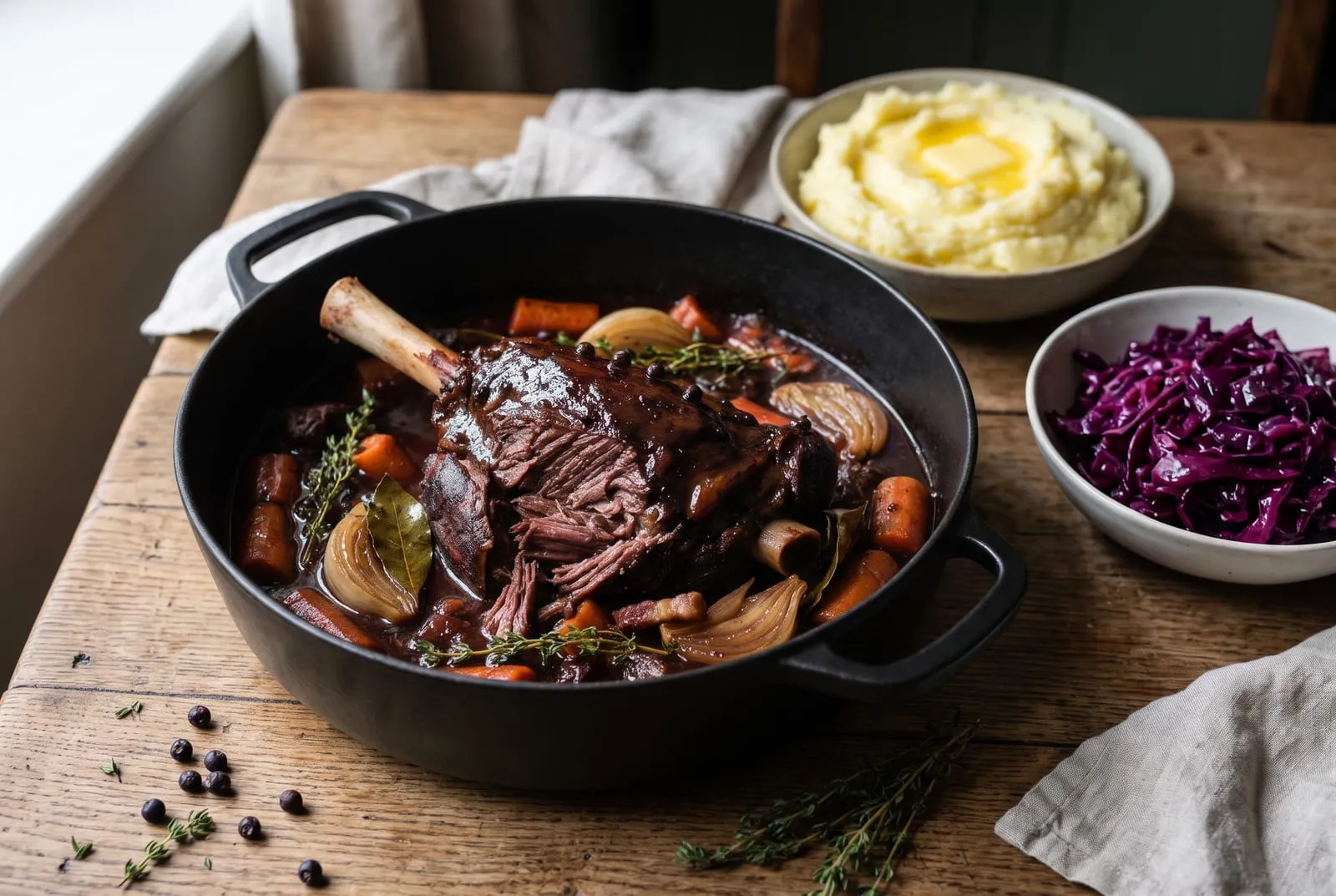
Shoulder is the cut to slow-cook: it’s one of the cheaper cuts of a deer and one of the toughest, because it’s a working muscle laced with connective tissue. Hours of gentle, wet heat turn that tissue to gelatine, so the meat pulls off the bone and the sauce gains body. This version braises it in red wine with juniper and smoked bacon for 3½ to 4 hours.
Which deer to use
Any deer shoulder will braise. What changes is the size, which decides how many you need and how long they take. The British Deer Society gives these weights for adult deer:
| Deer | Adult weight, whole animal | Shoulders for this recipe |
|---|---|---|
| Muntjac | 9 to 18 kg | Three |
| Roe | 10 to 25 kg | Two |
| Sika | 30 to 45 kg for hinds, 40 to 70 kg for stags | One |
| Fallow | 35 to 56 kg for does, 46 to 93 kg for bucks | One |
| Red | 63 to 120 kg for hinds, 90 to 190 kg for stags | Part of one |
We found no reliable published weights for shoulders by species, so ask what it weighs when you order, and aim for about 2 kg on the bone for six people. Fallow is a good size, and sika are much the same. A red deer shoulder may be too big for your casserole, so ask for it to be sawn in two and freeze the other piece.
The 3½ to 4 hours in the method is for about 2 kg on the bone. Thinner shoulders get there sooner, so start checking roe and muntjac after 2½ hours. A thick piece of red deer may need longer than 4 hours, so check it every half hour after that. However long it takes, it’s done when the meat comes away from the bone.
Where to get a shoulder
The British Deer Society suggests game dealers, butchers, local estates, farm shops and online suppliers, as well as local stalkers. Farmers’ markets are worth trying too.
- Game dealers. Approved game handling establishments take in wild deer from stalkers, and the carcases are inspected before the meat goes on sale. Some sell to the public, and some will skin and butcher a deer you’ve shot. Our deer page lists them, along with abattoirs approved for farmed deer.
- Stalkers. A stalker can sell small quantities of deer in the skin straight to you, but to sell you a butchered shoulder they must be registered with their council as a food business. Our guide to deer and wild game processing explains the rules and has a diagram of the venison cuts.
- Butchers and farm shops. Give a few days’ notice for a shoulder on the bone, and ask them to cut it to fit your pot if it’s large.
When you order, ask:
- which species it is, and what it weighs on the bone
- how long the carcase was hung
- whether it was shot with lead
- whether they’ll cut it to fit your casserole.
Seasons
The open seasons for wild deer in England and Wales are set by Schedule 1 of the Deer Act 1991, and the dates below are inclusive. Muntjac aren’t listed, and BASC confirms they have no statutory close season.
| Deer | Males | Females |
|---|---|---|
| Red, fallow and sika | 1 August to 30 April | 1 November to 31 March |
| Roe | 1 April to 31 October | 1 November to 31 March |
| Chinese water deer | 1 November to 31 March | 1 November to 31 March |
| Muntjac | All year | All year |
From May to July, only roe bucks and muntjac are in season. The close seasons don’t apply to farmed deer kept behind a deer-proof barrier and clearly marked, so farmed venison isn’t tied to these dates.
Scotland sets its own seasons. The Scottish Government removed the close season for male deer of all species from 21 October 2023, and NatureScot gives the open season for red and sika hinds and fallow does as 21 October to 15 February, and for roe does as 21 October to 31 March.
Hanging
Venison is usually hung before butchery, which makes it more tender. Game to Eat suggests up to 14 days for a red deer at about 7°C, down to 3 days for a muntjac, and fewer days if it’s warmer. Our guide to how long to hang meat has the detail.
Lead in wild venison
The FSA’s advice on eating lead-shot game covers deer as well as game birds, rabbits and hares. It says that if you eat it frequently you should cut down, and that cutting down matters most for toddlers, children, pregnant women and women trying for a baby, because lead can harm the developing brain and nervous system.
The FSA says the large game sold in supermarkets is farmed and will have no or very low levels of lead. For wild venison, ask your supplier whether it was shot with lead. The British Deer Society says many suppliers now sell only venison shot with alternatives to lead.
If you’re preparing a deer you’ve shot yourself, the FSA’s wild game guidance says to remove as much lead as possible, along with the meat around it. Game dealers remove lead and the affected meat, though the FSA says small amounts may remain.
From 1 April 2029, lead shot and lead bullets of 6.17mm calibre or more can’t be used for live quarry in England, Wales and Scotland. Our deer processing guide has the detail.
Cooking notes
- Fat. Venison is lean. The British Deer Society says it has less fat than skinless chicken and can dry out if overcooked. The bacon lardons give you fat to brown the meat in, and they enrich the sauce.
- Low and slow. The liquid should barely tremble. If it’s bubbling hard when you turn the meat, lower the oven a little. If it has dropped below a third of the way up the meat, top it up with hot water. If a bone stops the lid sitting flat, a sheet of foil under it keeps the steam in.
- When it’s done. The time is a guide. It’s ready when the meat comes away from the bone with a fork and the shoulder blade slides out. If it resists, give it another 30 minutes.
- Safety. The FSA says food is fully cooked when the middle reaches 70°C for 2 minutes. A shoulder braised this long is far past that, so tenderness, not safety, sets the time. The same page says whole cuts of meat other than poultry and pork can be pink in the middle once the outside is seared, but mince, burgers, sausages and rolled joints must be cooked all the way through. That covers venison burgers and mince, and a boned and rolled shoulder if you roast it.
- Resting. Lift the meat out and keep it warm under foil while you finish the sauce, which takes 10 to 15 minutes.
- Skimming. The bacon fat rises to the top of the liquid. Spoon it off before you boil the sauce down, or it will boil back in and make the sauce greasy. If you’re cooking a day ahead, chill the casserole and lift the fat off once it has set.
- Seasoning. Bacon and stock are both salty, so taste only once the sauce has reduced.
Leftovers and freezing
The FSA’s cooking advice says leftovers should be cooled and in the fridge within 2 hours, and eaten within 48 hours or frozen if you won’t manage that. Reheat them only once, until steaming hot all the way through.
Take the meat off the bone and keep it in its sauce, which stops it drying out. Freeze it in portions, covered with sauce. Then use it in:
- a pie, with the meat and sauce under shortcrust or puff pastry
- a ragu, shredded into the sauce with a tin of chopped tomatoes, simmered until thick and served with pappardelle
- a shepherd’s pie, with the meat chopped, mixed with the sauce and topped with mash.
Each of these uses the meat’s one reheat, so don’t reheat what’s left of them. If you cook the shoulder a day ahead, warming it for the meal is its reheat, so freeze any spare portions before you warm it.
What to serve with it
Mash, or a mash of potato and celeriac, takes up the sauce. Braised red cabbage suits the juniper and redcurrant, and buttered greens such as kale, cavolo nero or Savoy cabbage add something fresh.
Slow-cooked venison shoulder with red wine and juniper
- Serves 6
- Prep 25 min
- Cook 4 hr 45 min
- Total 5 hr 10 min
Ingredients
- 1 bone-in venison shoulder, about 2 kg
- Salt and black pepper
- 1 tbsp rapeseed or sunflower oil
- 200 g smoked bacon lardons
- 2 onions, cut into wedges
- 3 carrots, cut into large chunks
- 2 celery sticks, cut into chunks
- 6 garlic cloves, peeled and halved
- 12 juniper berries, lightly crushed
- 500 ml red wine
- 500 ml beef, chicken or game stock
- 3 bay leaves
- 6 thyme sprigs
To finish
- 1 to 2 tbsp redcurrant jelly
Method
- Heat the oven to 150°C (130°C fan), gas 2. Pat the shoulder dry with kitchen paper and season it all over with salt and pepper. If it's too long for your casserole, take off the shank by cutting through the joint above it, and cook both pieces.
- Heat the oil in a large flameproof casserole over a medium heat. Fry the lardons for 6 to 8 minutes, stirring now and then, until golden and their fat has run. Lift them out with a slotted spoon and set aside.
- Turn the heat up to medium-high. Brown the shoulder in the bacon fat for 10 to 12 minutes, turning it every few minutes, until it's deep brown all over. Use a large frying pan if the casserole is too small to turn it in. Set it aside on a plate.
- Turn the heat down to medium. Add the onions, carrots and celery and cook for 8 to 10 minutes, stirring, until they start to colour at the edges. Add the garlic and juniper and cook for 1 minute more.
- Pour in the wine and scrape up the browned bits from the bottom of the pan. Let it bubble for 2 to 3 minutes, then add the stock, bay and thyme and bring to a simmer.
- Put the shoulder and lardons back in, with any juices from the plate. The liquid should come about a third of the way up the meat, so add a little hot water if it doesn't. Cover with a sheet of foil and then the lid, so it seals well, and put it in the oven.
- Braise for 3½ to 4 hours, turning the shoulder over halfway through. It's ready when the meat comes away from the bone with a fork and the shoulder blade slides out. Check roe or muntjac shoulders after 2½ hours.
- Lift the shoulder onto a warm dish with two fish slices, cover it with foil and keep it warm. Lift out the vegetables and lardons with a slotted spoon and keep them warm too.
- Leave the liquid to settle for a few minutes, then tilt the pan and spoon the fat off the top. Boil the liquid on the hob for 10 to 15 minutes, until it has reduced by about a third and looks glossy. Stir in the redcurrant jelly until it melts, then taste and season.
- Pull the meat off the bone in large pieces, throwing away the bones, any gristle, the bay leaves and the thyme stalks. Serve it with the vegetables and lardons, and the sauce spooned over.
What you'll need
- Oval cast-iron casserole A bone-in shoulder is long, and an oval pot fits it better than a round one.
- Pestle and mortar Crushes juniper berries and spices just enough to release their flavour.
- Fat separator jug Pours the cooking liquid out from under the fat, quicker than skimming.
- Probe thermometer Checks the middle of the meat rather than guessing. Keep the tip away from the bone.
- Juniper berries The classic spice with venison and game. A jar lasts for years.
These are Amazon links. If you buy through them, Lairage may earn a small commission at no extra cost to you.
Questions people ask
How long does it take to slow-cook a venison shoulder?
About 3½ to 4 hours, covered, at 150°C (130°C fan), gas 2, for a shoulder of about 2 kg on the bone. Thinner roe and muntjac shoulders can be ready sooner, and a thick piece of red deer can take longer. It's done when the meat comes away from the bone with a fork.
Can venison be served pink?
Whole cuts such as steaks and joints can be. The FSA says whole cuts of meat other than poultry and pork can be pink in the middle once the outside has been seared. Venison mince, burgers, sausages and rolled joints must be cooked all the way through.
Is roe or fallow shoulder better for slow cooking?
Both work the same way. Fallow are bigger deer, so one shoulder is about right for six people, while roe are small and you'll need two. Start checking roe after 2½ hours, because thinner shoulders cook faster.
Can you cook a venison shoulder in a slow cooker?
Yes, if it fits. Brown the meat and vegetables in a pan first, use less liquid because little evaporates, and cook on low until the meat comes away from the bone, following your slow cooker's instructions on timing. Boil the liquid in a pan afterwards to reduce it before you add the redcurrant jelly.
Does venison need to be hung?
It's usually hung before butchery, which makes it more tender. The Countryside Alliance's Game to Eat campaign suggests up to 14 days for a red deer at about 7°C, down to 3 days for a muntjac, and fewer days if it's warmer.
Sources
- Food Standards Agency: Cooking your food
- Food Standards Agency: Eating lead-shot game
- Food Standards Agency: Guidance on the hygienic production of wild game, section 11, lead-shot game
- Deer Act 1991, Schedule 1: close seasons
- Deer Act 1991, section 2: close season offences and farmed deer
- NatureScot: Deer management in Scotland, frequently asked questions
- BASC: What can I shoot?
- The REACH (Amendment) Regulations 2026 (SI 2026/195): lead in ammunition
- Countryside Alliance: Hanging your game
- British Deer Society: Venison, healthy and sustainable
- British Deer Society: Muntjac deer
- British Deer Society: Roe deer
- British Deer Society: Sika deer
- British Deer Society: Fallow deer
- British Deer Society: Red deer
This recipe is general information. Follow the Food Standards Agency's advice on cooking meat safely, and on eating game shot with lead if you eat it often.
More recipes
-
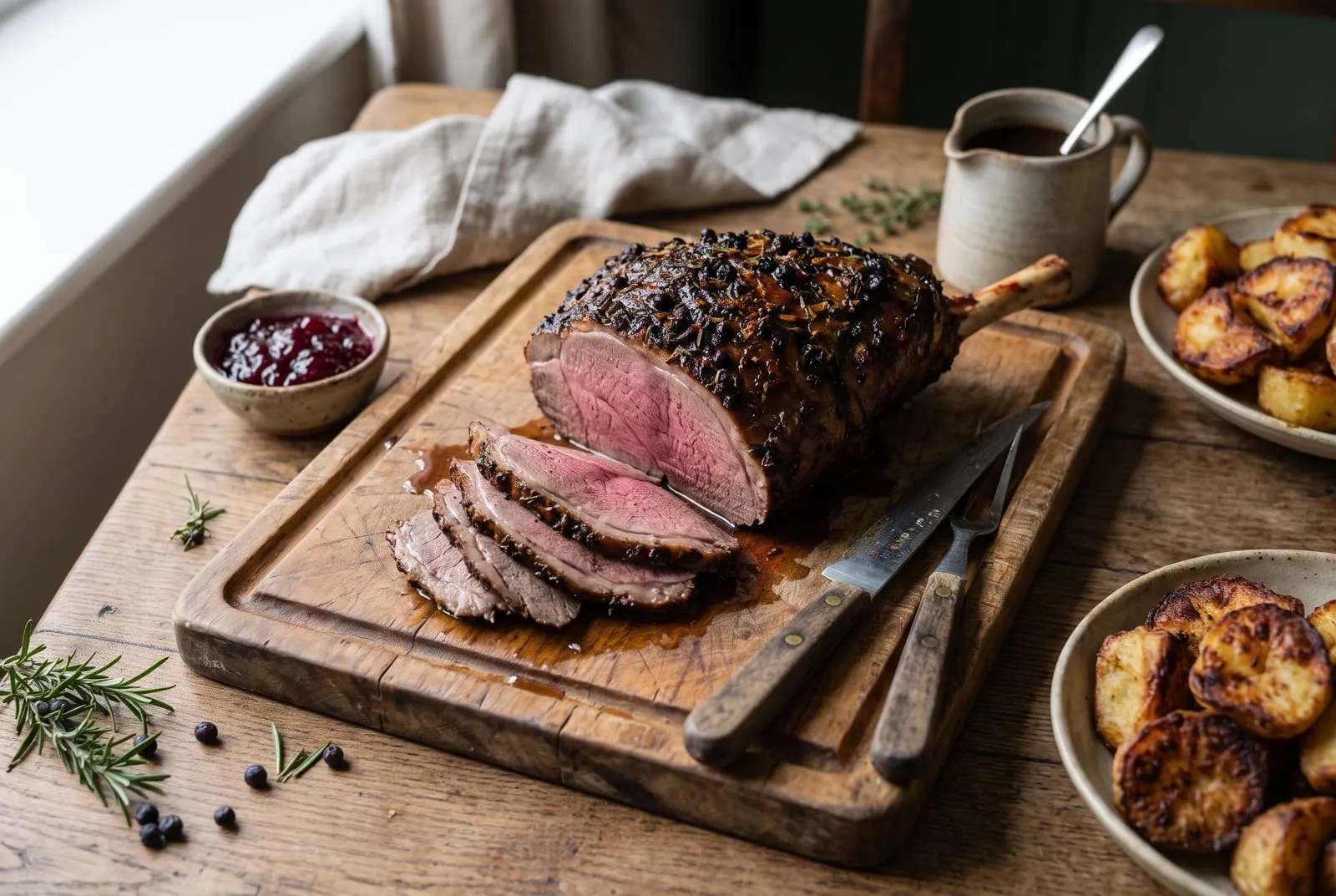
Roast haunch of venison with juniper and bacon
A whole bone-in venison haunch, seared, rubbed with juniper, garlic and rosemary and wrapped in bacon, then roasted pink and rested for 30 minutes. Enough for 6 to 8, with a port and redcurrant gravy.
-
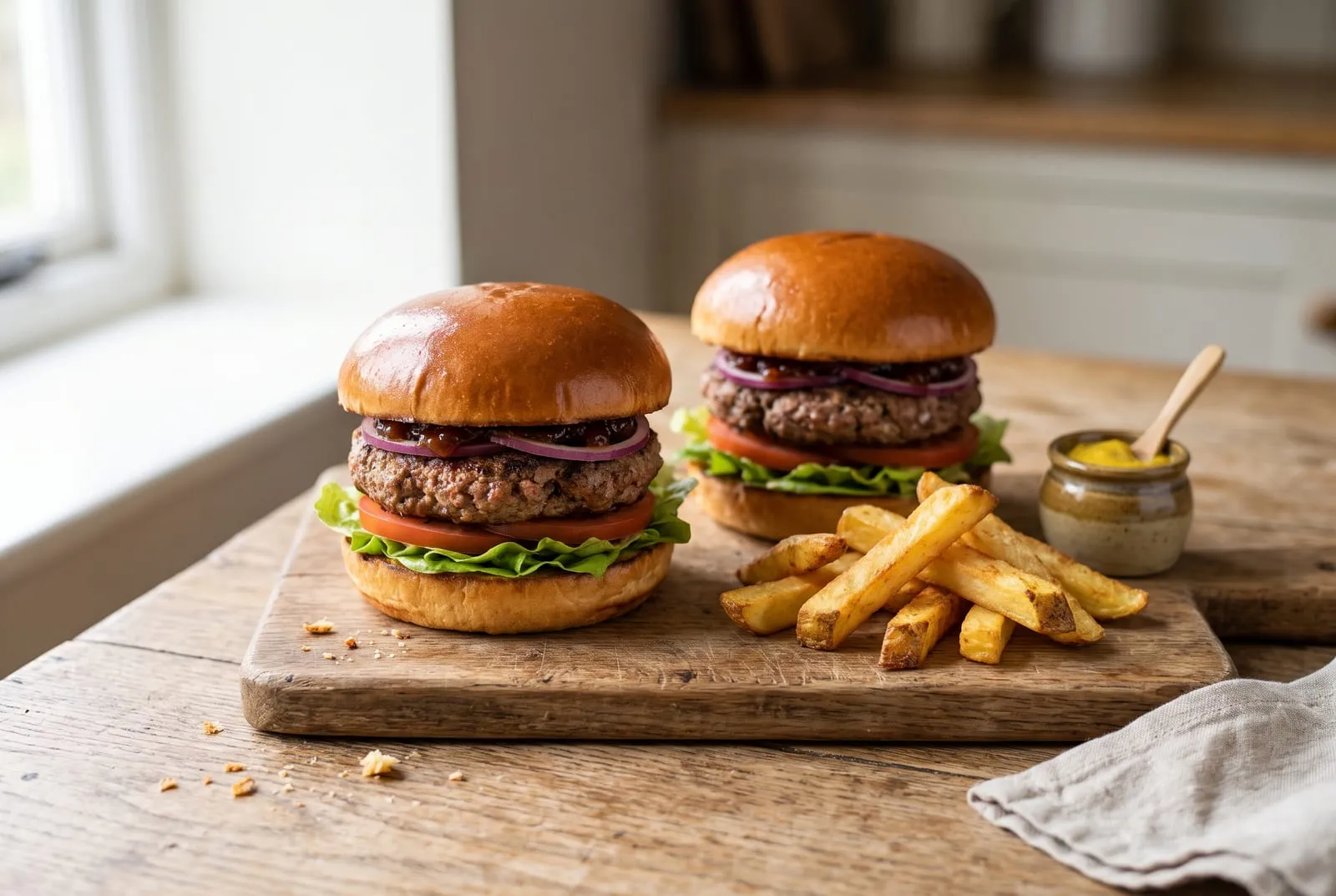
Venison burgers with pork belly
Venison mince mixed with minced pork belly for juiciness, shaped, chilled and cooked through in a pan or on the barbecue. Burgers shouldn't be served pink at home, so they're cooked until a probe reads 75°C.
-
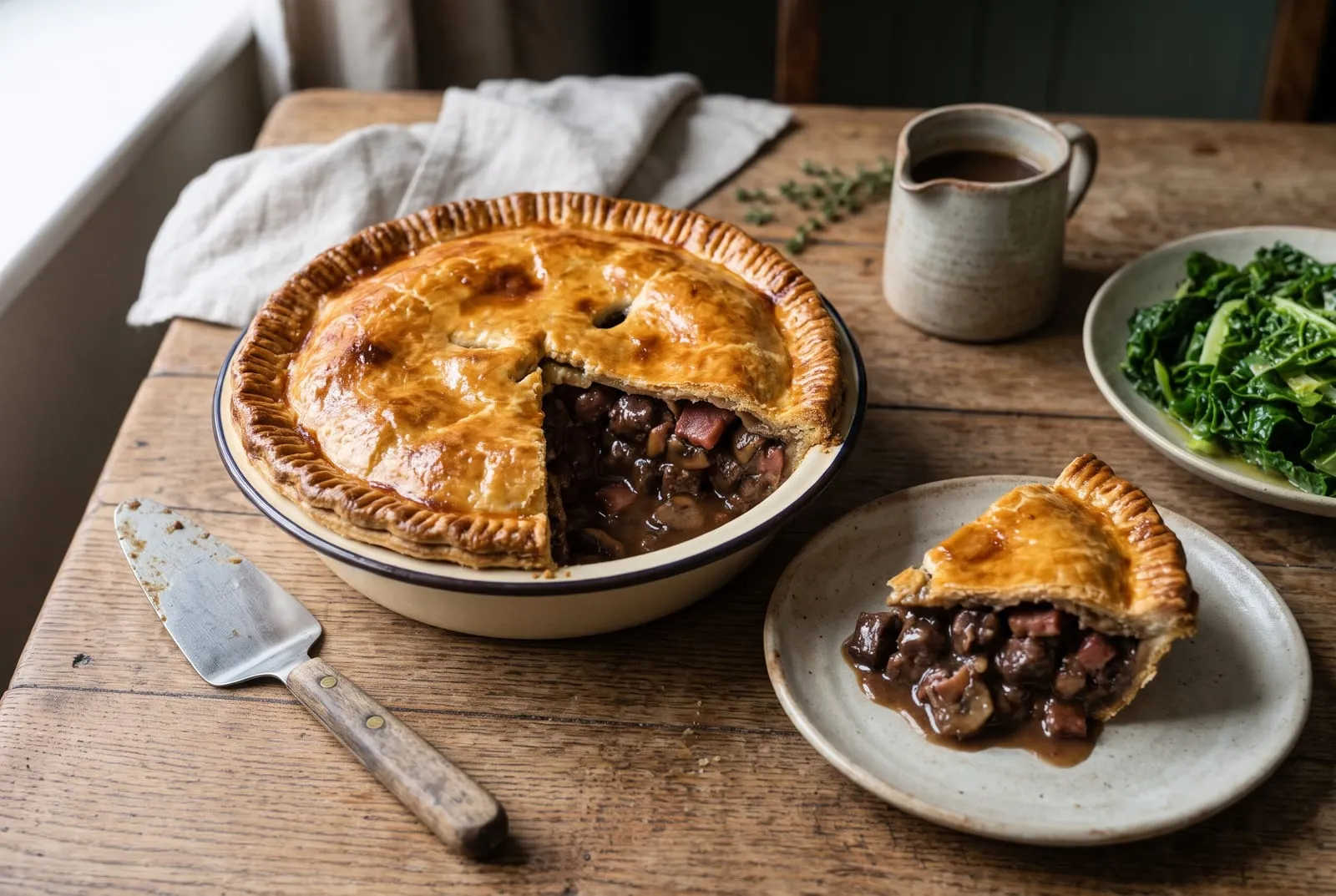
Game pie with venison and pheasant
Diced venison shoulder and pheasant slow-cooked in red wine with smoked bacon, mushrooms and juniper, cooled, then baked under a pastry lid. Freeze it unbaked to keep it.