Roast haunch of venison with juniper and bacon
A whole bone-in venison haunch, seared, rubbed with juniper, garlic and rosemary and wrapped in bacon, then roasted pink and rested for 30 minutes. Enough for 6 to 8, with a port and redcurrant gravy.
- Serves 6
- Prep 25 min
- Cook 2 hr 10 min
- Total 2 hr 35 min
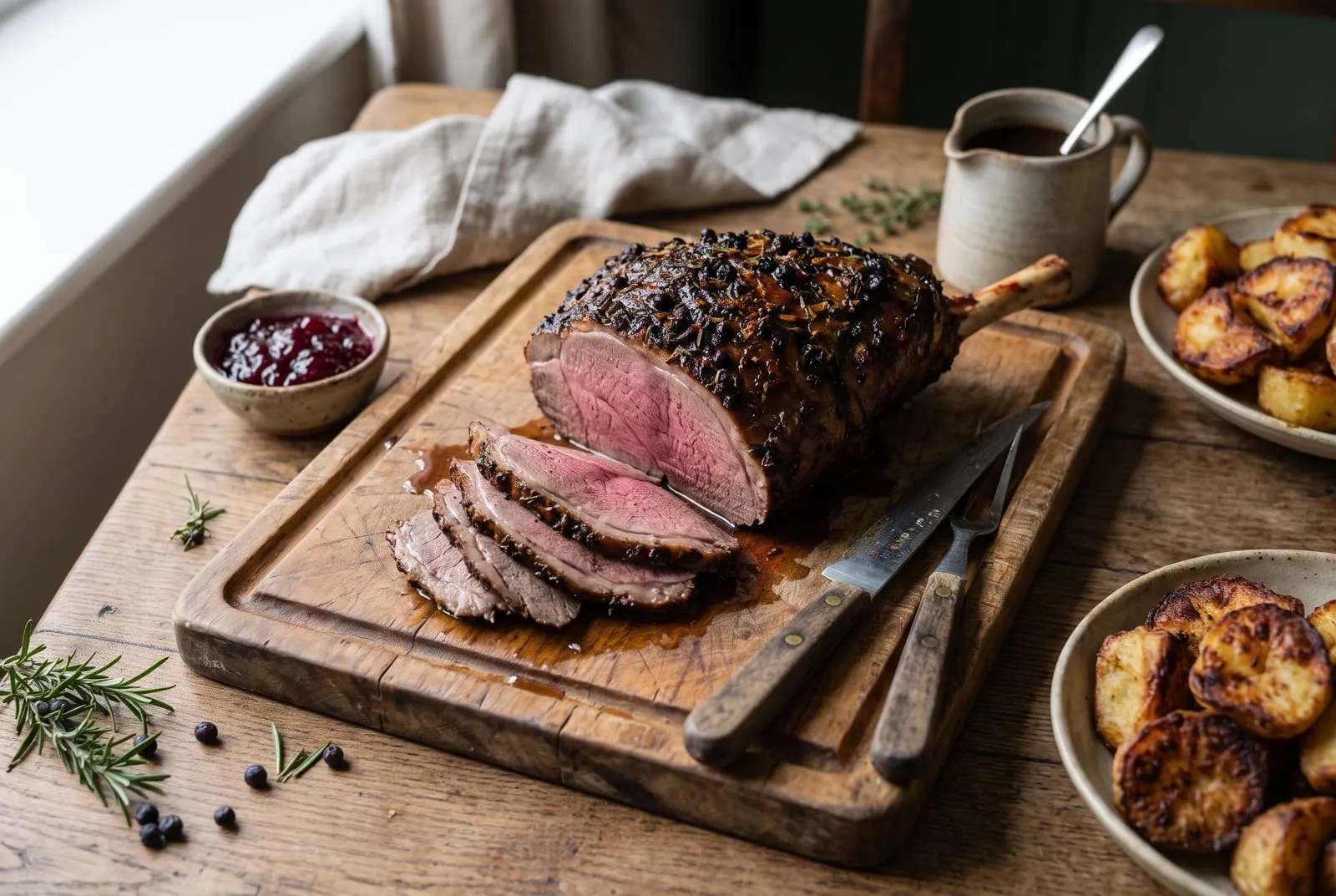
A haunch of venison can be roasted pink, but only as a whole joint: on the bone, or as a whole boneless muscle. Sear it, roast it hot until a probe reads about 46°C for medium-rare, then rest it for 30 minutes while the middle climbs towards 56°C. A haunch that has been boned and rolled is a rolled joint, and the Food Standards Agency (FSA) says it must be cooked all the way through.
Which deer, and how big a haunch
Any deer’s haunch will roast, but the size varies. The British Deer Society gives these adult weights:
| Deer | Whole animal | Haunches for 6 to 8 people |
|---|---|---|
| Muntjac | 9 to 18 kg | Three or four |
| Roe | 10 to 25 kg | Two |
| Sika | 30 to 70 kg | One |
| Fallow | 35 to 93 kg | One |
| Red | 63 to 190 kg | Part of one |
We found no reliable published weights for haunches by species, so the last column is our estimate: ask what yours weighs. One butcher suggests 300 to 450 g per person on the bone, or 200 to 250 g boneless, plus 20 to 30% for leftovers, so aim for about 2.5 kg on the bone. A red deer haunch may be too big for your oven, but the Deer Initiative’s butchery guide divides a haunch along its natural seams into separate muscles, so ask for one muscle to roast.
Where to get a haunch
The British Deer Society suggests game dealers, butchers, farm shops and local stalkers. Check the origin on supermarket venison: some comes from outside the UK. Our deer page lists approved game handlers. Wild deer are inspected there before the meat goes on sale, and some handlers sell to the public. A stalker must be registered as a food business to sell you a butchered haunch: see deer and wild game processing for the rules and a diagram of the cuts.
When you order, ask:
- which species it is, and what it weighs on the bone
- whether it’s whole and unrolled, because many are sold boned and rolled
- how long it was hung
- whether it was shot with lead
- whether they’ll remove the shank and the aitch bone, part of the pelvis, so it fits your tin.
Seasons
Schedule 1 of the Deer Act 1991 sets the open seasons for wild deer in England and Wales. At Christmas, red, fallow and sika of either sex are in season, but roe bucks aren’t, so a roe haunch shot in season then comes from a doe. Scotland sets its own seasons: NatureScot says male deer have had no close season since 21 October 2023, and gives 21 October to 15 February for red and sika hinds and fallow does, and 21 October to 31 March for roe does. Our slow-cooked venison shoulder recipe has the full table.
Hanging
Game to Eat suggests up to 14 days for a red deer at about 7°C, down to 3 days for a muntjac, and fewer days if it’s warmer. For a whole carcase for Christmas, count back from the day, as hanging comes before butchery: see how long to hang meat and Christmas private kill.
Bone-in or boned
- Whole. A haunch on the bone, or a whole boneless muscle such as the topside, is a whole cut and can be pink once the outside is seared. A boneless muscle cooks faster, so probe it sooner.
- Boned and rolled. The FSA’s cooking advice lists rolled joints with mince, burgers, sausages and kebabs as meat that must be cooked all the way through, and the NHS says the same. The FSA doesn’t say why, but the logic matches mince, which it says moves bacteria from the outside through the meat: rolling folds cut surfaces into the middle.
To serve it pink, ask the butcher not to roll it, even though some recipes roast rolled haunches to medium-rare. A rolled haunch must reach 70°C in the middle for 2 minutes, which can leave a lean joint dry, so slice it thinly with plenty of gravy, or braise it instead.
Lead in wild venison
The FSA says anyone who often eats lead-shot game, which includes deer, should cut down, and that it matters most for toddlers, children, pregnant women and women trying for a baby. The NHS lists game meats, including venison, among the foods to avoid in pregnancy because they may contain lead. The FSA says the large game sold in supermarkets is generally farmed, with no or very low lead, but the NHS doesn’t draw that distinction, so anyone pregnant should check its advice.
Ask your supplier whether it was shot with lead. If you shot the deer, the FSA’s wild game guidance says to remove as much lead as possible, with the meat around it, so cut away bloodshot meat around any wound first. From 1 April 2029, lead bullets of 6.17mm calibre or more can’t be used for live quarry, and our deer processing guide has the detail.
Doneness and resting
The FSA says steaks and joints other than poultry and pork only ever have bacteria on the outside, so they can be pink in the middle once seared. So the recipe sears every surface, including the cut ends, and keeps the flavourings on the surface: the FSA says mincing or skewering moves bacteria through the meat, so don’t pierce the joint to push garlic in.
Thermapen’s venison chart gives these temperatures for the middle:
| Doneness | When carved | Take out of the oven at |
|---|---|---|
| Rare | 52°C | 42°C |
| Medium-rare | 56°C | 46°C |
| Medium | 60°C | 50°C |
The last column allows for carryover. When Thermapen rested roast lamb legs after a 200°C fan oven, the middle rose by 13°C on average, more than the 5°C its testers expected, and was still climbing after about 25 minutes. A haunch is a similar size and shape, so we take it out about 10°C below the target, and probe again at the end of the rest.
Clean the probe after each use, as the FSA advises. One butcher gives 17 to 20 minutes per 500 g for a bone-in leg at about 200°C, so 2.5 kg takes about 1½ hours, and a roe haunch or boneless muscle less. Rest it for at least 30 minutes under loose foil, because carving a very hot joint lets the juices run onto the board.
The bacon is there because venison is lean: the British Deer Society says it has less fat than skinless chicken and can dry out if overcooked. Without bacon, baste every 20 minutes, working quickly, as the oven loses heat when the door is open.
Carving
Use a long, thin knife and slice thinly at right angles to the bone, which cuts across the grain. If the slices fall apart, you’re cutting with the grain, so turn the joint. A haunch is several muscles, so for a big one it’s easier to cut each muscle off the bone whole, along its seam, and slice it across its own grain.
Using the rest of the haunch
Simmer the carved bones with an onion, a carrot and a bay leaf to make stock, and freeze it in portions. Lean offcuts, trimmed of any lead, can be minced for venison burgers.
Leftovers
The FSA’s cooking advice says leftovers should be in the fridge within 2 hours, and eaten within 48 hours or frozen. Reheat them only once, until steaming hot all the way through. A pink roast is best cold, because reheating turns the slices grey, so make sandwiches with redcurrant jelly, horseradish and watercress. For a hot supper, warm slices in leftover gravy until steaming hot, which is their one reheat. Carve what’s left off the bone while it’s warm, so it cools quickly, and freeze spare slices in gravy before any reheating.
Roast haunch of venison with juniper and bacon
- Serves 6
- Prep 25 min
- Cook 2 hr 10 min
- Total 2 hr 35 min
Ingredients
- 1 bone-in venison haunch, about 2.5 kg, whole and not rolled
- 3 tbsp rapeseed oil
- 2 tsp sea salt flakes
- 1 tsp freshly ground black pepper
- 4 garlic cloves, crushed
- 3 rosemary sprigs, leaves finely chopped
- 10 juniper berries, crushed
- 12 rashers of streaky bacon, about 300 g
- 2 onions, cut into thick wedges
- 2 carrots, cut into large chunks
For the gravy
- 1 tbsp plain flour
- 200 ml ruby port or red wine
- 500 ml beef or game stock
- 2 tbsp redcurrant jelly
- Salt and black pepper
Method
- Heat the oven to 200°C (180°C fan), gas 6. Pat the haunch dry with kitchen paper. Trim off any loose skin and silvery membrane, and cut away any bloodshot or damaged meat, feeling for shot or bullet fragments as you go. Rub 1 tbsp of the oil over the joint and season it all over with the salt and pepper.
- Heat a large, heavy flameproof roasting tin, or a large frying pan, over a high heat for 2 minutes. Brown the haunch for 10 to 12 minutes in total, turning it with tongs, until it is deep brown all over, including the cut ends, so that no raw surface is left. Lift it onto a board and leave it for 5 minutes.
- Mix the garlic, rosemary, juniper and the remaining 2 tbsp of oil in a small bowl and spread it over the top and sides of the haunch with the back of a spoon. Don't stab the joint or push the garlic into slits, because the pink middle depends on the inside being untouched.
- Spread the onions and carrots over the base of the roasting tin, wiping out any burnt bits first, and stand the haunch on top. Lay the bacon over the top and sides, overlapping the rashers slightly, and tie it on with kitchen string in 4 or 5 places.
- Roast for about 1½ hours, which is 17 to 20 minutes per 500 g. A smaller joint will take less. From 1 hour 10 minutes, push a clean probe thermometer into the thickest part from the side, to the middle and away from the bone, and check every 10 minutes.
- Take the haunch out when the probe reads 42°C for rare, 46°C for medium-rare or 50°C for medium. That is about 10°C below the temperature you want, because the middle keeps rising as the joint rests. If it was boned and rolled, it must be cooked all the way through, so take it out at 70°C instead and check that the probe still reads 70°C or more 2 minutes later. Clean the probe.
- Snip off the string and lay the bacon on a baking tray. Cover the haunch loosely with foil and leave it to rest for at least 30 minutes. While it rests, put the bacon back in the oven for 8 to 10 minutes, until crisp.
- Make the gravy while the haunch rests. Spoon all but 1 tbsp of the fat out of the roasting tin, set it over a medium heat and stir in the flour for 1 minute. Pour in the port or wine, scraping up the browned bits, and boil for 3 to 4 minutes, until reduced by half. Add the stock, redcurrant jelly and any juices from the resting dish, and simmer for 10 minutes, mashing the vegetables into the liquid. Strain into a jug, pressing the vegetables, and season to taste.
- Probe the haunch again at the end of the rest. It should now read 52°C for rare, 56°C for medium-rare or 60°C for medium. If it is well below, carve it and lay the slices in the hot gravy off the heat for a minute.
- Carve the haunch in thin slices at right angles to the bone, so you cut across the grain. Lay the crisp bacon over the slices, or crumble it on top, and serve with the gravy.
What you'll need
- Deep roasting tin Holds a whole joint and the juices it gives off.
- Leave-in probe thermometer with alarm Sits in the joint while it roasts and beeps at your target, so you never open the door to check.
- Butcher's string Ties bacon over a breast or holds a joint in shape.
- Carving knife and fork A long, thin blade cuts even slices across the grain.
- Carving board with a juice groove Catches the juices while the meat rests, for the gravy.
- Juniper berries The classic spice with venison and game. A jar lasts for years.
These are Amazon links. If you buy through them, Lairage may earn a small commission at no extra cost to you.
Questions people ask
How long does it take to roast a haunch of venison?
About 1½ hours for a bone-in haunch of 2.5 kg at 200°C (180°C fan), gas 6, after searing, which is 17 to 20 minutes per 500 g. Smaller haunches and boneless muscles take less. Go by a probe thermometer rather than the clock: take it out at 46°C for medium-rare, then rest it for at least 30 minutes.
Can you eat a haunch of venison pink?
Yes, if it is a whole joint. The FSA says whole cuts of meat other than poultry and pork can be pink in the middle once the outside has been seared. A haunch that has been boned and rolled is a rolled joint, which must be cooked all the way through, with the middle at 70°C for 2 minutes or an equivalent such as 75°C for 30 seconds.
What temperature should roast venison be cooked to?
Thermapen's venison chart gives 52°C for rare, 56°C for medium-rare and 60°C for medium. The middle of a large joint keeps rising for 25 minutes or more after it leaves the oven, so we suggest taking a haunch out about 10°C below the target and probing it again at the end of the rest.
How do you stop a venison haunch drying out?
Venison is lean, with less fat than skinless chicken, so it dries out if it is overcooked. Sear it, wrap it in streaky bacon or baste it often, take it out by probe temperature rather than by the clock, and rest it for at least 30 minutes before carving.
How big a haunch of venison do you need?
One butcher suggests 300 to 450 g per person for a joint on the bone and 200 to 250 g for a boneless one, plus 20 to 30% for leftovers. About 2.5 kg on the bone feeds 6 to 8 people. A roe haunch is small, so you may need two, while a red deer haunch can be too big for most ovens, so ask for it to be divided.
Sources
- Food Standards Agency: Cooking your food
- Food Standards Agency: Eating lead-shot game
- Food Standards Agency: Guidance on the hygienic production of wild game, section 11, lead-shot game
- NHS: Foods to avoid in pregnancy (page last reviewed 15 June 2026)
- The REACH (Amendment) Regulations 2026 (SI 2026/195): lead in ammunition
- Deer Act 1991, Schedule 1: close seasons
- NatureScot: Deer management in Scotland, frequently asked questions
- Countryside Alliance: Hanging your game
- British Deer Society: Venison, healthy and sustainable
- British Deer Society: Muntjac deer
- British Deer Society: Roe deer
- British Deer Society: Sika deer
- British Deer Society: Fallow deer
- British Deer Society: Red deer
- The Deer Initiative: Carcass butchering (3), haunch preparation (England and Wales best practice guide, 2009)
- Thermapen (Electronic Temperature Instruments): Roast venison loin with beetroot, venison temperature chart (23 October 2020)
- Thermapen (Electronic Temperature Instruments): The science of resting lamb (1 March 2024)
- The Village Butchers: Venison cooking times
- Eversfield Organic: How much meat do you need per person? (20 November 2025)
This recipe is general information. Follow the Food Standards Agency's advice on cooking meat safely, and on eating game shot with lead if you eat it often.
More recipes
-
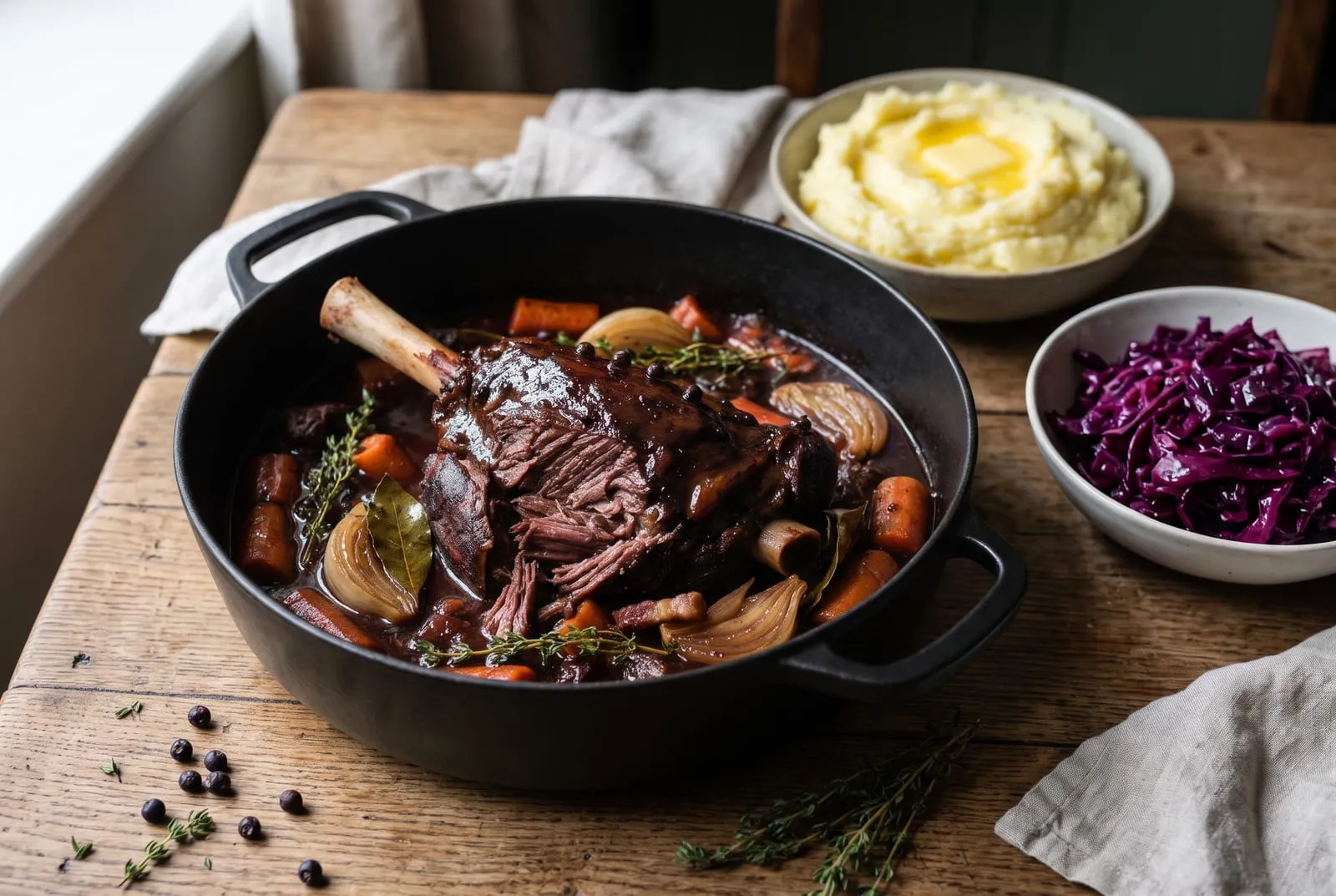
Slow-cooked venison shoulder with red wine and juniper
A bone-in venison shoulder braised for 3½ to 4 hours in red wine with juniper, bay and smoked bacon, until the meat falls off the bone. Fallow is a good size, or use two roe shoulders.
-
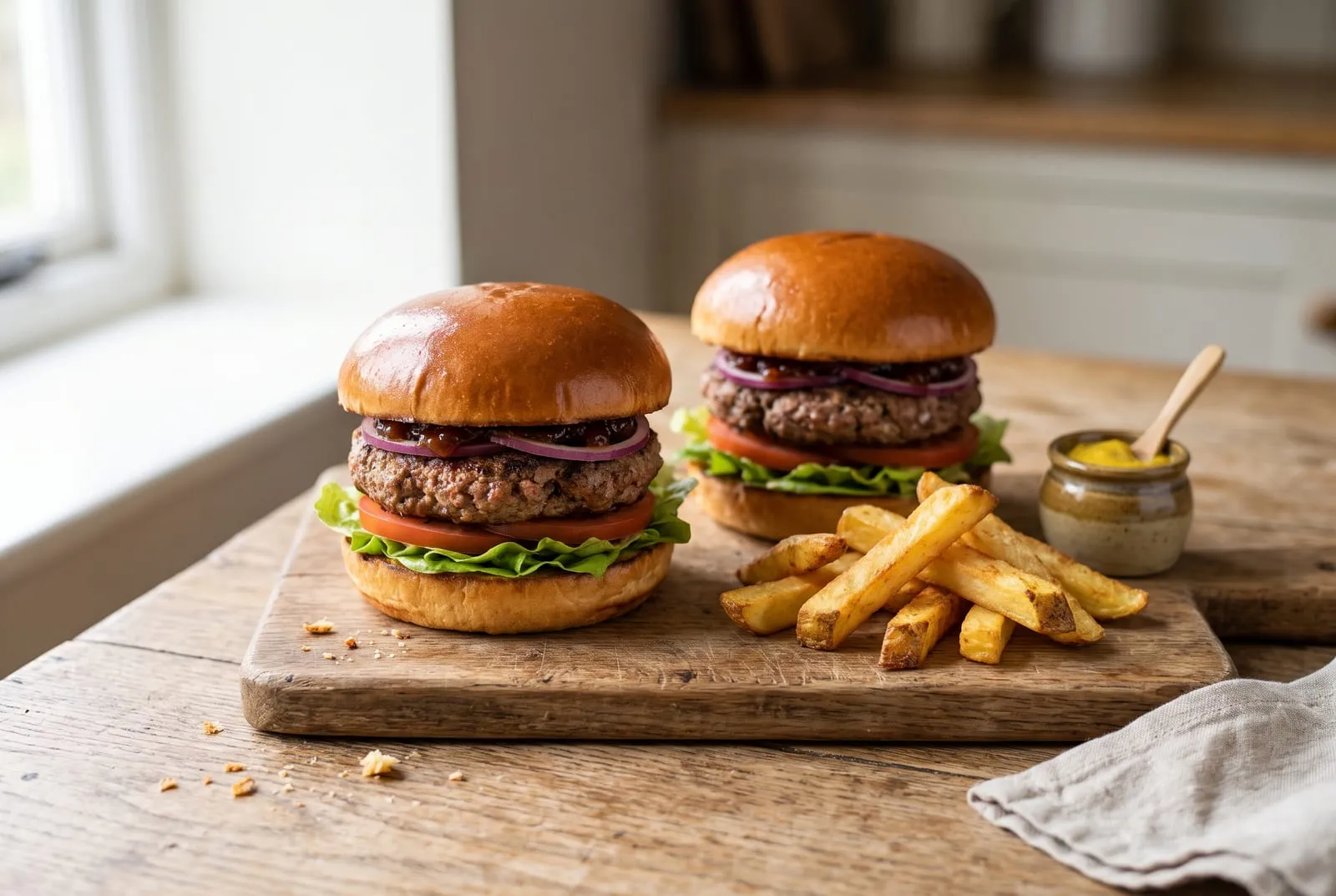
Venison burgers with pork belly
Venison mince mixed with minced pork belly for juiciness, shaped, chilled and cooked through in a pan or on the barbecue. Burgers shouldn't be served pink at home, so they're cooked until a probe reads 75°C.
-
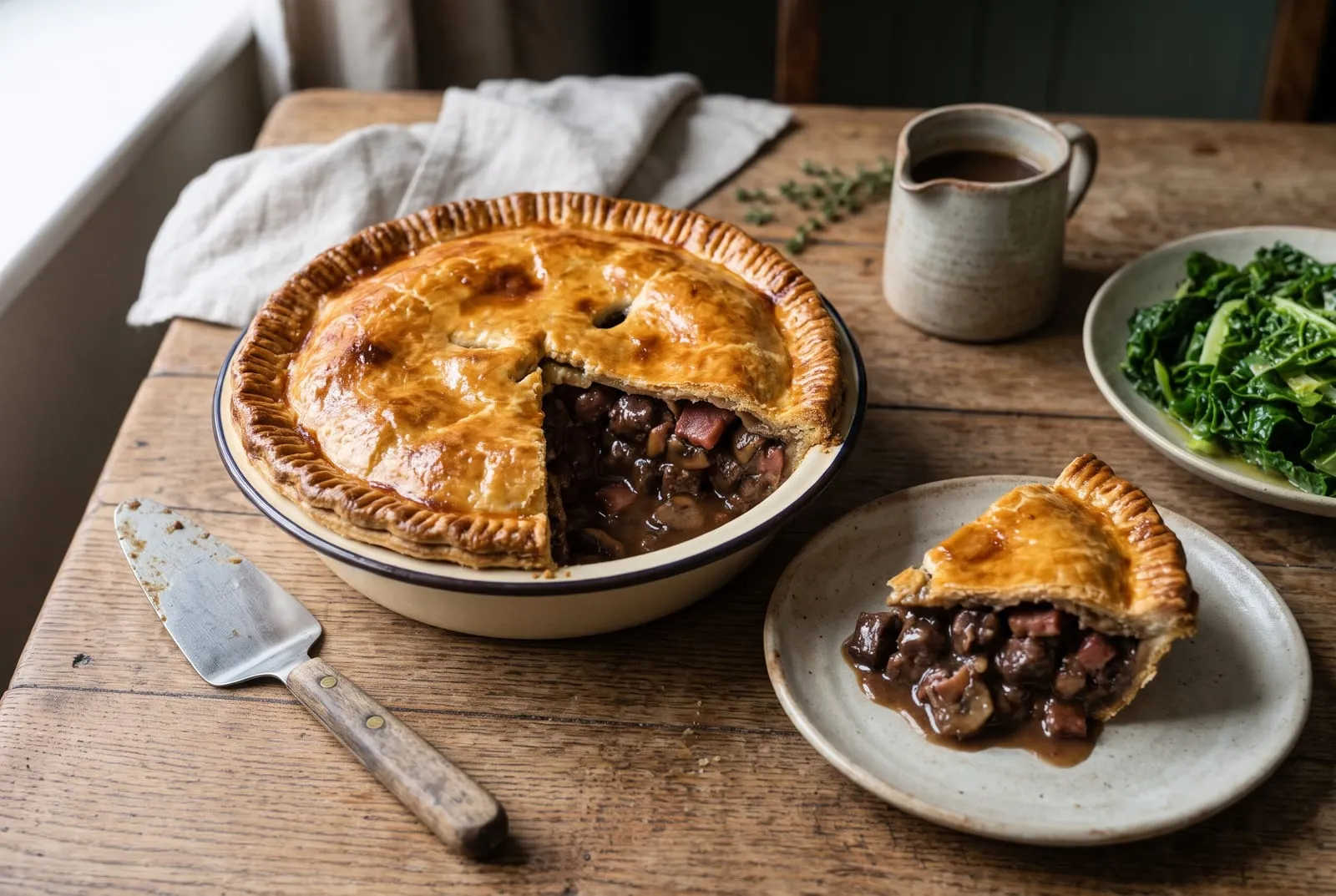
Game pie with venison and pheasant
Diced venison shoulder and pheasant slow-cooked in red wine with smoked bacon, mushrooms and juniper, cooled, then baked under a pastry lid. Freeze it unbaked to keep it.