Venison burgers with pork belly
Venison mince mixed with minced pork belly for juiciness, shaped, chilled and cooked through in a pan or on the barbecue. Burgers shouldn't be served pink at home, so they're cooked until a probe reads 75°C.
- Serves 4
- Prep 50 min
- Cook 15 min
- Total 1 hr 5 min
Venison is so lean that a plain burger dries out, so mix in about 20% minced pork belly, shape the burgers, chill them, then cook them all the way through. The Food Standards Agency (FSA) says burgers shouldn’t be served rare or pink at home, and that holds for any mince, venison included: the middle should reach 70°C for 2 minutes, or an equivalent such as 75°C for 30 seconds.
Why venison mince needs added fat
Wild fallow, red and roe deer meat has less than 2 g of fat per 100 g, according to a 2025 study that BASC summarises, and the British Deer Society says venison has less fat than skinless chicken and can dry out if overcooked. A burger needs more. MeatEater gives 10 to 20% fat for venison burgers, BASC’s staff add around 15% pork mince or 25% smoked bacon trimmings to theirs, and the Countryside Alliance’s Game Chef adds a little minced fat pork to keep game burgers juicy.
This recipe uses 125 g of minced pork belly to 500 g of venison, so the belly makes up 20% of the mix. Belly has lean meat in it as well as fat, so for a richer burger use about 100 g of pork back fat instead. MeatEater prefers pork fat to beef fat, because its flavour doesn’t overpower game.
Mincing your own
Mince is a good home for trim and tougher cuts such as neck, shank and flank, so keep the haunch for roasting. Trim first. The FSA’s wild game guidance says to remove as much lead as possible, with the surrounding meat, and you can’t do that once it’s minced. Cut away bloodshot meat, shot or bullet fragments, sinew, silverskin and bones. Lakeland’s mincer booklet says to remove bones and cut large pieces into smaller chunks.
Then chill. Cut the venison and pork into 2 to 3 cm cubes and chill them until firm but not frozen solid. One BASC officer part-thaws frozen diced venison, minces it together with the bacon trimmings and says the blades cut better while the meat is still slightly frozen. Mincing the fat and meat together spreads the fat through the mix. Use the coarse plate.
The FSA says mincing moves any bacteria from the outside all the way through the meat, so keep the meat in the fridge until it goes through the mincer, use a board kept for raw meat, and wash the parts straight afterwards in hot soapy water. Lakeland’s booklet says to clean the parts after every use and keep them out of the dishwasher.
Buying venison mince
The FSA says the large game sold in supermarkets is generally farmed, with no or very low lead. The British Deer Society says some supermarket venison comes from outside the UK, and the country of origin should be on the pack. Wild venison mince comes from game dealers and butchers. A game dealer removes lead and the affected meat, though the FSA says small amounts may remain, and the Society says many suppliers now sell only venison shot with alternatives to lead. Our deer and wild game pages list approved game handlers. From 1 April 2029, lead bullets of 6.17mm calibre or more can’t be used for live quarry, and our deer processing guide has the detail.
Ask:
- whether it’s wild or farmed, and which species
- whether it was shot with lead
- whether anything has been added, such as fat, pork or bacon, so you can work out your fat ratio
- when it was minced, and its use-by date.
The FSA’s burger advice is to keep raw mince and burgers in the fridge at 5°C or below, covered, on the bottom shelf and away from ready-to-eat food.
Cooking burgers through
The FSA says harmful bacteria on the surface of a steak are killed when it’s seared, but mincing spreads them through the whole burger, so they can survive inside unless it’s cooked right through. Its test for fully cooked food is 70°C in the middle for 2 minutes, or an equivalent such as 65°C for 10 minutes or 75°C for 30 seconds. This recipe uses 75°C for 30 seconds.
You will find venison burger recipes that aim for a pink middle, and BASC’s staff tips say five minutes a side gives medium rare. The FSA’s advice for home cooks is different. It matters most for children, people aged 65 or over, people who are pregnant and people with weakened immune systems, who should only ever eat thoroughly cooked burgers. The NHS also lists game meats, including venison, among the foods to avoid in pregnancy because they may contain lead, and doesn’t distinguish farmed from wild, so anyone pregnant should check its advice.
Cooking notes
- Binding. Lean venison has little fat to hold a burger together, so mixing it with the salt for about a minute, until it turns sticky, does the job. No egg or breadcrumbs are needed.
- Heat. A heavy pan or a hot grill browns the outside before the middle dries out.
- Don’t press. Pressing a burger with the spatula squeezes out its fat and juices.
Barbecue safety
The FSA’s barbecue guidance says to wait until the coals are glowing red with a grey, powdery surface, and warns that meat charred on the outside isn’t always cooked inside. Turn the burgers regularly and probe each one. The pork fat will drip and flare, so keep a cooler part of the grill free to move them to. Keep raw and cooked apart: use different utensils, plates and boards, and never put a cooked burger back on the plate that held raw ones. The FSA also says frozen meat often doesn’t cook through properly on a barbecue, so defrost burgers first.
Freezing raw burgers and defrosting them
Freeze the burgers raw once they’re shaped and chilled. Lay them on a tray until firm, then stack them with baking paper between, as BASC’s staff do with wax discs, and wrap them airtight. The FSA’s advice on freezing and defrosting is that a freezer at about -18°C pauses bacterial growth, that airtight wrapping prevents freezer burn, which affects quality, not safety, and that meat is usually best eaten within 2 to 3 months. Label them with the date.
Defrost them overnight in the fridge, in a dish with a lip to catch drips, and cook them within 24 hours of them being fully defrosted. The FSA says partly defrosted food may not cook evenly, which matters for a burger that has to be cooked right through. Plan to cook what you defrost: the FSA says food can be frozen again once cooked, and then reheated only once.
Serving
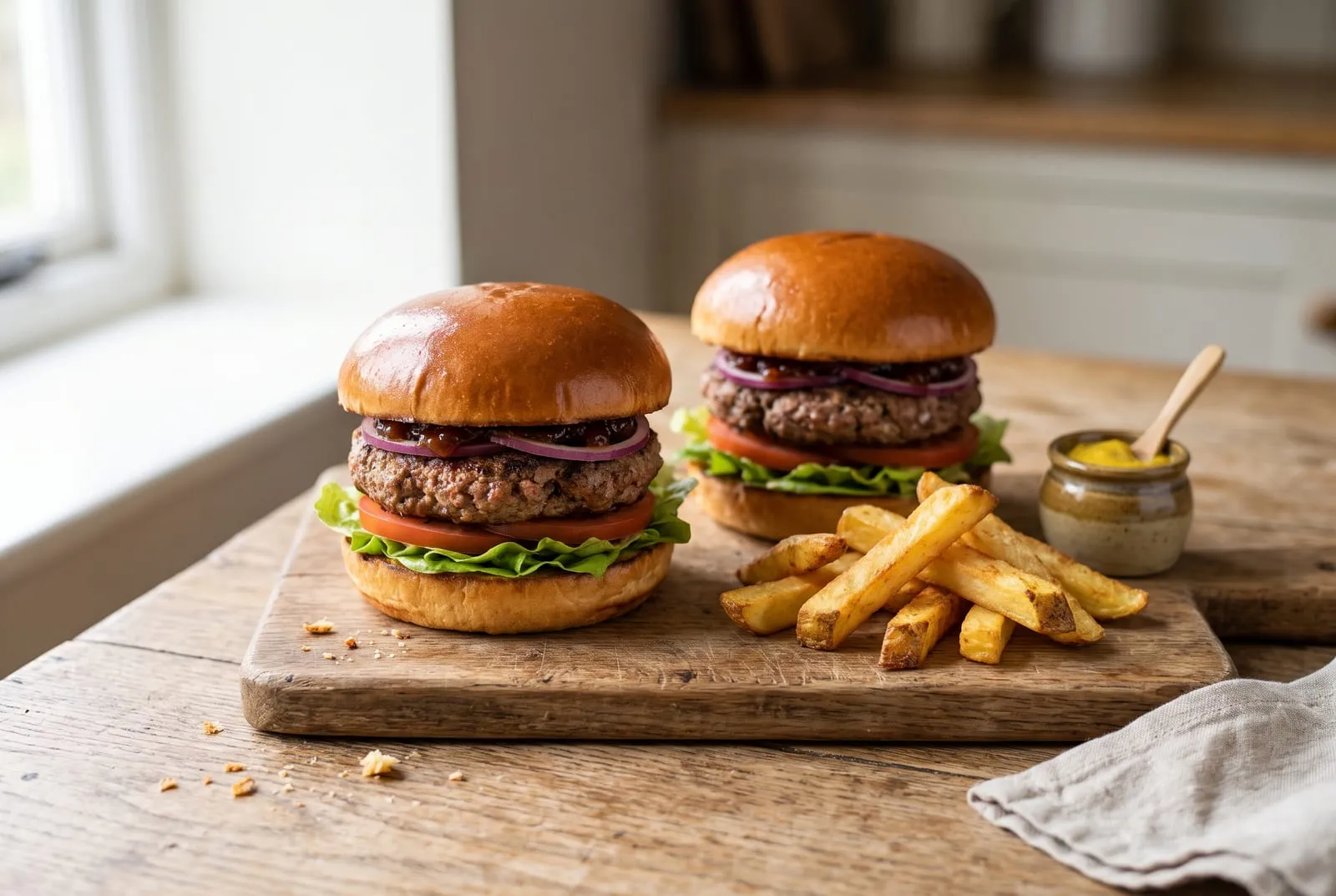
Toast the buns, then spread them with redcurrant jelly, cranberry sauce or a fruity relish, and add lettuce, tomato and red onion, or watercress for something peppery. Mature Cheddar, blue cheese and caramelised onions all suit venison, and chips or wedges go on the side. The FSA says cooked leftovers should be in the fridge within 2 hours, eaten within 48 hours and reheated only once, until steaming hot.
Venison burgers with pork belly
- Serves 4
- Prep 50 min
- Cook 15 min
- Total 1 hr 5 min
Ingredients
- 500 g venison mince
- 125 g pork belly, rind removed, minced
- ½ small onion, finely grated (about 40 g)
- 4 juniper berries, finely crushed (optional)
- 1 tsp fine salt
- ½ tsp freshly ground black pepper
- 1 tbsp rapeseed oil, for frying
To serve
- 4 burger buns, split and toasted
- 2 tbsp redcurrant jelly or a fruity relish
- Lettuce leaves, sliced tomato and thinly sliced red onion
Method
- If you're mincing your own, trim the venison of any bloodshot meat, shot or bullet fragments, sinew and silverskin, and cut the rind off the pork belly. Cut both into 2 to 3 cm cubes, spread them on a tray and chill them in the freezer for 20 to 30 minutes, until firm but not frozen solid. If you've bought venison mince, ask the butcher to mince the pork belly for you, or chop it very finely with a sharp knife.
- Mince the venison and pork belly together through the coarse plate into a chilled bowl, feeding in a few cubes at a time. Keep any meat you're not mincing in the fridge until you need it.
- Add the onion, juniper, salt and pepper and mix with clean hands for about a minute, until the mixture feels sticky and holds together. Don't overwork it, or the burgers will be dense.
- Pinch off a small piece, fry it in a hot pan until cooked all the way through, and taste it for seasoning. Never taste the mixture raw. Add more salt or pepper if you need to.
- Divide the mixture into 4 portions of about 155 g. Shape each into a patty about 10 cm wide and 2 cm thick, and press a shallow dip into the middle with your thumb so it doesn't dome as it cooks. Lay them on a plate lined with baking paper, cover and chill in the fridge for at least 30 minutes. Cook them the same day, or freeze them raw.
- Heat a heavy frying pan over a medium-high heat for 2 minutes, then add the oil. Lay in the burgers, leaving space between them, and cook for 5 to 6 minutes without moving them, until deep brown underneath. Turn them once and cook for 5 to 6 minutes more, turning the heat down a little if they brown too fast. On a barbecue, wait until the coals are glowing red with a grey, powdery surface, and cook for 5 to 7 minutes a side.
- Push a clean probe thermometer in from the side to the middle of each burger. Keep cooking until it reads 75°C, then give it 30 seconds more, which meets the FSA's test of 70°C for 2 minutes or an equivalent such as 75°C for 30 seconds. Without a probe, cut one open: it should be steaming hot, with no pink meat and clear juices. Clean the probe after each burger.
- Lift the burgers onto a clean, warm plate, not the one that held the raw patties, and leave them to rest for 2 minutes while you toast the buns.
- Spread the toasted buns with the redcurrant jelly or relish, add the lettuce, tomato and red onion, then the burgers, and serve.
What you'll need
- Meat mincer Mince your own venison and pork fat, so you know exactly what went in.
- Burger press Makes even burgers that cook through at the same rate.
- Burger patty papers Stops raw burgers sticking together in the fridge or freezer.
- Heavy frying pan Cast iron or thick steel stays hot when cold meat goes in, so it browns rather than stews.
- Probe thermometer Checks the middle of the meat rather than guessing. Keep the tip away from the bone.
These are Amazon links. If you buy through them, Lairage may earn a small commission at no extra cost to you.
Questions people ask
Can you eat venison burgers pink?
Not at home. The FSA says burgers shouldn't be served rare or pink at home, because mincing spreads any bacteria from the surface of the meat all the way through, so a burger has to be cooked right through. That means the middle at 70°C for 2 minutes, or an equivalent such as 75°C for 30 seconds, with no pink meat and clear juices. It applies to venison burgers as much as beef ones.
How long do you cook venison burgers?
A 155 g burger about 2 cm thick takes 5 to 6 minutes a side in a hot frying pan, and 5 to 7 minutes a side over barbecue coals that are glowing red with a grey, powdery surface. Go by a probe thermometer rather than the clock: it should read 75°C in the middle, held for 30 seconds.
Do venison burgers need added fat?
For a juicy burger, yes. Wild fallow, red and roe deer meat has less than 2 g of fat per 100 g, so a plain venison burger dries out. MeatEater suggests 10 to 20% fat for venison burgers, and BASC staff add around 15% pork mince or 25% smoked bacon trimmings. This recipe uses minced pork belly at 20% of the mix.
Can you freeze venison burgers?
Yes, raw, once they have been shaped and chilled. Separate them with baking paper, wrap them airtight and label them. The FSA says meat is usually best eaten within 2 to 3 months. Defrost them in the fridge, in a dish to catch drips, and cook them within 24 hours of them being fully defrosted.
Can you cook venison burgers on the barbecue?
Yes. Wait until the coals are glowing red with a grey, powdery surface, turn the burgers regularly and check each one with a probe, because the FSA says meat charred on the outside isn't always cooked inside. Defrost frozen burgers first, as frozen meat often doesn't cook through properly on a barbecue, and keep raw and cooked burgers on separate plates with separate utensils.
Sources
- Food Standards Agency: Cooking your food
- Food Standards Agency: Burgers
- Food Standards Agency: BBQ food safety
- Food Standards Agency: How to chill, freeze and defrost food safely
- Food Standards Agency: Eating lead-shot game
- Food Standards Agency: Guidance on the hygienic production of wild game, section 11, lead-shot game
- NHS: Foods to avoid in pregnancy (page last reviewed 15 June 2026)
- The REACH (Amendment) Regulations 2026 (SI 2026/195): lead in ammunition
- British Deer Society: Venison, healthy and sustainable
- BASC: The value of wild venison (9 September 2025)
- BASC: BASC's top tips for game sausages and burgers (9 November 2022)
- MeatEater: How much fat should you add to ground venison? (31 December 2024)
- Countryside Alliance: The Game Chef, a celebration of burgers (4 October 2024)
- Lakeland: Meat mincer instruction booklet, model 15863
This recipe is general information. Follow the Food Standards Agency's advice on cooking meat safely, and on eating game shot with lead if you eat it often.
More recipes
-
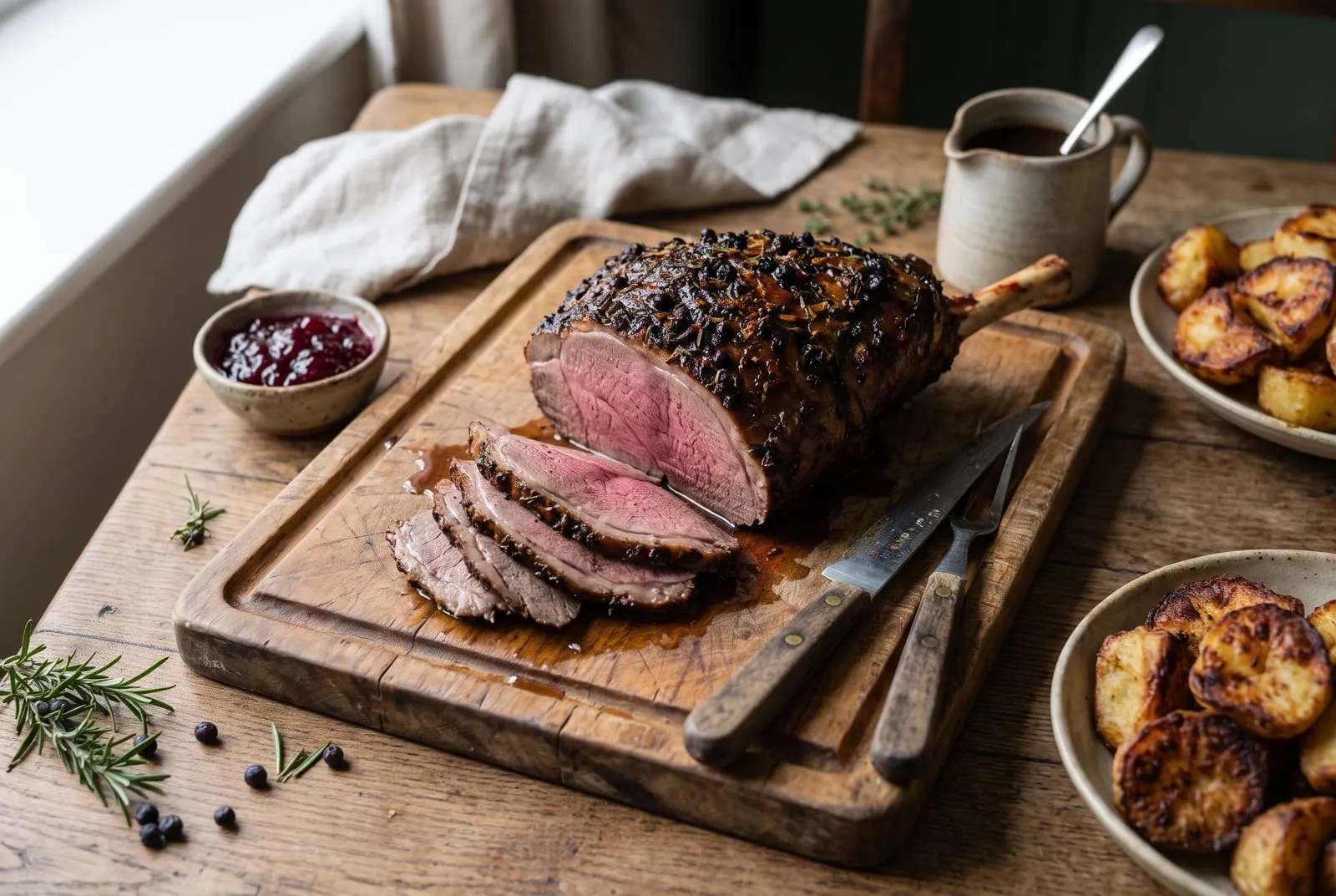
Roast haunch of venison with juniper and bacon
A whole bone-in venison haunch, seared, rubbed with juniper, garlic and rosemary and wrapped in bacon, then roasted pink and rested for 30 minutes. Enough for 6 to 8, with a port and redcurrant gravy.
-
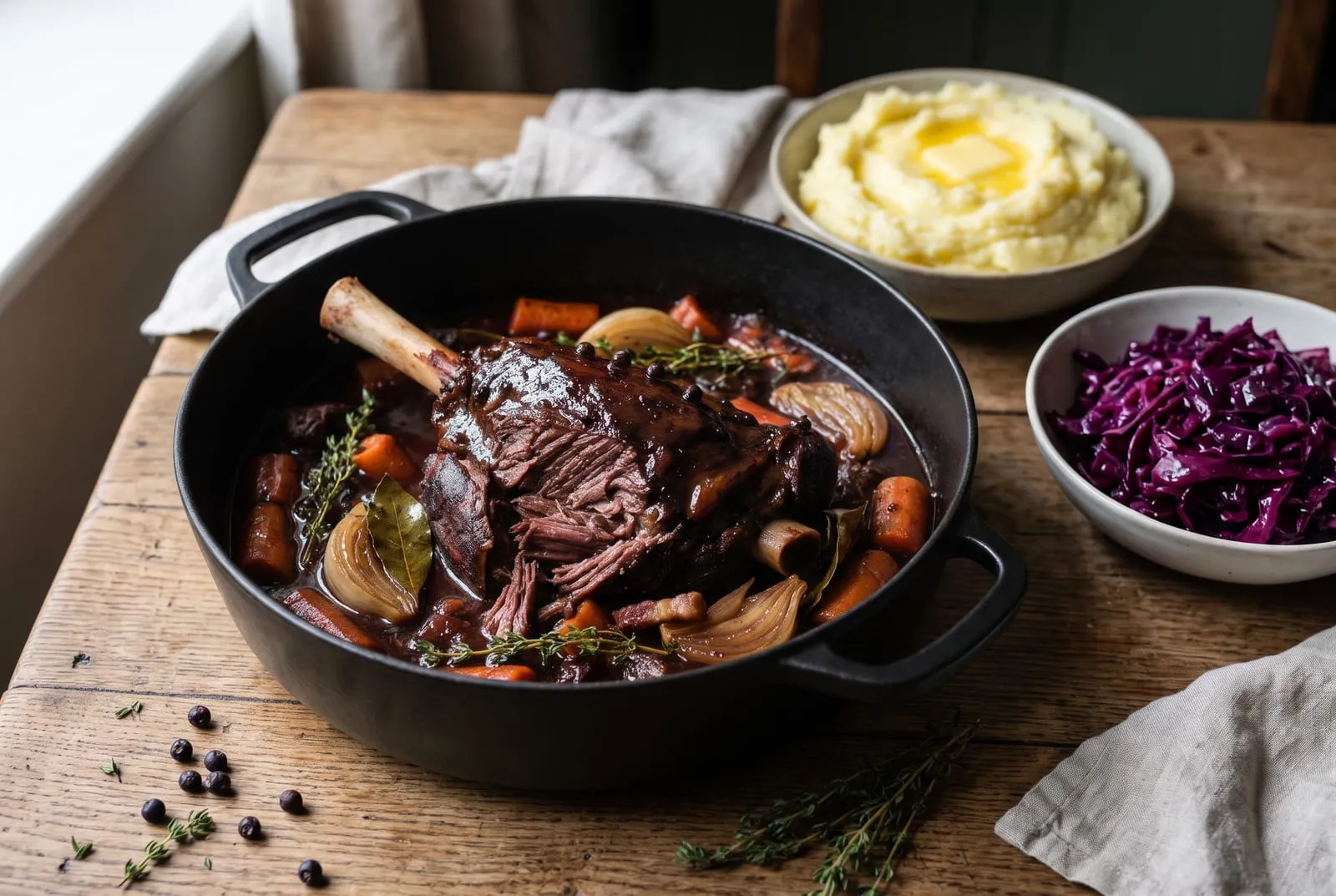
Slow-cooked venison shoulder with red wine and juniper
A bone-in venison shoulder braised for 3½ to 4 hours in red wine with juniper, bay and smoked bacon, until the meat falls off the bone. Fallow is a good size, or use two roe shoulders.
-
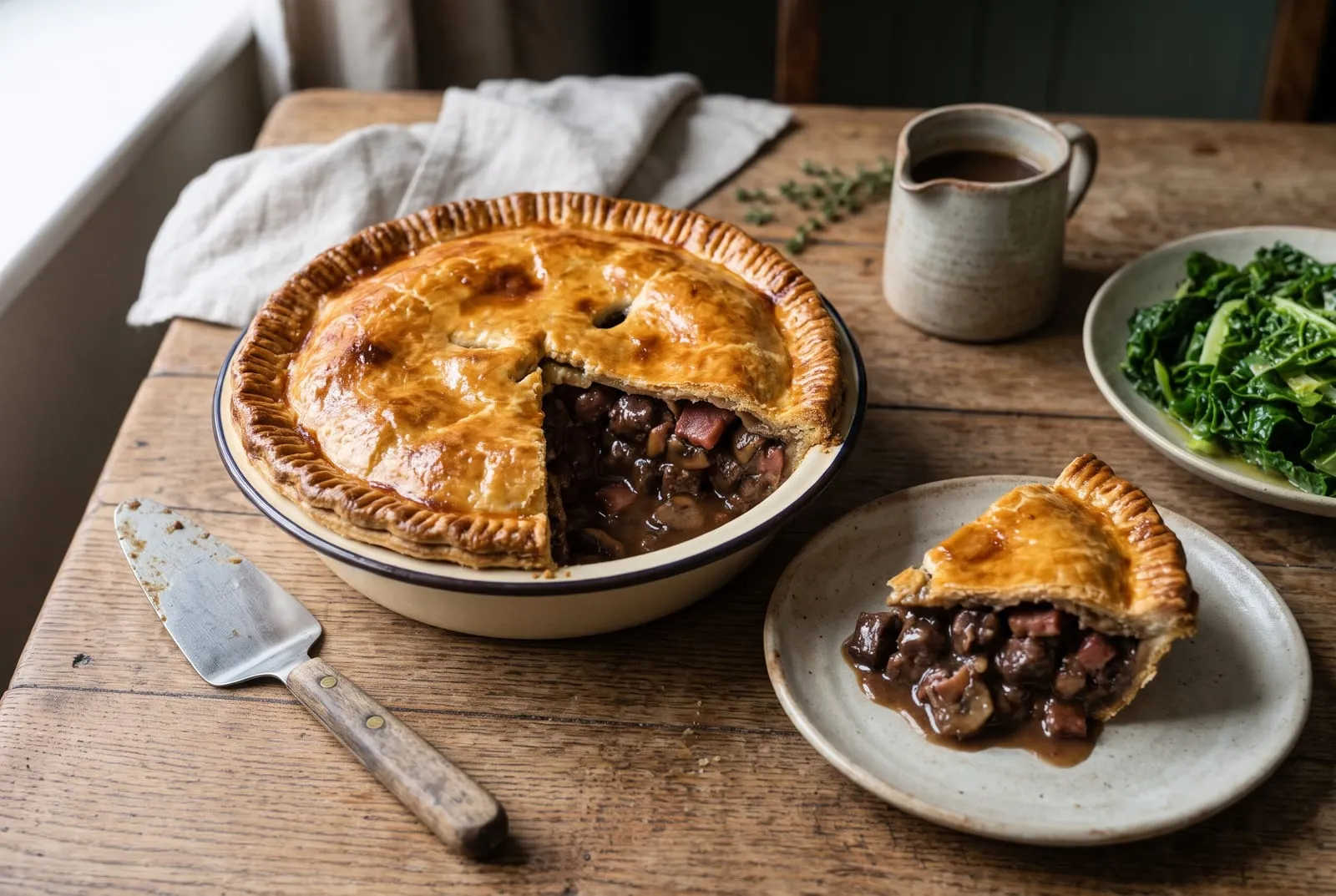
Game pie with venison and pheasant
Diced venison shoulder and pheasant slow-cooked in red wine with smoked bacon, mushrooms and juniper, cooled, then baked under a pastry lid. Freeze it unbaked to keep it.