Wild boar ragu with pappardelle
Diced wild boar shoulder, simmered gently for 3 hours with pancetta, red wine and tomatoes until it shreds, then tossed with pappardelle. Cooked through, like pork.
- Serves 6
- Prep 30 min
- Cook 4 hr
- Total 4 hr 30 min
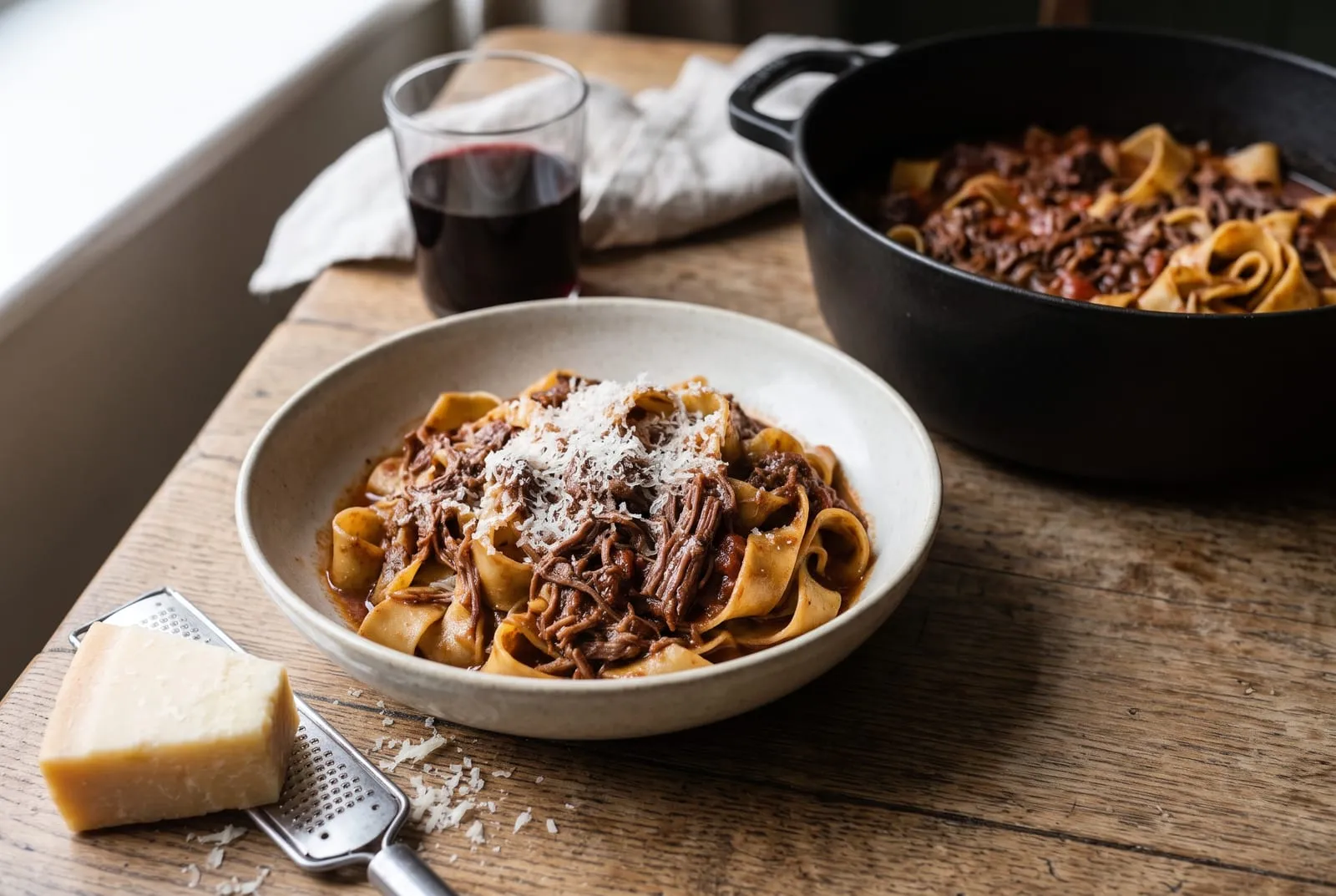
Wild boar shoulder is hard-working, lean meat that needs long, gentle cooking to soften, which is what a ragu gives it. Three hours at a bare simmer in red wine and tomatoes turns it into soft strands that hold the sauce, while pancetta adds the fat the boar lacks. Like pork, boar has to be cooked all the way through, and a ragu does that without drying it out.
Farmed or wild-shot boar
Wild boar sold in Britain is either farmed or shot wild. The Food Standards Agency (FSA) counts boar produced by farming as farmed game, and free-living boar as large wild game (FSA).
Boar living wild in Britain are feral. The Woodland Trust estimates that about 2,600 live in several breeding populations in England, Wales and Scotland. They descend from captive animals that escaped or were illegally released, thought to be from farms raising them for meat.
The largest population is in the Forest of Dean. It began with boar that escaped from a farm in the 1990s, joined in 2004 by about 60 farm-reared animals released illegally. Boar culled there by Forestry England’s rangers are inspected and tested, and those passed fit to eat are sold to game dealers (Forestry England).
Where to buy wild boar
- From a game dealer. Approved game handling establishments buy wild-shot boar and prepare it for sale. Lead and the meat around it are removed, though small amounts may remain (FSA). We list approved game handlers, so ask the ones near you whether they sell to the public.
- From the hunter. A hunter can supply small quantities direct to you, or to local shops, pubs and restaurants that sell to the public (FSA). Ask whether it has been tested.
- From a farm. Some farms that rear boar sell it direct. Orchard Hill Farm in Kent, for example, sells joints, sausages and burgers from its shop and online.
- Your own. If you keep boar, ask the abattoirs on our list of pig abattoirs whether they take them. Selling boar you’ve shot? See our guide to deer and wild game processing.
If you aren’t sure whether boar was shot with lead, the FSA says to ask the supplier. It says large game sold in supermarkets is generally farmed, with no or very low lead levels (FSA).
Trichinella and cooking it through
Trichinella is a parasitic worm. People can be infected by eating raw, undercooked or processed meat from infected pigs, wild boar, horses or game (FSA). The Animal and Plant Health Agency (APHA) says there have been no confirmed human cases from meat produced in the UK since 1969. But the parasite was found in a fox in mainland UK in 2013, and APHA counts wild boar as a potential source (APHA).
- Through a game dealer. Wild boar accepted by an approved game handling establishment is tested for Trichinella as standard. If a sample tests positive, the carcase is traced and rejected as unfit to eat (FSA). The law requires every wild boar carcase that goes through a slaughterhouse or game handling establishment to be sampled (Regulation 2015/1375).
- For your own table, or sold direct. Testing isn’t mandatory for boar you eat at home or supply in small quantities direct. The FSA calls it best practice for both, and APHA strongly advises it for boar you supply. Sampling kits and freepost envelopes are free from APHA, and can be ordered before you hunt (FSA).
APHA’s guidance for hunters asks for 60 to 100 g of muscle from the pillar of the diaphragm, or from the foreleg or tongue if that isn’t possible. Don’t freeze the sample; it can be kept in the fridge at about 4°C for a few days. Results are sent out on the day of the test. Keep the meat out of the food chain until a negative result comes back.
Testing doesn’t replace cooking. The FSA says pork can have bacteria all the way through the meat, so it must be cooked all the way through: the middle should reach 70°C for 2 minutes, or an equivalent such as 65°C for 10 minutes or 75°C for 30 seconds (FSA). Its cooking advice doesn’t mention wild boar, so we treat boar as pork. APHA says thorough cooking can kill Trichinella larvae, but still counts testing as essential.
A ragu that has simmered for 3 hours is well past those figures. To check, push a clean probe thermometer into the middle of a large piece.
Which cut to use
Shoulder is the cut for ragu. It works hard, so it has plenty of connective tissue and some fat between the muscles, and both melt into the sauce over a long cook. Leg works too, but it’s leaner and can turn dry and stringy, so take it off the heat as soon as it shreds.
Dice it rather than mince it. Diced meat breaks into strands that give the ragu body, and you can see what you’re cutting. If the boar was shot, trim off any bloodshot or damaged meat and any fragments: the FSA says anyone preparing wild game at home should remove as much lead as possible and the surrounding meat (FSA), which you can’t do once it’s minced. Mince must be cooked all the way through too, because mincing moves any bacteria from the outside of the meat all the way through (FSA).
How boar differs from pork
Hunted boar is leaner than pork, according to an Italian study: loin from 20 hunted wild boar had 2.2% fat, against 3.7% for indoor-reared pigs and 4.7% for outdoor-reared pigs, with about the same protein (Di Bella and others, 2024). Boar in Britain may not match those figures, since the Woodland Trust says many feral boar are likely to have interbred with domestic pigs in captivity. Less fat leaves less margin for error, hence the pancetta and the gentle simmer.
Cooking notes
Brown it in batches. Wet or crowded meat steams in its own juices instead of browning, so dry it first and leave space around each piece. Don’t move a piece until it lifts away easily. The brown layer left on the base of the pan is flavour, and the wine lifts it into the sauce.
Keep the simmer gentle. The surface should barely tremble. A hard boil tightens lean meat and makes it stringy, even under liquid. If your hob won’t go low enough, cook it covered in the oven at 150°C (130°C fan, gas 2) for the same time.
Know when it’s done. Press a piece against the side of the pan with a wooden spoon: it should fall into strands. If it holds together or springs back, give it another 30 minutes. Boar varies in age and size, so go by the meat rather than the clock. The sauce should coat the meat rather than pool around it.
Making it ahead, freezing and leftovers
Ragu reheats well, so it’s worth making the day before. Set any leftovers aside before you add the pasta. The FSA’s advice on cooking and on chilling, freezing and defrosting covers the rest:
- Cool it and put it in the fridge within two hours, divided into smaller portions. Your fridge should be at 0 to 5°C.
- Eat it within 48 hours, or freeze it.
- Freeze it as soon as it has cooled, in portions so you defrost only what you need, and label it. Frozen meat is usually best eaten within 2 to 3 months, though that’s about quality rather than safety.
- Defrost it in the fridge, and use it within 24 hours of it fully thawing.
- Reheat it only once, until it’s steaming hot all the way through, not just warm. On the hob, stir often. In a microwave, the edges can be very hot while the middle is still cold.
- If the boar was frozen when you bought it, you can still freeze the ragu: the FSA says food can be frozen again once cooked, but can then be reheated only once.
Freeze the sauce without the pasta, and cook fresh pasta when you serve it.
Serving it
Pappardelle are wide, flat ribbons of egg pasta, and they carry a chunky ragu better than thin strands. To make your own, roll egg pasta dough thin on a pasta machine and cut it into ribbons 2 to 3 cm wide. Toss the pasta with the sauce in the pan rather than spooning the ragu on top, so every ribbon is coated, and grate Parmesan over at the table.
Other ways to serve it:
- Other pasta. Tagliatelle works the same way. Rigatoni, paccheri and other large tubes catch shreds of meat inside.
- Polenta. Spoon the ragu over soft polenta, or over slices of set polenta, grilled or fried.
- Lasagne. Layer leftover ragu with pasta sheets and béchamel. The bake is the ragu’s one reheat, so don’t reheat the lasagne again.
Wild boar ragu with pappardelle
- Serves 6
- Prep 30 min
- Cook 4 hr
- Total 4 hr 30 min
Ingredients
- 1.2 kg wild boar shoulder, diced into 4 cm pieces
- 3 tbsp olive oil
- 150 g diced pancetta
- 1 large onion, finely chopped
- 2 carrots, finely chopped
- 2 celery sticks, finely chopped
- 4 garlic cloves, finely chopped
- 300 ml dry red wine
- 2 x 400 g tins chopped tomatoes
- 400 ml chicken stock
- 2 bay leaves
- 2 rosemary sprigs
- 6 juniper berries, lightly crushed
- Salt and black pepper
To serve
- 600 g dried egg pappardelle, or 750 g fresh
- 60 g Parmesan, finely grated
Method
- Pat the boar dry with kitchen paper and trim off any thick sinew. If it was shot, cut away any bloodshot or damaged meat and any fragments you find. Season with pepper, but hold back on salt until the end, because the pancetta and stock both add it.
- Heat 1 tbsp of the oil in a large cast-iron casserole over a medium-high heat until it shimmers. Brown the boar in 3 or 4 batches, in a single layer with space between the pieces, for 5 to 6 minutes a batch, turning each piece once it lifts easily from the pan. Move each batch to a bowl, adding a little more oil if the pan looks dry.
- Turn the heat down to medium. Add the pancetta and cook for 4 to 5 minutes, stirring, until the fat runs and it starts to colour. Add the onion, carrot and celery and cook gently for 10 to 12 minutes, stirring now and then, until soft and sweet but not browned. Stir in the garlic for the last minute.
- Pour in the wine and scrape up the brown bits from the base of the pan with a wooden spoon. Let it bubble for 3 to 4 minutes, until reduced by about half.
- Return the boar and any juices to the pan, then add the tomatoes, stock, bay leaves, rosemary and juniper. Bring to the boil, then turn the heat as low as it will go, so the sauce barely simmers, with a bubble breaking the surface every few seconds.
- Cover with the lid slightly ajar and cook for about 3 hours, stirring every 30 minutes and adding a splash of water if it starts to catch or gets too thick. It's ready when a piece falls into strands when pressed against the side of the pan with a spoon. Wild boar must be cooked all the way through, like pork, and after 3 hours at a simmer it will be.
- Lift out the bay leaves, rosemary stalks and any juniper berries you can find. Shred the meat into the sauce with two forks. If the sauce is thin, simmer it uncovered for 10 to 15 minutes until it coats the meat. Taste, and season with salt and pepper.
- Meanwhile, cook the pappardelle in a large pan of well-salted boiling water until just tender, following the packet timings. Keep a mug of the cooking water, then drain.
- Add the pappardelle to the ragu over a low heat and toss, loosening it with a splash of the pasta water so the sauce coats every ribbon. Serve in warm bowls with the grated Parmesan.
What you'll need
- Cast-iron casserole dish Goes from hob to oven, and holds a steady heat for long, slow cooking.
- Pestle and mortar Crushes juniper berries and spices just enough to release their flavour.
- Pasta machine For fresh pappardelle, if you want to make your own.
- Probe thermometer Checks the middle of the meat rather than guessing. Keep the tip away from the bone.
- Juniper berries The classic spice with venison and game. A jar lasts for years.
These are Amazon links. If you buy through them, Lairage may earn a small commission at no extra cost to you.
Questions people ask
Does wild boar need to be cooked all the way through?
Yes. The FSA says pork must be cooked all the way through, with the middle reaching 70°C for 2 minutes or an equivalent, and we treat wild boar the same way. A ragu simmered for 3 hours is well past that, and leftovers should be reheated until steaming hot throughout.
Is wild boar tested for Trichinella?
Wild boar accepted by an approved game handling establishment is tested for Trichinella as standard, and a carcase that tests positive is traced and rejected. Boar shot for your own table, or sold in small quantities direct, doesn't have to be tested, but the FSA calls testing best practice and APHA supplies sampling kits free of charge.
Where can I buy wild boar in the UK?
Wild-shot boar is sold through game dealers, which are approved game handling establishments, and a hunter can sell small quantities direct to you or to local shops and restaurants. Some farms that rear boar sell it direct from a farm shop or online. If you're not sure whether boar was shot with lead, ask the supplier.
Is wild boar leaner than pork?
It can be. In an Italian study, loin from 20 hunted wild boar had about 2.2% fat, against 3.7% for indoor-reared pigs and 4.7% for outdoor-reared pigs, with about the same protein. Britain's feral boar may differ, as many are likely to have interbred with domestic pigs in captivity.
Can I make wild boar ragu in a slow cooker?
Yes. Brown the boar, cook the pancetta and vegetables and reduce the wine in a pan first, because a slow cooker won't brown them, then cook on low until the meat falls apart when pressed. Use less stock, since little liquid evaporates, and loosen the sauce with a splash at the end if it needs it.
Sources
- Food Standards Agency: Cooking your food
- Food Standards Agency: How to chill, freeze and defrost food safely
- Food Standards Agency: Guidance for primary producers and food business operators on the hygienic production of wild game (October 2024)
- Food Standards Agency: Lead-shot game
- Animal and Plant Health Agency: Wild boar, trichinella testing
- Animal and Plant Health Agency: Guidance for Trichinella testing in UK wild boar (leaflet)
- Commission Implementing Regulation (EU) 2015/1375, Article 2: sampling of carcases for Trichinella
- Forestry England: More information about wild boar (updated 9 September 2026)
- Woodland Trust: Wild boar (Sus scrofa)
- Di Bella S and others (2024): Does hunted wild boar meat meet modern consumer nutritional expectations? Italian Journal of Food Safety 13:11608
- Produced in Kent: Orchard Hill Farm
This recipe is general information. Follow the Food Standards Agency's advice on cooking meat safely, and on eating game shot with lead if you eat it often.
More recipes
-
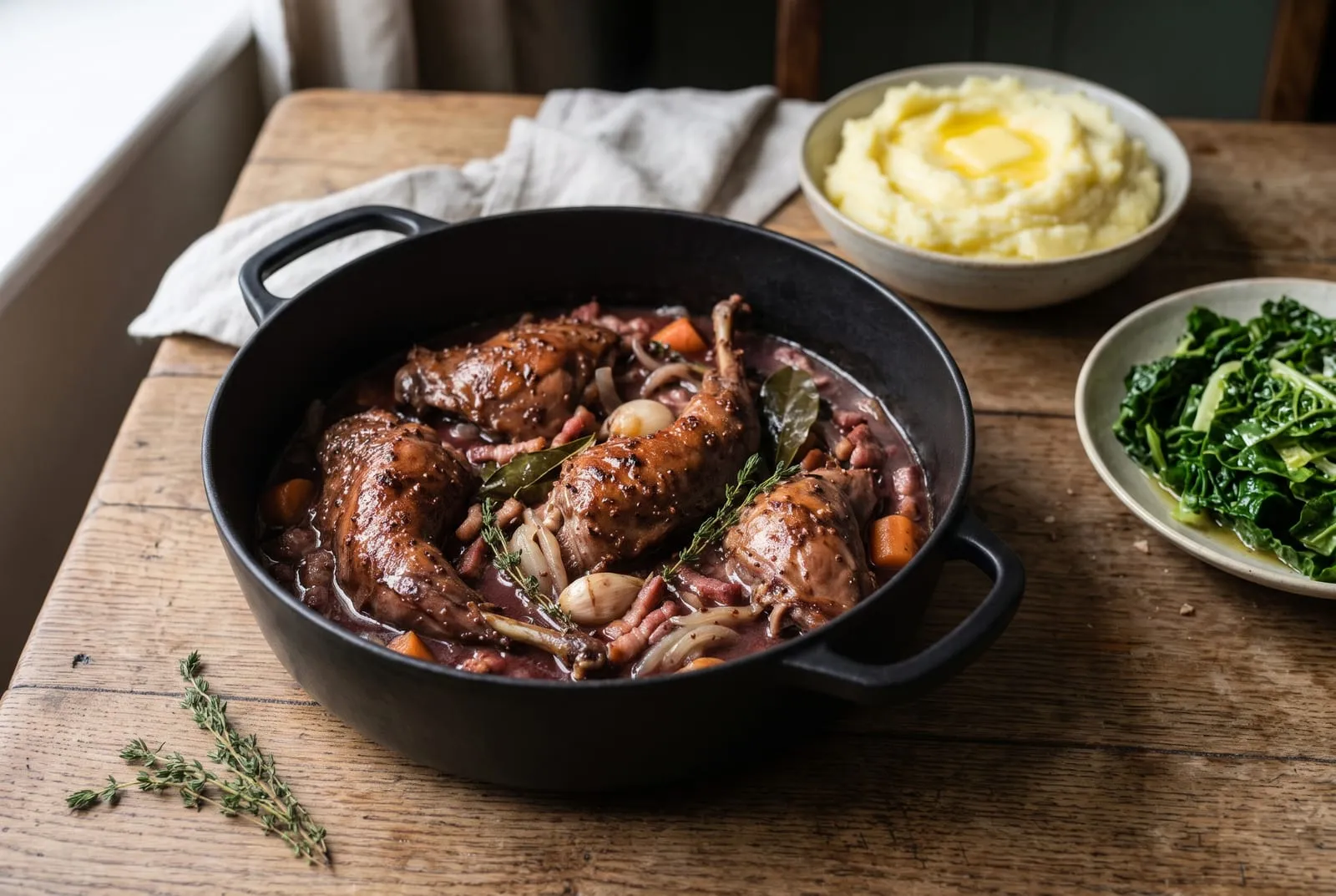
Braised pheasant legs with bacon and red wine
Eight pheasant legs braised in red wine with smoked bacon until the meat falls off the bone, with the hard tendons picked out. Cooked all the way through, as the FSA advises for game birds.
-
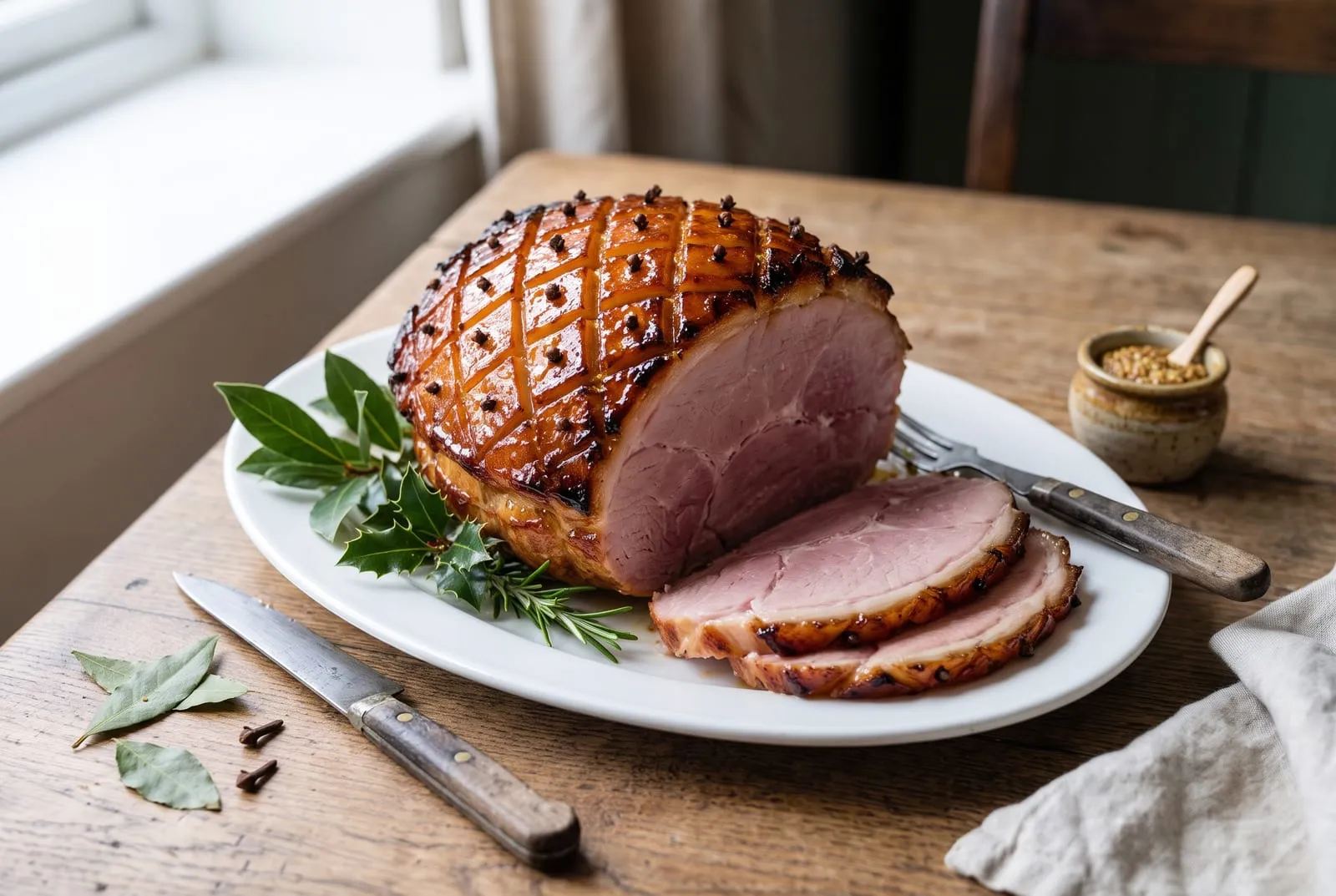
Christmas gammon: boiled and glazed
A cured gammon joint of 3 to 4 kg, simmered with onion, carrot, bay and cider, then scored, studded with cloves and baked with a honey and mustard glaze. Serves 10 to 12.
-
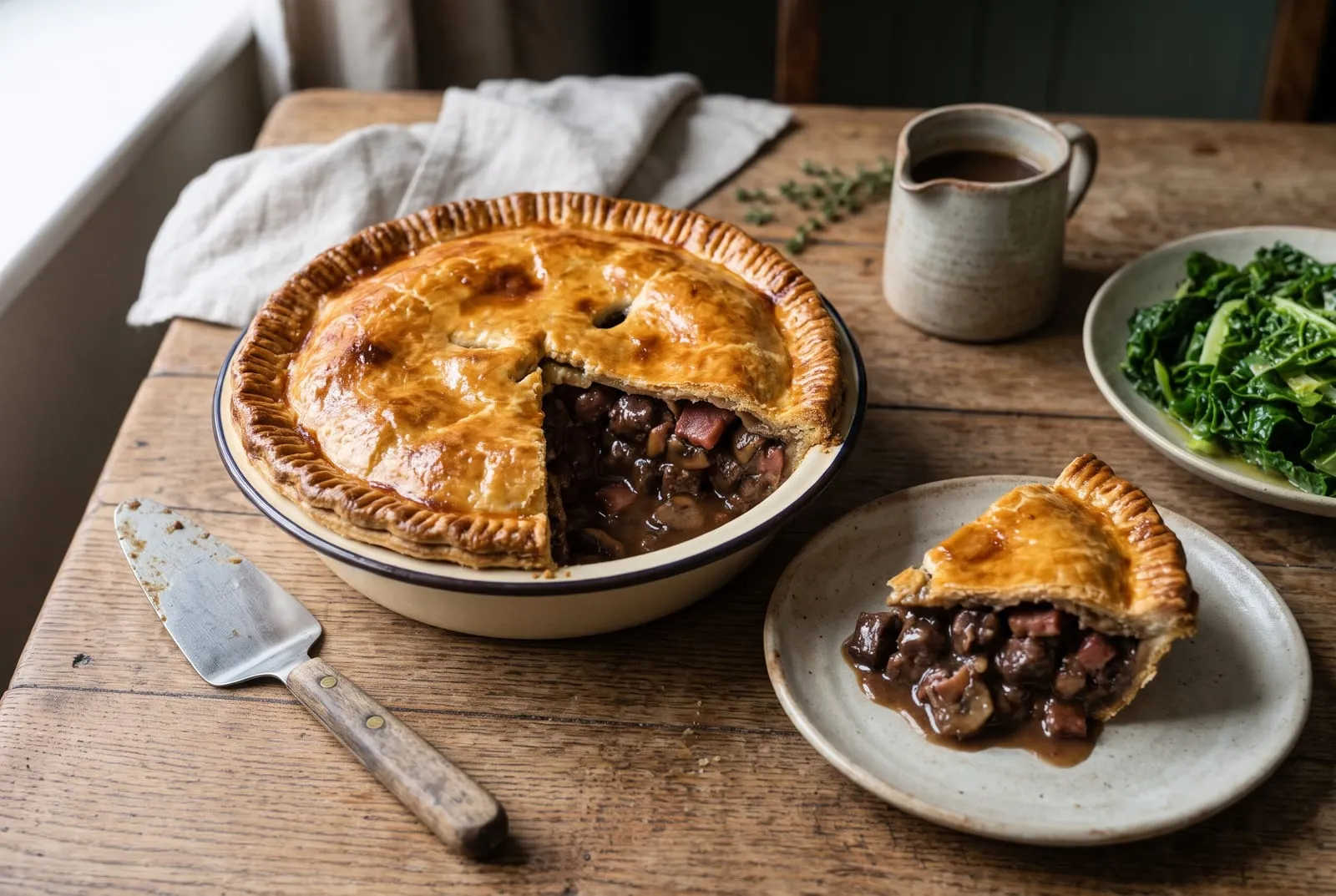
Game pie with venison and pheasant
Diced venison shoulder and pheasant slow-cooked in red wine with smoked bacon, mushrooms and juniper, cooled, then baked under a pastry lid. Freeze it unbaked to keep it.