Christmas gammon: boiled and glazed
A cured gammon joint of 3 to 4 kg, simmered with onion, carrot, bay and cider, then scored, studded with cloves and baked with a honey and mustard glaze. Serves 10 to 12.
- Serves 10
- Prep 30 min
- Cook 4 hr 10 min
- Total 4 hr 40 min
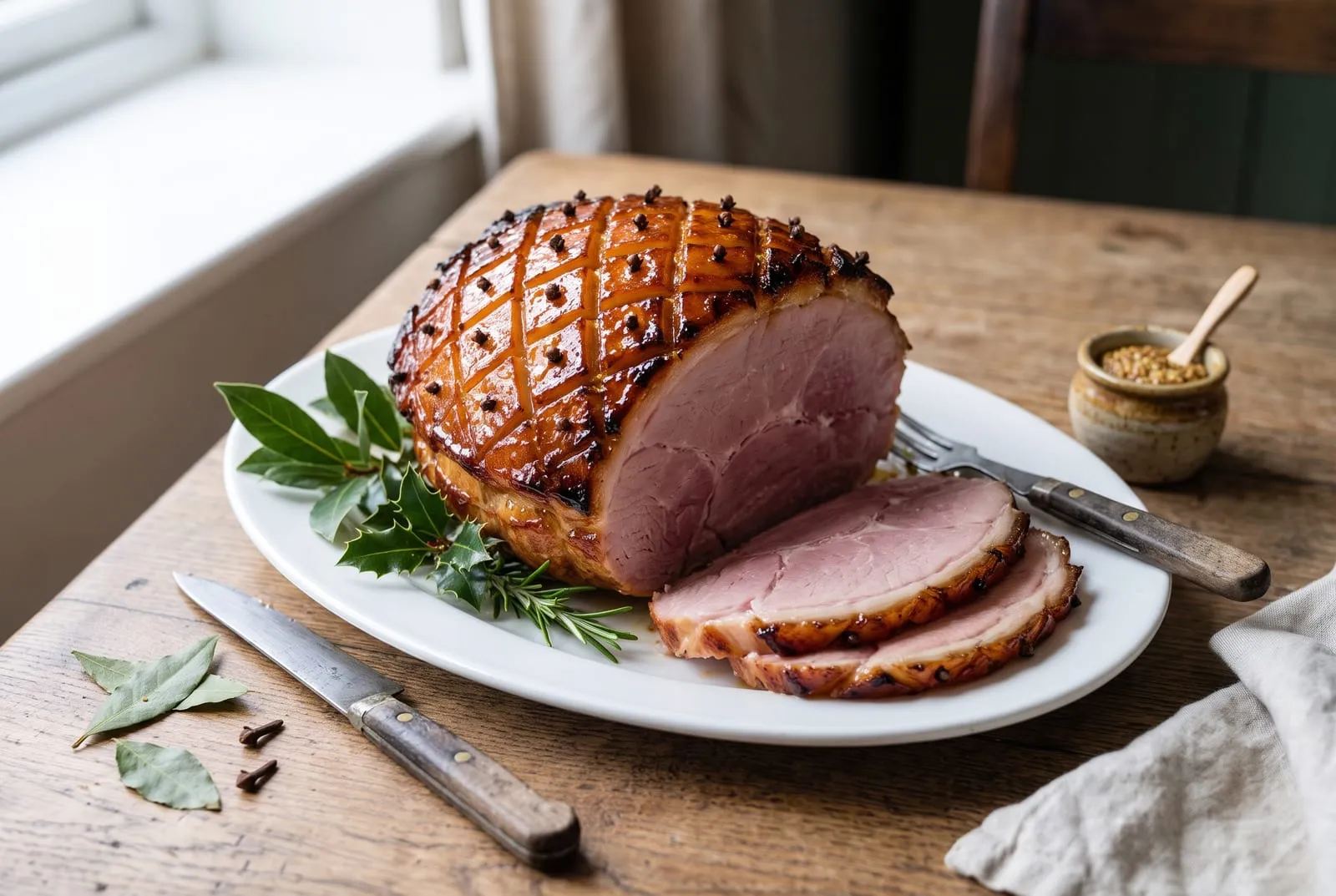
A gammon is raw, cured pork from the hind leg, so it has to be cooked all the way through. Weigh it raw, simmer it for 20 minutes per 450g plus 20 minutes, check the middle with a probe thermometer, then glaze and bake it. If it’s coming from your own pig, the cure adds a week or more to the timetable, so settle that first.
Gammon or ham
Gammon and ham both come from the hind leg and both are cured. Gammon is sold raw and must be cooked before you eat it, while ham is ready to eat (Great British Chefs). Love Pork, AHDB’s pork site, says gammon is cured in the same way as bacon, by dry-salting or brining, and that once you’ve cooked it, it becomes ham (Love Pork). That’s why this recipe treats it as raw pork.
Getting a gammon from your own pig
A gammon is a cured leg, so it has to be cured as well as cut. Not every abattoir or butcher cures, it usually costs extra per kg and it adds time, so ask when you book the kill. Our guide to taking pigs to the abattoir covers the rest of the paperwork.
On your cutting list, put the request against the legs, with numbers:
- Cure: “cure as gammon”. Ask whether it’s dry-salted or brined, and how salty the result is, because that decides whether it needs soaking.
- Size: a weight in kg for each joint, such as “two joints of 3 to 4 kg”. A whole leg may be more than one pan will take.
- Bone: on the bone, or boned and rolled.
- Smoke: smoked or unsmoked.
- Rind and fat: rind on, with a layer of fat left on. If the abattoir skins its pigs, the rind will already be off, so ask for the fat to stay.
- Keeping time: how long the cured gammon keeps in the fridge, and its use-by date.
Curing comes after hanging and cutting. The Village Butchers in Essex says it dry-cures its Christmas hams and gammons for 7 to 10 days (The Village Butchers), so take the cure time off your collection day as well. Our Christmas private kill guide works back from collection day. With its hanging range for pork of 4 to 14 days and a 7 to 10 day cure, a gammon to collect on Monday 21 December 2026 means a kill between Friday 27 November and Thursday 10 December, and earlier still once cutting time and the Trichinella result are allowed for. Some cures take much longer: a West Dorset farmer selling their own pork tells buyers that gammon and bacon take 3 to 4 weeks to cure (Broadwindsor.org), which moves the same collection to a kill between Monday 9 and Thursday 26 November. Ask how long your butcher’s cure takes before you book. If that won’t work, or your abattoir doesn’t cure, buy a cured gammon from a butcher instead.
Smoked or unsmoked
Gammon is sold smoked or unsmoked, and unsmoked is also called green (Great British Chefs). Nigella.com says smoked gammon works in a glazed recipe, but recommends a mild smoke over a heavy one (Nigella.com). The method here is the same for either, so choose by taste and say which on the cutting list.
Soaking
Gammon is salted, so the question is whether yours is too salty. Which? says you don’t need to soak a gammon you’re going to boil, and advises 12 to 48 hours only before roasting one without boiling it first (Which?). Nigella.com says the cure on most UK gammon is relatively mild (Nigella.com), and Great British Chefs says to check with the butcher or the label.
If you’re unsure, test it. Simmer a small piece in a little water until cooked, let it cool slightly and taste it. If it’s too salty, soak the joint in cold water in the fridge and change the water every 6 to 8 hours: Nigella.com gives 8 hours for a very small joint and up to 24 for a large one. The times on the recipe card don’t include soaking.
Cooking it through
The FSA says pork can have bacteria all the way through, so it must be cooked all the way through: the middle should reach 70°C for 2 minutes, or 65°C for 10 minutes or 75°C for 30 seconds (FSA). Its page doesn’t mention gammon or any cured meat, so we apply the pork rule. Don’t go by colour: DukesHill, a ham producer, says nitrites give cured ham its pink colour, and that without them cooked pork is a dull grey-brown (DukesHill). Push a clean probe into the thickest part, and keep it away from the bone, as the FSA advises.
For timing, weigh the raw joint. Love Pork’s rule for boiling is 20 minutes per 450g (1lb) plus 20 minutes (Love Pork). That’s about 2½ hours for 3 kg, 3 hours for 3.5 kg and 3¼ hours for 4 kg. Which? gives the same formula. Morrisons’ is longer, at 30 minutes per 500g plus 30 (Morrisons), which adds about an hour to a 3 kg joint. Use the rule to decide when to start probing, and keep simmering if the middle hasn’t reached temperature. The cook time on the card assumes a 3.5 kg joint.
Glaze late: Morrisons says to apply the glaze only for the last 20 to 30 minutes, because the sugar can burn. Love Pork and Which? roast gammon at 180°C (160°C fan), gas 4. Ours goes into a hotter oven, 200°C (180°C fan), gas 6, for a short time, because it’s already cooked through and the oven only has to set the glaze. Rest it for 15 to 20 minutes under loose foil before carving, as Morrisons advises.
Fridge space at Christmas
A 3 to 4 kg gammon needs fridge room twice, raw and then cooked. The FSA suggests planning fridge and freezer space before Christmas, and checking with a fridge thermometer that the fridge is at 5°C or below. It also says to keep raw meat covered on the bottom shelf, away from ready-to-eat food (FSA). A cooked gammon is ready to eat, so once it has cooled, keep it on a shelf above any raw meat.
If space runs out, the FSA says it’s safe to freeze food right up to and including its use-by date. Thaw it in the fridge. For a turkey the FSA allows 10 to 12 hours per kg, which makes 35 to 42 hours for a 3.5 kg joint, and Which? says to allow at least 36 hours for a gammon. Cook it within 24 hours of it thawing fully (FSA).
Leftovers and freezing
The FSA’s advice on leftovers (FSA), applied to a big joint:
- Cool it fast. Carve it and divide it into smaller portions, which cool faster, and get it into the fridge within one to two hours.
- Use it or freeze it. Eat it within 48 hours, or freeze it. Carve on Christmas Day and that takes you to the 27th. Frozen meat is best eaten within 2 to 3 months.
- Freeze it in slices. Love Pork suggests greaseproof paper between the slices, so you can take out only what you need, and patting them dry after defrosting because gammon can hold some water (Love Pork).
- Defrost and reheat. Defrost in the fridge and use it within 24 hours of fully thawing. Reheat it only once, until it’s steaming hot all the way through (FSA).
- Frozen raw, cooked, frozen again. If the gammon was frozen raw, the cooked leftovers can go back in the freezer, but they can then be reheated only once.
Boxing Day uses
Cold gammon is ready to eat, so slices go straight into sandwiches with mustard and pickle. For hot dishes, Love Pork suggests pies, tarts, warm salads and soups, and Morrisons a ham frittata, ham and mushroom tagliatelle and croquetas (Morrisons).
- Pea and ham soup. Morrisons and Which? both say the cooking liquid can be kept for stock. Gammon is cured in salt, so taste it first and dilute it with water if it needs it.
- Pie or tart. Mix chopped gammon with leeks and a mustard sauce, and bake until it’s steaming hot.
- Pasta. Stir slices into a creamy mushroom sauce, or layer them into a pasta bake.
Each hot dish is the gammon’s one reheat, so eat it up rather than heating it again.
Christmas gammon: boiled and glazed
- Serves 10
- Prep 30 min
- Cook 4 hr 10 min
- Total 4 hr 40 min
Ingredients
- 1 cured gammon joint, 3 to 4 kg, smoked or unsmoked, on the bone or boned and rolled
- 2 onions, peeled and quartered
- 2 carrots, cut into large chunks
- 3 bay leaves
- 1 tsp black peppercorns
- 300 ml dry cider or apple juice
- Cold water, enough to cover the joint
For the glaze
- About 25 whole cloves
- 6 tbsp runny honey
- 4 tbsp wholegrain mustard
- 4 tbsp soft light brown sugar (or use 8 tbsp orange marmalade instead of the honey and sugar)
Method
- If the butcher says the gammon is salty, or you want to be sure, soak it before cooking. Put it in a large pan of cold water in the fridge, changing the water every 6 to 8 hours, for up to 24 hours. To test whether it needs soaking, simmer a small piece in a little water until cooked and taste it.
- Weigh the raw gammon and work out the simmering time: 20 minutes per 450g (1lb), plus 20 minutes. That is about 2½ hours for a 3 kg joint and 3¼ hours for a 4 kg one.
- Put the gammon in a pan large enough for the water to cover it. Add the onions, carrots, bay leaves, peppercorns and cider, then cover with cold water. Bring to the boil, skim off any froth, then turn the heat down to a gentle simmer.
- Simmer for the calculated time, topping up with boiling water if the level drops below the joint.
- Lift the gammon onto a board and push a probe thermometer into the middle of the thickest part, away from the bone. Gammon is raw cured pork, so it must be cooked all the way through: the middle needs to hold 70°C for 2 minutes, or 75°C for 30 seconds. If it has not got there, return it to the pan for 15 minutes and test again.
- Heat the oven to 200°C (180°C fan), gas 6. When the gammon is cool enough to handle, cut off the rind, leaving a thin layer of fat. Score the fat in a diamond pattern and press a clove into the centre of each diamond.
- Mix the honey, mustard and sugar and spread the glaze over the fat. Sit the gammon in a foil-lined roasting tin and bake for 20 to 30 minutes, basting every 10 minutes with the glaze that runs into the tin, until the glaze is deep golden and sticky.
- Rest the gammon for 15 to 20 minutes under loose foil, then carve it into thin slices. Serve it hot or cold.
What you'll need
- Large stockpot A whole gammon has to sit under the liquid while it simmers.
- Paring knife Makes small, deep slits for garlic and herbs, and scores fat neatly.
- Deep roasting tin Holds a whole joint and the juices it gives off.
- Probe thermometer Checks the middle of the meat rather than guessing. Keep the tip away from the bone.
- Carving knife and fork A long, thin blade cuts even slices across the grain.
These are Amazon links. If you buy through them, Lairage may earn a small commission at no extra cost to you.
Questions people ask
How long do you boil a gammon joint?
Love Pork, AHDB's pork site, says to weigh the joint raw and boil it for 20 minutes per 450g (1lb) plus 20 minutes. That is about 2½ hours for a 3 kg gammon and 3¼ hours for a 4 kg one. Other retailers give longer rules, so go by a probe thermometer: the middle should hold 70°C for 2 minutes, or 75°C for 30 seconds.
Do you have to soak gammon before boiling it?
Usually not. Which? says you don't need to soak a gammon you are going to boil, and Nigella.com says the cure on most UK gammon is relatively mild. If your butcher says it is salty, or you are unsure, simmer a small piece in water and taste it. If it is too salty, soak the joint in cold water in the fridge for up to 24 hours, changing the water every 6 to 8 hours.
What is the difference between gammon and ham?
Both come from the pig's hind leg and both are cured. Gammon is sold raw and must be cooked before you eat it, while ham is ready to eat. Once you have cooked a gammon, it becomes ham.
How much gammon do you need per person?
Morrisons recommends 170g to 200g of raw gammon per person. Its size chart puts a 2 kg joint at 10 to 12 servings and a 3 kg joint at 15 to 18, so a 3 to 4 kg gammon feeds 10 to 12 comfortably, with leftovers.
How long does cooked gammon last in the fridge?
The FSA says to get leftovers into the fridge within one to two hours, and to eat them within 48 hours or freeze them. Frozen meat is best eaten within 2 to 3 months. Defrost it in the fridge, use it within 24 hours of it fully thawing, and reheat it only once, until it is steaming hot all the way through.
Sources
- Food Standards Agency: Cooking your food
- Food Standards Agency: How to chill, freeze and defrost food safely
- Food Standards Agency: Christmas food hygiene
- Love Pork (AHDB): What's the difference between gammon and ham?
- Love Pork (AHDB): Gammon and ham FAQs
- Which?: How to cook a gammon joint
- Nigella.com: Soaking hams before cooking (21 December 2010)
- Nigella.com: Smoked gammon (8 October 2012)
- Great British Chefs: How to cook gammon
- Morrisons: How to cook gammon, a boiling, roasting and glazing guide
- Broadwindsor.org: Local reared pork for sale
- The Village Butchers: Christmas ham and gammon
- DukesHill: What is nitrite-free ham?
This recipe is general information. Follow the Food Standards Agency's advice on cooking meat safely, and on eating game shot with lead if you eat it often.
More recipes
-
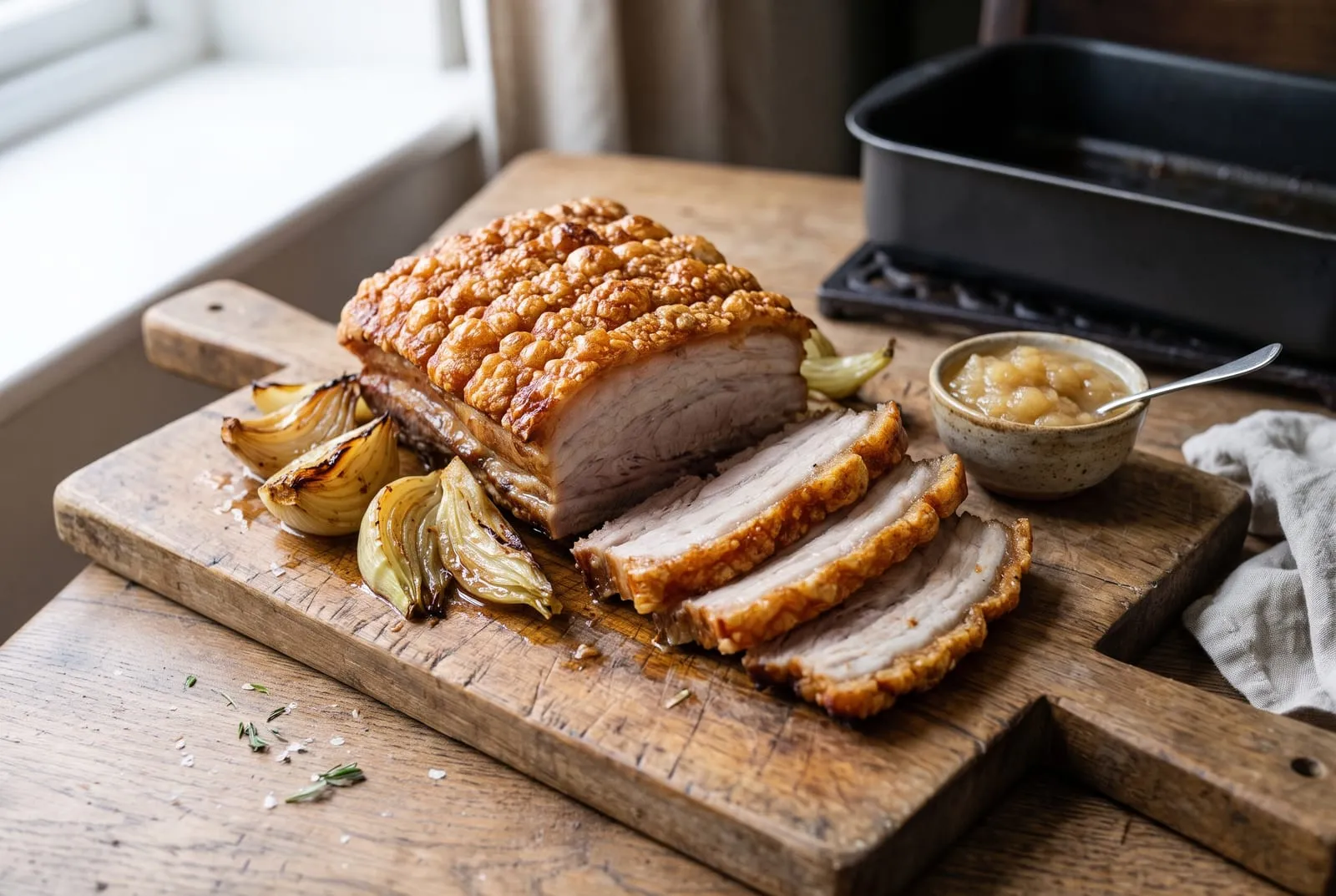
Slow-roast pork belly with crackling
A skin-on pork belly, dried overnight, salted and roasted low for about 2½ hours, then blasted hot for 20 to 30 minutes until the crackling blisters. Carve it skin side down.
-
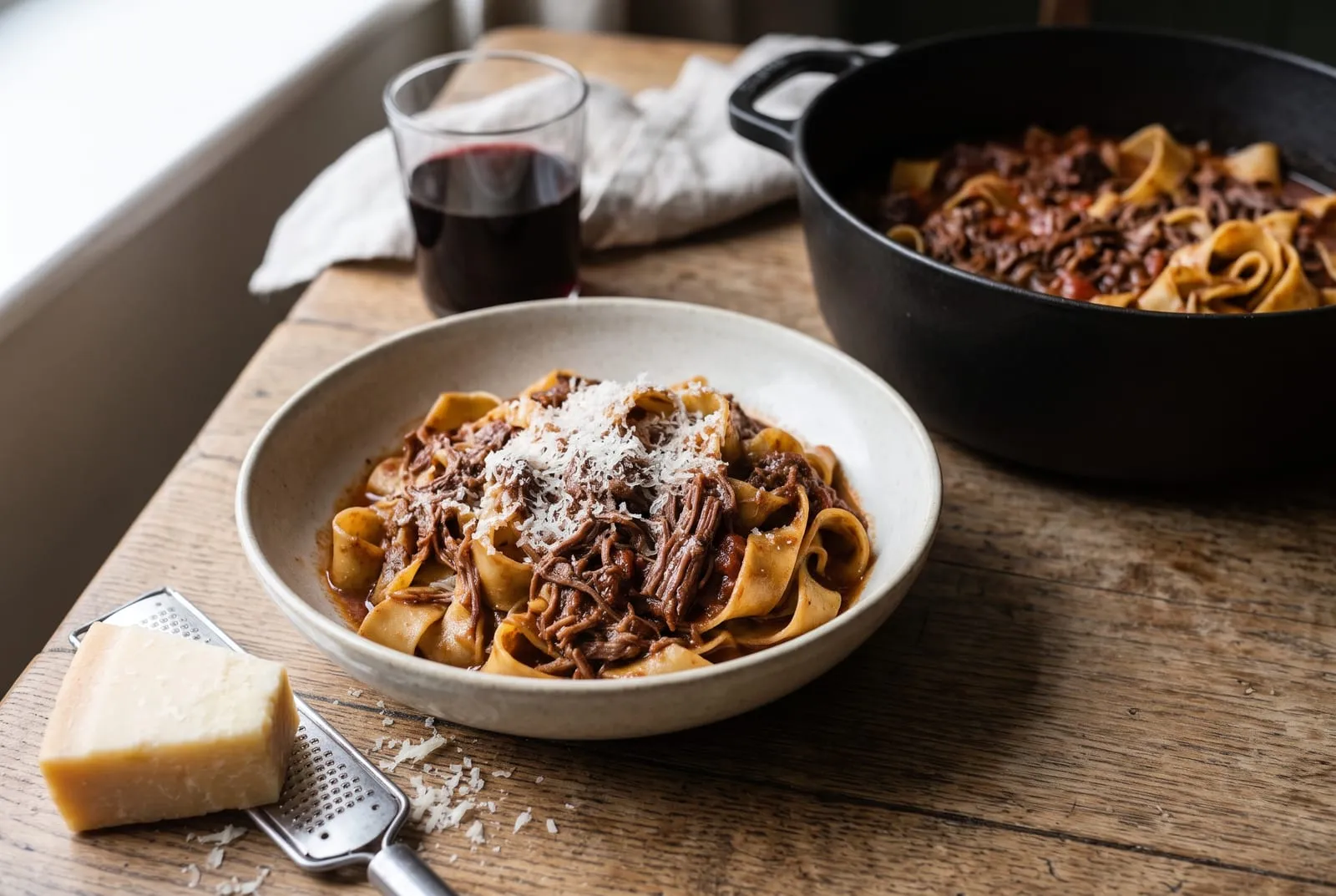
Wild boar ragu with pappardelle
Diced wild boar shoulder, simmered gently for 3 hours with pancetta, red wine and tomatoes until it shreds, then tossed with pappardelle. Cooked through, like pork.
-
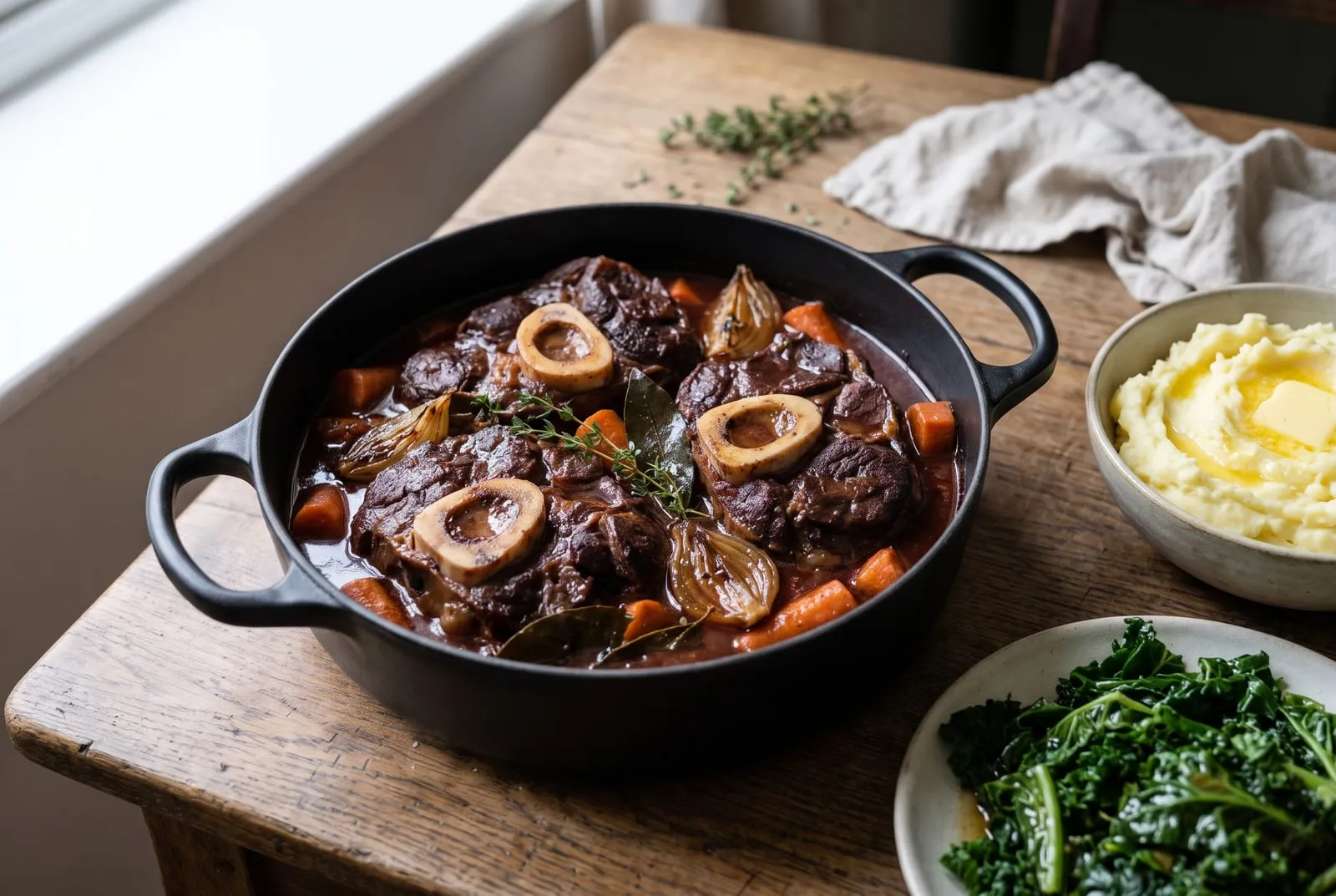
Braised beef shin with red wine
Beef shin, cut across the bone or boneless, browned and braised in red wine with onions, carrots and thyme for 3 to 3½ hours, until it falls apart.