Where to take shot pheasants, partridges and ducks
To sell shot pheasants and partridges, book a game dealer before the shoot day and give it your numbers and dates. On the FSA’s list for October 2026, 22 dealers are approved for wild game birds, all of them in England, and Shooting UK has reported some turning small shoots away or charging to collect. Expect little for the birds: in September 2026 the magazine reported that even the best-handled ones typically fetch 50p a brace. You can also sell a few in the feather to local people, butchers, pubs and restaurants, or send them home with the Guns and beaters. Wherever they go, keep birds apart and chill them to 4°C or below. The pheasant and partridge seasons end on Monday 1 February 2027, and woodcock, snipe and inland duck on Sunday 31 January.
Plan where the birds will go before the shoot day
The Code of Good Shooting Practice, the shooting organisations’ voluntary code rather than the law, says all shot game must be treated as food, and that shoot managers must arrange for the sale or eating of the expected bag before every shoot day. Its Guide to Good Game Handling says to give your dealer early notice of shoot dates and expected bags, and in August 2026 Shooting UK reported that dealers want those forecasts before the first shoot day, not after it.
For each shoot day, work out:
- how many birds you expect, of each species
- which dealer is taking them, on which day, and how they get there
- how many go home with the Guns, beaters and pickers-up, to the shoot lunch or to local buyers
- where they’ll be chilled on the day.
Game dealers that take birds
An approved game handling establishment, usually called a game dealer, is approved by the FSA to take in wild game, inspect it and prepare it for sale. Our guide to deer and wild game processing covers the general rules. This one covers what’s different for birds.
Not every dealer takes birds. Of the 46 game handling establishments on the FSA’s list of approved establishments for 1 October 2026, 22 are approved for wild game birds, all of them in England. There are none in Wales, so Welsh shoots need a dealer over the border: ask the nearest ones whether they collect in your area.
Dealers don’t take everything. In the last survey of where shot game goes, for the 2017/18 season, they took on average 48% of a shoot’s bag (Savills). Since then Shooting UK has reported:
- in September 2025, some dealers charging shoots to collect birds rather than paying for them, as demand for partridges fell, and one dealer dropping small game altogether (Shooting UK)
- in November 2025, the chief executive of the Country Food Trust, a charity that turns game into meals, saying dealers were “just saying no, especially to small shoots” (Shooting UK)
- in August 2026, Eat Wild, which promotes game meat, warning that there “just isn’t the capacity” for this season’s partridges (Shooting UK).
Ask about lead too. Lead shot is already illegal for shooting ducks, geese, coot and moorhen anywhere in England and Wales, and for any shooting on the foreshore or over listed wetland sites. From 1 April 2029 it’s banned for all shooting, with a few narrow exceptions (see our deer and wild game guide). Until then, ask whether your dealer takes pheasants and partridges shot with lead.
Bird flu
Shooting can carry on inside bird flu protection and surveillance zones, and BASC says birds shot there can still go into the food chain. But some dealers won’t take them, because it could affect their export status, so check first (BASC). Zones change through the winter, so check the latest for England and Wales before each shoot day. Don’t feed raw shot birds to dogs (Code of Good Shooting Practice), and see GOV.UK for which dead wild birds to report, on 03459 33 55 77.
What game dealers pay
Expect little or nothing for birds in the feather, or a charge for collection, especially for partridges and small numbers. We couldn’t find a game dealer in England or Wales that publishes what it pays or charges, or any published price at all for ducks, woodcock or snipe. So before the shoot day, ask each dealer what it pays or charges per bird or per brace, for each species.
The figures that have been published:
- In September 2026 Shooting UK reported that even shoots with the best bird handling typically get 50p a brace, which is 25p a bird. Tom Peachey, Eat Wild’s incoming managing director, told the magazine that many shoots still aren’t paid at all.
- In the 2017/18 survey, 46% of shoots gave their birds to the dealer free, and 12% paid the dealer to collect them, typically 20 to 30p a bird (Savills).
- In July 2026 a dealer told Shooting UK that picking up a single bird costs at least 50p before any processing.
What oven-ready birds sell for
The money is made after the shoot, in plucking, dressing and selling. Some dealers publish their prices for oven-ready birds:
- Peterborough Game Company’s 2025/26 trade list for butchers: pheasant £3.25, partridge £2.60, mallard £3.50 (Peterborough Game)
- Lancashire Game’s shop list, updated September 2025: pheasant £5.00, partridge £4.00, mallard £5.00 (Lancashire Game)
- Turner’s Game in Kent, online in November 2026: pheasant £4.95, partridge £3.00, mallard £4.95 (Turner’s Game).
A shoot that dresses its own birds and sells them direct can earn more for each one, but it has to register with the council first (see selling a few birds direct).
Presenting and chilling birds for a dealer
Dealers grade birds when they arrive and turn away any that are damaged or starting to spoil. Alan Hayward of Oakland Park, a game processor in Berkshire, told Shooting UK in July 2026 that he grades out around half of what he handles, for being too small, damaged or showing “a touch of green”. He says the first hour after a bird is shot is the most important hour of its life as food.
On the shoot day
The Guide to Good Game Handling, revised in 2025, says:
- Carry shot birds in game carriers, not closed bags, and not packed closely together.
- At the peg, lay birds individually on their backs with space between them, out of direct sunlight and away from animals and pests. Never leave them in heaps.
- Keep damaged birds, and any unfit to eat, apart from the rest.
- Move them in a separate game cart, or a part of a vehicle set aside for game, with space between the birds. On warmer days, take them to the larder more often.
- Cool them to the air temperature as quickly as you can, then chill them in a larder to below 4°C.
Dealers put it more bluntly. Tristan Kirk of Lincolnshire Game told Shooting UK that heat damage begins within 20 minutes, and that birds touching each other taint the meat even on a cold day. Nick Lister of Ox Close Fine Foods told BASC that birds should ideally go to the larder after every drive or every other drive, and that they cool better hanging on rails than lying in trays, unless it’s warm and flies are about.
In the larder
- Keep it clean, fly-proof and big enough for the whole bag without crowding.
- Get the birds down to 0 to 4°C, the guide’s target, as fast as you can. Hang them apart and away from the walls.
- Keep a record of the larder temperature, as the FSA’s wild game guidance expects.
- Leave the guts in unless your dealer asks otherwise. The FSA says gutting is done, or finished, at the dealer without undue delay.
- Get the birds collected early. For how long they keep, see how long to hang meat.
If your dealer collects on the shoot day while the birds are still cooling, the guide doesn’t expect you to have a larder of your own. If not, the Code says shoots selling game should install a suitable chiller, and Shooting UK reported in August 2026 that adapted domestic fridges are “not up to the job”.
Handing birds over
The guide says a dealer should collect in a refrigerated vehicle, with the birds in clean trays. If you deliver birds yourself after chilling them overnight, they should be below 4°C inside when they arrive, so agree the trays with the dealer first. The FSA says wild game mustn’t be piled or heaped at any stage of transport, so lay birds in the trays, not on top of each other.
Paperwork for a dealer
- A trained person. At least one person in the shooting party must be trained to examine the birds soon after shooting and report anything abnormal. Our deer and wild game guide lists the courses. Willo Game in Shropshire, for one, asks every supplier for a copy of a game hygiene or deer stalking certificate.
- A declaration. For birds it isn’t a legal requirement, but the FSA calls it best practice, so ask whether your dealer wants one. The FSA’s template records when and where the birds were shot, how many, the species, any observations, and the trained person’s details and signature.
- Registration. The FSA says hunters, shoots, game buyers, transporters and larders that supply a game dealer must register as a food business with their council, and have a food safety plan based on HACCP principles (FSA). Register at least 28 days before you start (FSA).
- Records. Keep a note of each batch: what it was, how many, the date it went, your name and address, the buyer’s name and address, and a batch reference.
Selling a few birds direct
You don’t have to use a game dealer. Hunters can sell small quantities of birds direct to the people who’ll eat them, or to local butchers, pubs, restaurants and farm shops that sell to the public. Keep the birds in the feather and ungutted if you can: once you pluck, draw or breast them, they become wild game meat, and you have to register as a food business with your council first (FSA). Our deer and wild game guide explains who can buy, what counts as small and local, and the records to keep.
Ducks, woodcock and snipe
Wild ducks, woodcock and snipe can only be sold dead from 1 September to 28 February, and only the species in Part III of Schedule 3 to the Wildlife and Countryside Act (section 6):
- ducks: mallard, teal, wigeon, pintail, pochard, shoveler and tufted duck
- coot, golden plover, common snipe and woodcock.
Wild geese, gadwall, goldeneye and moorhen aren’t on the list, so they can be shot in season but not sold. Woodpigeon, in Part II, can be sold all year.
Pheasants and partridges have no such limit. Since 2007, game that was killed lawfully can be sold all year round (Regulatory Reform (Game) Order 2007), as long as the food hygiene rules are met.
When dealers fill up
Most pheasant shooting happens between November and January (GWCT), and most red-legged partridge days are in the first half of the season (GWCT).
This season the squeeze started early, with partridges. In August 2026 processors told Shooting UK that more partridges had been put down than the trade could take, and partridges are slower and more expensive to process than pheasants. Shoots were told to get accurate partridge numbers to their dealers by 1 September, and to plan sales or storage rather than turn birds away in October.
We couldn’t find figures for when in the season dealers are fullest, or for when they stop collecting. So ask your dealer now how many birds it can take from you in December and January, and when its last collection is. Birds shot on the last day, Monday 1 February 2027, still need somewhere to go.
What to do with surplus birds
Work down this list, starting before the shoot day:
- Send birds home. The Code says shoot managers should always offer Guns a brace, which Guns should accept, and oven-ready birds where practical. Shooting UK’s August 2026 report said Guns, beaters, pickers-up and guests can usually take a fair share of the bag between them.
- Eat them at the shoot. Serve game at the shoot lunch. The same report said only 78% of shoots serve game on a shooting day.
- Sell a few locally, in the feather (see selling a few birds direct).
- Freeze them for your own household. Game for your own table is outside the food hygiene rules (see our deer and wild game guide). BASC suggests freezing oven-ready birds individually, for six months at most.
- Give them to charity. The Country Food Trust supplies meals and raw meat to food banks and community kitchens. It takes pheasants and partridges in the feather and has a game dealer process them. In September 2026 it was running six chillers around the UK, and it asks the shoot or the Guns for a donation towards processing (Shooting UK). Contact it before the shoot day. Don’t take birds to a food bank yourself: most can’t store fresh or frozen food (Trussell).
- Feed them to animals, through a registered user. Birds that won’t be eaten can go to recognised kennels and hunt packs, falconers, zoos and maggot farms registered with APHA to use animal by-products, with a commercial document that’s kept for at least two years (GOV.UK; GOV.UK). Don’t feed raw game birds to your own pets: GOV.UK advises against it because of bird flu.
Never dump them. Picked-up birds that nobody eats are animal by-products, and Defra has confirmed that dumping shot game is an offence (UK Parliament). Burying or burning them in the open is banned too, except on a few remote islands (GOV.UK). Anything left has to go by an approved route, such as a renderer or incinerator.
When the seasons end
| Bird | Open season | Last day this season |
|---|---|---|
| Pheasant | 1 October to 1 February | Monday 1 February 2027 |
| Grey and red-legged partridge | 1 September to 1 February | Monday 1 February 2027 |
| Woodcock | 1 October to 31 January | Sunday 31 January 2027 |
| Common snipe | 12 August to 31 January | Sunday 31 January 2027 |
| Ducks and geese, inland | 1 September to 31 January | Sunday 31 January 2027 |
| Ducks and geese below the high-water mark (the foreshore) | 1 September to 20 February | Saturday 20 February 2027 |
These are the seasons in England and Wales, and the first and last dates are open days. Sources: BASC, the Game Act 1831 for pheasants and partridges, and the Wildlife and Countryside Act 1981 for the rest.
Sundays and Christmas Day
- Game. Pheasants, partridges, grouse and hares can’t be killed or taken on a Sunday or on Christmas Day anywhere in England and Wales (Game Act 1831, section 3). Christmas Day 2026 is a Friday. Sunday 31 January 2027 is closed, so the last two pheasant and partridge days are Saturday 30 January and Monday 1 February.
- Ducks, geese, woodcock and snipe aren’t game under that Act, so they can be shot on Sundays except where a Sunday order from the 1950s or 1960s applies. BASC lists those areas by their pre-1974 county names: Anglesey, Brecknock, Caernarvon, Cardigan, Carmarthen, Cornwall, Denbigh, Devon, Doncaster, Glamorgan, Great Yarmouth, the Isle of Ely, Leeds, Merioneth, Norfolk, Pembroke, Somerset, and the North and West Ridings of Yorkshire. The 1955 order also names Montgomery, which BASC’s list leaves out, so check with BASC if you shoot there. In these areas, the last day for inland ducks and geese, woodcock and snipe this season is Saturday 30 January.
Woodcock and snipe may change
Defra, the Welsh Government and the Scottish Government consulted from 23 March to 17 May 2026 on changing the list of wild birds that can be shot (GOV.UK). For England and Wales they proposed, among other things (Defra):
- a longer close season for woodcock, so shooting wouldn’t start until December
- a later start to the common snipe season in England, and an end to snipe shooting in Wales
- taking pochard, goldeneye and the European white-fronted goose off the list, and in Wales coot and golden plover too.
Nothing has changed yet. On 5 November 2026 no decision had been published, and any change needs a new order before it becomes law, so this season’s dates stand. We’ll update this guide if they change.
What to ask a game dealer
- Do you take birds from small shoots this season, and is there a minimum number?
- Which birds do you take: pheasants, partridges, ducks, woodcock, pigeons?
- Do you collect, and on which days? If not, where and when can we drop birds off?
- What do you pay, or charge to collect, per bird or per brace, for each species?
- How do you want them presented: in the feather and not gutted, in your trays or ours, chilled to what temperature?
- What paperwork do you need: a copy of the trained hunter’s certificate, a declaration, our food business registration?
- Do you take birds shot with lead, or inside a bird flu control zone?
- How many can you take from us in December and January, and when is your last collection?
- Will you pluck and return birds for the shoot’s own use, and what does that cost?
Send it all in one enquiry
Every game handler listed on Lairage has a “Send an enquiry” form:
- Under “What are you bringing?”, choose “Game birds”, and put the number you expect from each shoot day under “How many?”.
- Under “What do you need?”, choose “Buying my game” to sell the birds, or “Skinning or plucking game” to have them dressed and returned to you.
- Under “When?”, give your first and last shoot dates. Under “Getting them there”, choose “I need them collected” if you want a collection.
- Under “Anything else”, list every shoot date, the species, where the shoot is, and how you’ll chill the birds.
That gives the dealer what it needs to say whether it has room. Find one with the finder, or see every wild game handler.
Questions people ask
Where can I sell shot pheasants?
To a game dealer, which is an approved game handling establishment, or in small quantities in the feather direct to local people, butchers, pubs and restaurants. On the FSA's list for October 2026, 22 game dealers in England are approved for wild game birds, and there are none in Wales. Ring before the shoot day: Shooting UK has reported dealers turning small shoots away.
How much do game dealers pay for pheasants?
Very little, and we couldn't find a dealer that publishes a price. In September 2026 Shooting UK reported that even the best-handled birds typically fetch 50p a brace, and some dealers charge shoots to collect birds instead. In the 2017/18 season, 46% of shoots gave birds to their dealer free and 12% paid 20 to 30p a bird to have them taken. Ask your dealer before the shoot day.
Do I need to register to sell pheasants?
Not to sell small quantities in the feather, ungutted, direct to local people and shops, though you must keep a record of the businesses you supply. You do if you pluck or draw the birds before selling them. The FSA also says hunters and shoots supplying a game dealer must register as a food business with their council, at least 28 days before they start.
What can I do with surplus pheasants?
Plan before the shoot day. Offer the Guns a brace, give birds to beaters and pickers-up, serve game at the shoot lunch, sell a few in the feather locally, or freeze them for your own household. The Country Food Trust takes pheasants and partridges for food banks and asks for a donation towards processing. Birds nobody eats can go to registered kennels, falconers or zoos, but dumping them is an offence.
When does the pheasant season end?
On 1 February, which in 2027 is a Monday. The partridge season ends the same day. Woodcock, common snipe, and ducks and geese inland close on 31 January, and ducks and geese below the high-water mark on 20 February.
Can you shoot pheasants on a Sunday?
No. In England and Wales it's an offence to kill or take game, including pheasants, partridges, grouse and hares, on a Sunday or on Christmas Day. Ducks, geese, woodcock and snipe can be shot on Sundays except in the areas covered by Sunday orders from the 1950s and 1960s, which take in most of Wales and parts of England including Norfolk, Devon, Cornwall, Somerset and much of Yorkshire.
Are the woodcock and snipe seasons changing?
They might. In spring 2026 Defra and the Welsh Government consulted on a longer close season for woodcock, so shooting would start in December, a later start to the snipe season in England and an end to snipe shooting in Wales. No decision had been published by 5 November 2026, and any change needs a new order, so the 2026 to 2027 dates stand.
Can I sell wild ducks I've shot?
Some of them, from 1 September to 28 February only. Mallard, teal, wigeon, pintail, pochard, shoveler and tufted duck can be sold dead in that period, along with coot, golden plover, snipe and woodcock. Wild geese, gadwall, goldeneye and moorhen can't be sold at all.
Useful kit
- Game carrier Birds hang apart and cool, instead of warming up in a closed bag.
- Temperature logger Keeps the record of larder temperatures the FSA expects.
- Probe thermometer Checks the meat itself, not just the air.
- Boning and butchery knives A boning knife, a steak knife and a steel cover most home jobs.
- Vacuum sealer and bags Stops freezer burn if the butcher packs in plain bags.
These are Amazon links. If you buy through them, Lairage may earn a small commission at no extra cost to you.
Sources
- Food Standards Agency: Approved food establishments
- Code of Good Shooting Practice (2017 revision)
- Code of Good Shooting Practice: Guide to Good Game Handling (revised 2025)
- Food Standards Agency: Guidance for primary producers and food business operators on the hygienic production of wild game
- Food Standards Agency: Food business registration (updated 25 June 2026)
- Savills: Game meat challenge (24 July 2018)
- Shooting UK: Shoots urged to find new ways to get birds into the food chain (19 September 2025)
- Shooting UK: Game hubs rescue shoots while feeding thousands (27 November 2025)
- Shooting UK: Game dealers warn shoots to book partridges in before 1 September (25 August 2026)
- Shooting UK: The Country Food Trust's game chillers (20 September 2026)
- GWCT: Woodland conservation and pheasants
- GWCT: National Gamebag Census, red-legged partridge
- Shooting UK: Game by the tonne, not by the brace (22 September 2026)
- Shooting UK: Game handling, how to look after shot birds from peg to chiller (23 July 2026)
- BASC: Food for thought, an expert's advice on good game handling (17 November 2025)
- BASC: Freezing game
- BASC: Avian influenza (updated 22 October 2026)
- Code of Good Shooting Practice: Avian influenza biosecurity advice for shoots and participants (2026)
- GOV.UK: Bird flu, latest situation in England
- Welsh Government: Avian influenza, current restrictions
- GOV.UK: Report dead wild birds
- GOV.UK: Bird flu, how to keep pets safe
- The Country Food Trust: About us
- The Country Food Trust: Contact
- Trussell: Donate food
- GOV.UK: Using animal by-products to feed carnivores at kennels and zoos
- GOV.UK: Animal by-product categories, site approval, hygiene and disposal
- GOV.UK: Fallen stock
- UK Parliament: Written question HL4536 on dumped game birds (answered 26 January 2023)
- Willo Game: Become a supplier
- Peterborough Game Company: Catalogue 2025/26
- Lancashire Game: Price list
- Turner's Game: Game birds
- The Environmental Protection (Restriction on Use of Lead Shot) (England) Regulations 1999, regulation 3
- The Environmental Protection (Restriction on Use of Lead Shot) (Wales) Regulations 2002, regulation 3
- Wildlife and Countryside Act 1981, section 2: close seasons and Sundays
- Wildlife and Countryside Act 1981, section 6: sale of dead wild birds
- Wildlife and Countryside Act 1981, Schedule 3: birds which may be sold
- Game Act 1831, section 3: close seasons, Sundays and Christmas Day
- The Regulatory Reform (Game) Order 2007, explanatory note
- The Wild Birds (Sundays) Order 1955
- BASC: Shooting seasons
- BASC: Sunday and Christmas Day shooting
- GOV.UK: Improving protection for huntable wild birds (consultation, 23 March to 17 May 2026)
- Defra: Stronger protections to help protect threatened wild birds (23 March 2026)
This guide is general information, not legal advice. It's written for Great Britain: rules differ between England, Scotland and Wales and change over time, so check with your abattoir, vet or local council if you're unsure. In Northern Ireland the Food Standards Agency and DAERA set the rules, and in the Republic of Ireland the Department of Agriculture, Food and the Marine does. Prices here are in pounds; abattoirs in the Republic charge in euros and set their own prices.
Cook it
-
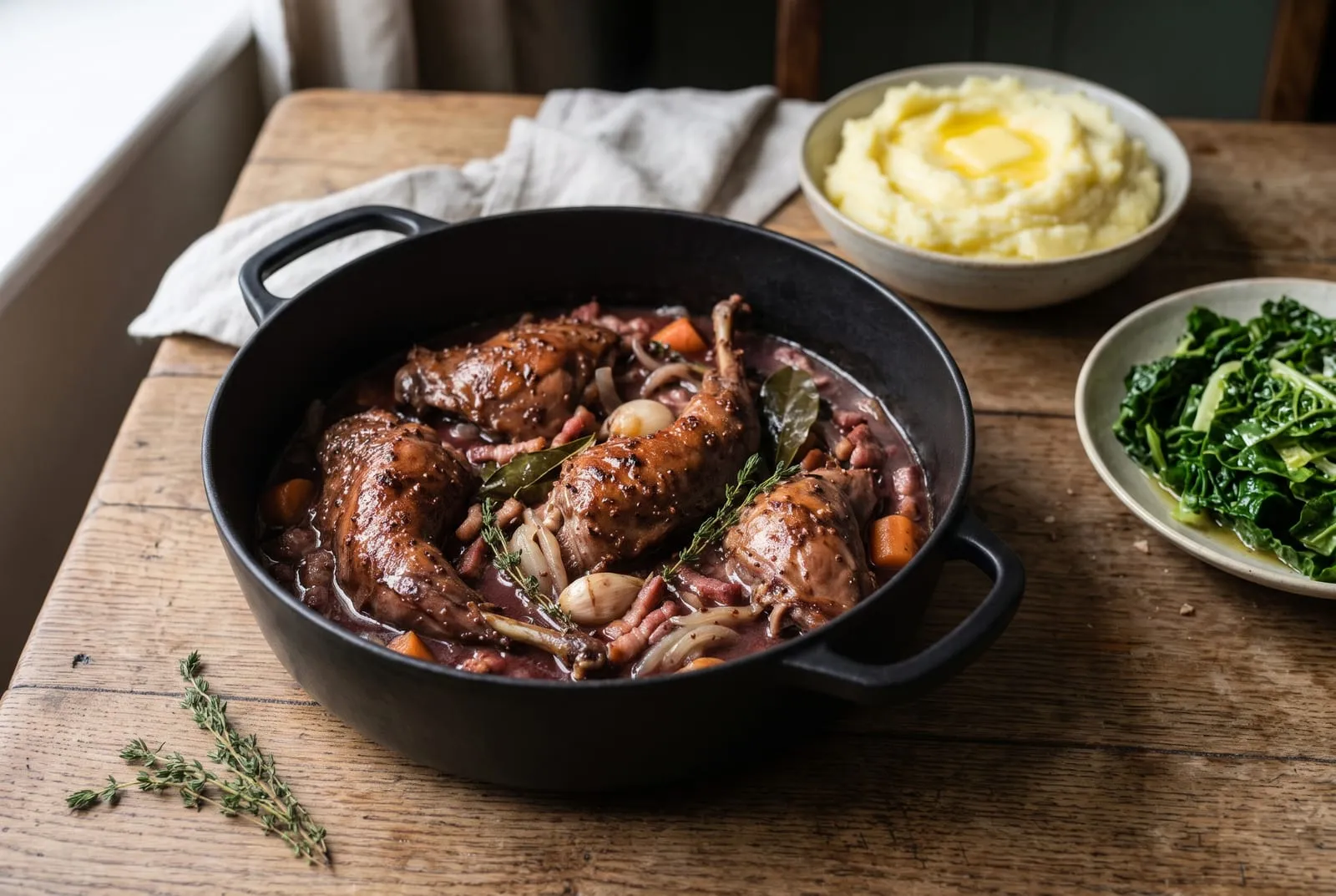
Braised pheasant legs with bacon and red wine
Eight pheasant legs braised in red wine with smoked bacon until the meat falls off the bone, with the hard tendons picked out. Cooked all the way through, as the FSA advises for game birds.
-
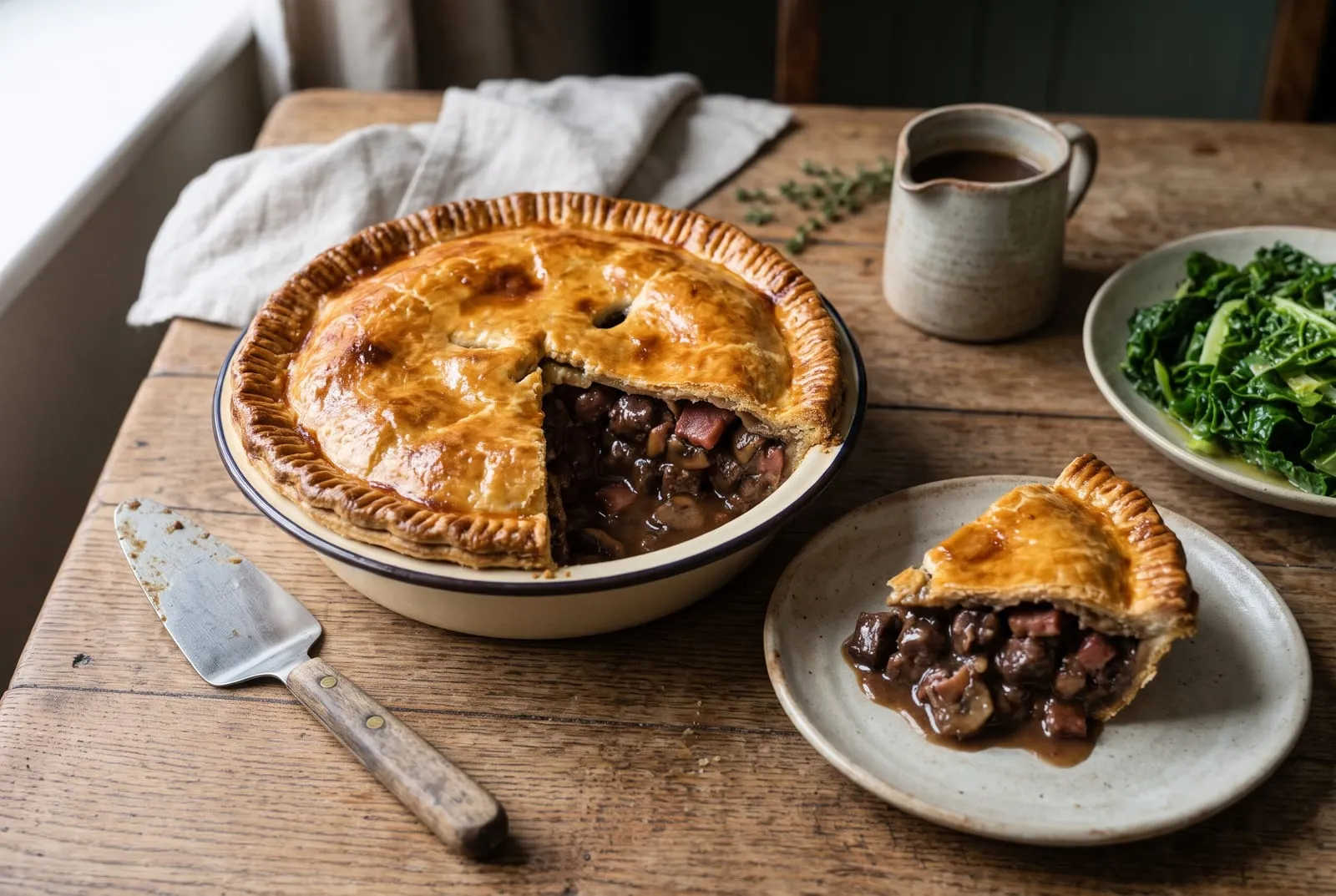
Game pie with venison and pheasant
Diced venison shoulder and pheasant slow-cooked in red wine with smoked bacon, mushrooms and juniper, cooled, then baked under a pastry lid. Freeze it unbaked to keep it.
-
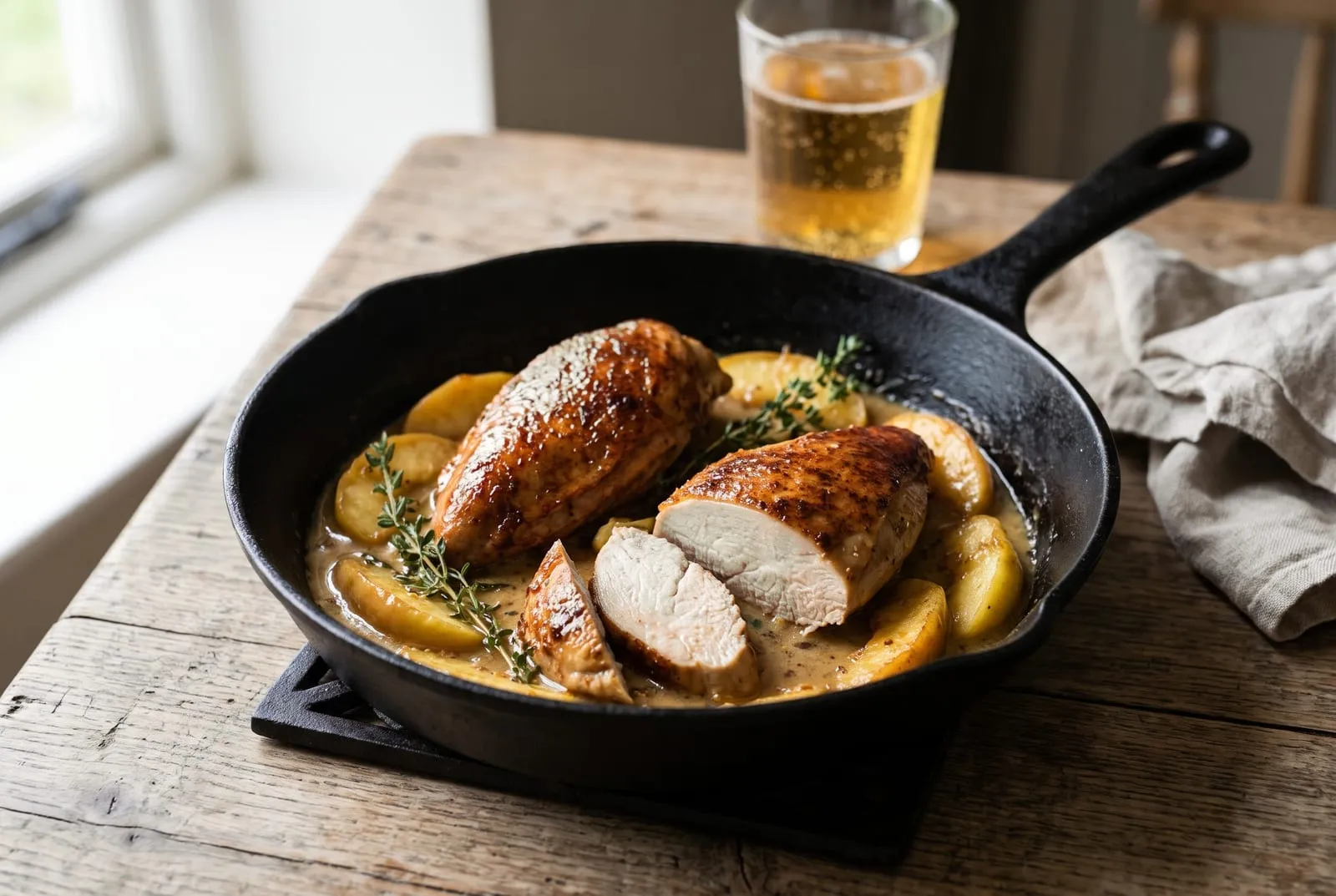
Pan-fried pheasant breasts, no plucking needed
Take the breasts off a brace without plucking or gutting, then pan-fry them in thyme butter with a quick apple, cider and cream sauce. Cooked through, as the FSA advises for game birds, and still juicy.