Slow-roast shoulder of mutton or hogget
A bone-in shoulder of mutton or hogget, studded with garlic, rosemary and anchovy and roasted low and slow on onions for 4 to 5 hours, until it falls off the bone.
- Serves 6
- Prep 25 min
- Cook 5 hr
- Total 5 hr 25 min
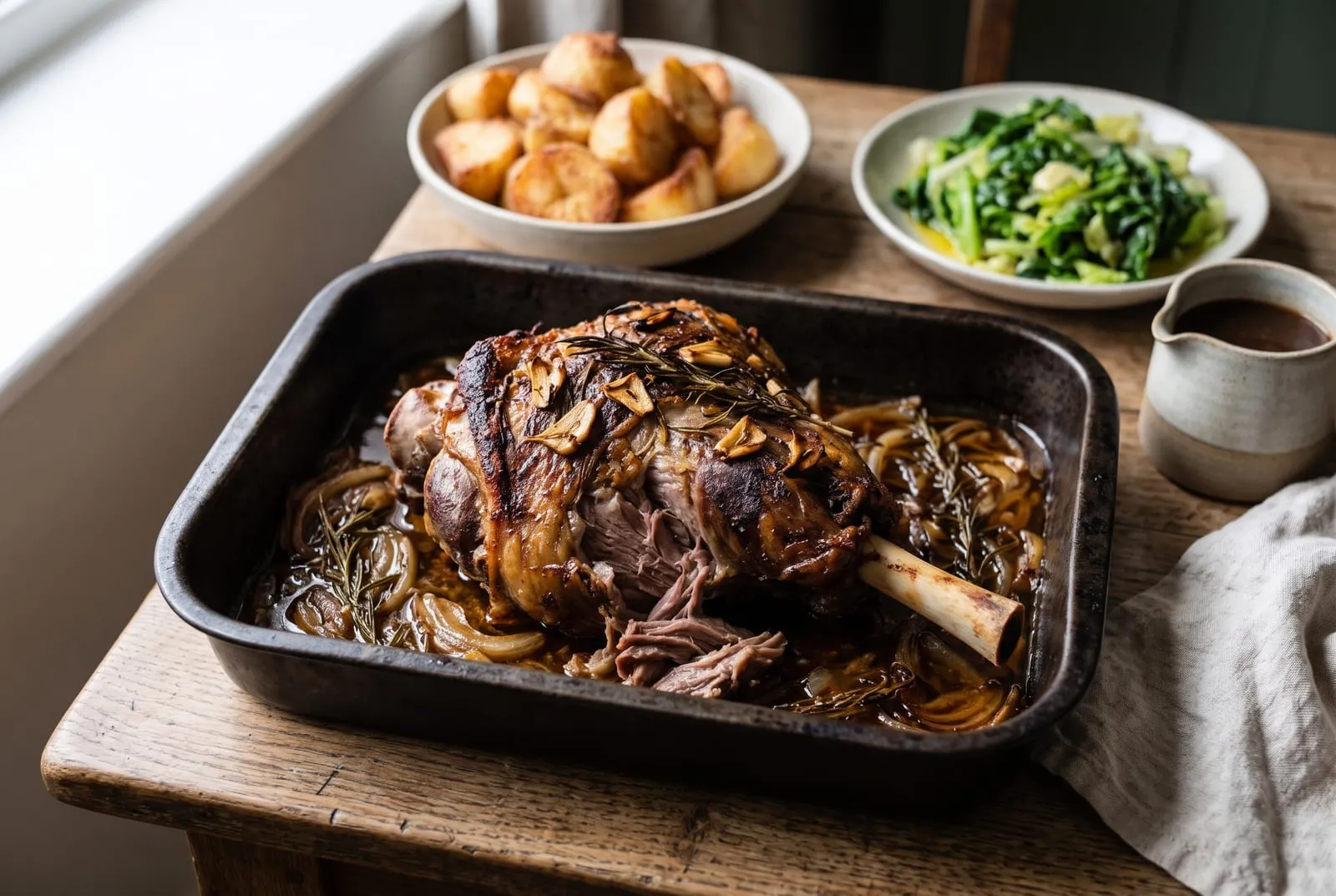
Shoulder is the most forgiving cut of an older sheep. It carries more fat than the leg (AHDB), and a long, slow roast renders that fat and breaks down the connective tissue until the meat comes away from the bone (Great British Chefs). You cook it to that texture, not to a set temperature, so the timing needn’t be exact, and an older, tougher animal simply needs a little longer.
Lamb, hogget or mutton
British Heritage Sheep, part of the National Sheep Association, uses three ages (British Heritage Sheep):
- Lamb: up to a year old.
- Hogget: one to two years old. The Ginger Pig, a butcher, switches to the name in January, once a spring-born lamb is into its second calendar year (The Ginger Pig).
- Mutton: over two years old, usually from an older ewe or a wether.
There’s no legal definition of mutton (Much Ado About Mutton), and the slaughter rules don’t use any of these names: they go by age and teeth (see below). The Mutton Renaissance campaign set a tighter standard. Renaissance mutton comes from a farm-assured sheep at least two years old, finished on forage and matured for at least two weeks (AHDB).
As the sheep gets older, the meat changes:
- Colour and texture. It gets darker and denser (The Ginger Pig). It also gets tougher: AHDB says older lambs are tougher, and that hanging them for longer helps.
- Flavour. Spring lamb is mild. Australian research links the characteristic “mutton” flavour of cooked sheep meat to the animal’s age (Meat & Livestock Australia).
- Cooking. The Ginger Pig says hogget and mutton need gentle cooking, for longer, at a lower heat.
Getting mutton from your own flock
If you keep sheep, an older ewe or wether doesn’t have to go to market. Book it in for private kill and it comes back as mutton for your own freezer. Lambs kept on through the winter give you hogget.
Older sheep are handled differently (taking sheep and goats to the abattoir):
- Tags. A sheep over 12 months needs two adult tags, one of them electronic. If you’re keeping lambs on as hoggets, replace their slaughter tags before they reach 12 months.
- Spinal cord. Sheep over 12 months old, or with a permanent incisor through the gum, have their spinal cord removed at the abattoir as specified risk material. The carcase usually comes back split down the backbone, and the head stays behind. That rules out a whole saddle or Barnsley chops, but it doesn’t touch the shoulders.
- Price. Expect to pay about £4 to £5 more for the kill (private kill prices).
On your cutting list, ask for both shoulders whole and on the bone. The shanks stay on unless you ask for them separately, so say if you want them off to help a big shoulder fit the tin. Expect bigger shoulders from a ewe: in September 2026 the average UK carcase weighed 27.3 kg for ewes and rams, against 20.5 kg for clean sheep such as lambs (Defra). If one is too big for your tin, ask for it halved.
To find somewhere to take them, start with the abattoirs that take sheep.
Buying mutton if you don’t keep sheep
Ask a butcher who buys from local farms, look for sheep farmers selling their own meat at farmers’ markets, or order from a farm that sells meat boxes. Two directories list farms selling hogget and mutton, with details such as breed, age and hanging time: Much Ado About Mutton and British Heritage Sheep.
Bob Kennard, who wrote Much Ado About Mutton, suggests asking four questions: how old the animal was, what breed it was, whether and for how long the carcase was hung, and what it was fed on (Much Ado About Mutton).
Hanging and resting
AHDB recommends hanging lamb for at least 7 days and ideally 10. It says roasting, frying and grilling cuts are the ones that gain from more than a week, and a roast shoulder is one of them (AHDB). Older meat needs longer:
- Mutton. The Mutton Renaissance standard is at least two weeks (AHDB). The speech that launched the campaign said mutton should hang for at least 14 days, and preferably longer (royal.uk).
- Hogget. We found no published figure. AHDB advises considering longer hanging for older sheep, and the farms in the British Heritage Sheep directory hang their hogget and mutton for anything from 7 days to 6 weeks.
Hanging depends on chiller space, and some abattoirs set a limit, so agree it when you book. Our guide to how long to hang meat has the detail.
At home, keep the shoulder in its packaging on the bottom shelf of the fridge, at 0 to 5°C, or freeze it (FSA). Thaw a frozen one in the fridge. For a turkey, the FSA allows 10 to 12 hours per kg in the fridge (FSA), and at that rate a 2.5 kg shoulder needs more than a day. Cook it within 24 hours of it thawing fully. You can stud it the night before and leave it covered in the fridge, which leaves less to do on the day.
Cooking notes
- Low and slow. AHDB calls shoulder an ideal joint for slow-cooked dishes (Simply Beef & Lamb). Covering the tin keeps the steam in, so the meat cooks in its own juices and the onions don’t catch. Uncovering it at the end lets the fat brown and crisp.
- Fat. Shoulder is a fatty cut. Trimming a thick layer and scoring the rest helps it render, but the juices will still need skimming.
- Anchovy. The anchovies melt into the meat as it cooks. Heston Blumenthal says they make a slow-cooked roast more savoury without making it taste fishy (The Week). They’re salty, so taste the gravy before you add salt.
- Is it done? It’s ready when the meat pulls away from the bone with a fork and the blade bone moves when you wiggle it.
- Food safety. The FSA says whole cuts of meat other than poultry and pork can be pink in the middle once the outside is seared, but rolled joints and mince must be cooked through, to 70°C for 2 minutes or an equivalent (FSA). A bone-in shoulder roasted for 4 to 5 hours is cooked well past that. A boned and rolled shoulder counts as a rolled joint, so cook it through. If you check with a probe, keep the tip away from the bone.
- Resting. Rest it for 15 to 20 minutes under loose foil, as AHDB advises for roast lamb (Simply Beef & Lamb), while you make the gravy.
- Skimming. Leave the juices in a jug for a few minutes and the fat rises to the top, ready to spoon off, with the darker juices underneath for the gravy. A gravy separator does the same job faster. Keep the fat for roasting potatoes.
Leftovers and freezing
The FSA’s advice on leftovers (FSA):
- Cool them at room temperature and get them into the fridge within one to two hours. Smaller portions cool faster.
- Eat them within 48 hours, or freeze them. Frozen meat is best eaten within 2 to 3 months.
- Food can go back in the freezer once it’s cooked, so leftovers from a shoulder that was frozen raw can be frozen. After that, they can only be reheated once.
- Reheat leftovers only once, until they’re steaming hot all the way through (FSA).
Pull the meat off the bone while it’s still warm, as it comes away easily, and keep the jellied juices with it. Simmer the bone with an onion for stock. Then:
- Shepherd’s pie. Chop the meat, mix it with the onions from the tin and the leftover gravy, top with mash and bake until it’s bubbling and steaming hot. To freeze one, assemble it with cold meat and freeze it before baking, so the baking is its only reheat.
- Flatbreads. Crisp the shredded meat in a hot pan and pile it onto warm flatbreads with yoghurt, sliced red onion, mint and a squeeze of lemon.
- Curry. Make the sauce first, then stir in the cooked meat and simmer until it’s steaming hot.
Each of these is the meat’s one reheat, so eat them up rather than heating them again.
Serving ideas
Serve it with mash, or potatoes roasted in the skimmed fat, and buttered cabbage, kale or carrots. Something sharp cuts the richness: mint sauce, salsa verde or redcurrant jelly. The Ginger Pig notes that legs of mutton were traditionally cooked in sauces with capers or onions, and a caper sauce suits a shoulder too.
Slow-roast shoulder of mutton or hogget
- Serves 6
- Prep 25 min
- Cook 5 hr
- Total 5 hr 25 min
Ingredients
- 1 bone-in mutton or hogget shoulder, 2 to 2.5 kg
- 5 or 6 garlic cloves, cut into thin slivers
- 3 or 4 sprigs of rosemary, pulled into small tufts
- 8 anchovy fillets in olive oil, drained
- 1 tbsp olive oil, or oil from the anchovies
- Black pepper and a little salt
- 3 onions, thickly sliced
- 175 ml (a glass) dry white wine, or lamb or chicken stock
For the gravy
- 1 tbsp plain flour
- 300 ml lamb or chicken stock
- 1 tsp redcurrant jelly (optional)
- Salt and black pepper
Method
- Heat the oven to 150°C (130°C fan), gas 2. If the shoulder has a thick layer of fat, trim it to about 1 cm, then score the fat lightly in a criss-cross.
- Cut each anchovy fillet into 3. With a small, sharp knife, make about 24 slits 2 to 3 cm deep all over the shoulder, and push a sliver of garlic, a tuft of rosemary and a piece of anchovy into each one.
- Rub the shoulder with the oil and season it with pepper and a little salt, going easy on the salt because the anchovies add more. Spread the onions over the base of a deep roasting tin, sit the shoulder on top, fat side up, and pour the wine or stock around it.
- Cover the tin tightly with a lid or a double layer of foil, crimped around the edges, and roast for 3½ hours.
- Check it by pushing a fork into the thickest part. The meat should pull away from the bone easily, and the blade bone should move when you wiggle it. If it is still firm, add a splash of water if the tin looks dry, cover it again and check every 30 minutes.
- Once it is tender, take off the cover, spoon some of the juices over the top and roast uncovered for a final 30 to 45 minutes, until the fat is brown and crisp. For more colour, turn the oven up to 200°C (180°C fan), gas 6, for the last 10 to 15 minutes.
- Lift the shoulder onto a warm dish, cover it loosely with foil and leave it to rest for 15 to 20 minutes.
- Meanwhile, tip the onions and juices into a jug and leave them for a few minutes so the fat rises to the top. Spoon off the fat, saving 1 tablespoon. Heat that tablespoon of fat in the tin on the hob over a low heat, or in a saucepan, stir in the flour and cook for a minute, then gradually stir in the skimmed juices, the onions and the stock, scraping up any browned bits.
- Simmer for 5 minutes, until the gravy thickens slightly. Stir in the redcurrant jelly if using, taste before adding any salt, and sieve out the onions if you want it smooth. Pull the meat off the bone in large pieces and serve with the gravy.
What you'll need
- Deep roasting tin Holds a whole joint and the juices it gives off.
- Paring knife Makes small, deep slits for garlic and herbs, and scores fat neatly.
- Fat separator jug Pours the cooking liquid out from under the fat, quicker than skimming.
- Probe thermometer Checks the middle of the meat rather than guessing. Keep the tip away from the bone.
These are Amazon links. If you buy through them, Lairage may earn a small commission at no extra cost to you.
Questions people ask
What is the difference between lamb, hogget and mutton?
Lamb comes from a sheep up to a year old, hogget from one aged one to two, and mutton from a sheep over two, usually an older ewe or a wether. There is no legal definition of mutton, and the meat gets darker, firmer and fuller in flavour as the sheep ages.
How long does it take to slow-roast a shoulder of mutton?
A bone-in shoulder of 2 to 2.5 kg takes about 4 to 5 hours at 150°C (130°C fan), gas 2, covered for most of that time and uncovered for the last 30 to 45 minutes to crisp. It's ready when the meat comes away from the bone with a fork, so go by that rather than the clock, especially with a bigger shoulder from an older ewe.
Does mutton taste strong?
It tastes fuller and deeper than lamb, and research links that characteristic mutton flavour to the age of the animal. Hogget sits between the two, and garlic, rosemary and anchovy suit both.
Can I use lamb shoulder instead?
Yes. Use the same method, but lamb is younger and more tender, so start checking it after about 3 hours. Uncover it to crisp once the meat comes away from the bone.
Where can I buy mutton?
Try a butcher who buys from local farms, sheep farmers selling their own meat at farmers' markets, or farms that sell meat boxes. British Heritage Sheep and Much Ado About Mutton both keep online directories of farms that sell hogget and mutton.
Sources
- Food Standards Agency: Cooking your food
- Food Standards Agency: How to chill, freeze and defrost food safely
- Food Standards Agency: Christmas food hygiene, how to defrost your turkey
- AHDB (EBLEX): Direct Facts 1, Maturation for improved beef and lamb
- AHDB (EBLEX): Better Returns from Meat, Meat quality and shelf life (2009)
- Simply Beef & Lamb (AHDB): Lamb shoulder
- Simply Beef & Lamb (AHDB): How to guide, roast lamb
- British Heritage Sheep (National Sheep Association): Lamb, hogget and mutton
- British Heritage Sheep (National Sheep Association): Suppliers directory
- Much Ado About Mutton (Bob Kennard): What is mutton
- Much Ado About Mutton (Bob Kennard): Choosing mutton
- Much Ado About Mutton (Bob Kennard): Directory of suppliers
- The Royal Family: A speech by HRH The Prince of Wales to launch The Mutton Renaissance, The Ritz, London
- The Ginger Pig: The life of a lamb
- Meat & Livestock Australia (Watkins and Warner, CSIRO, 2011): Compounds associated with consumer acceptability of the flavour of lamb meat
- Great British Chefs: How to cook lamb shoulder
- The Week: Slow-roasted lamb, a marriage of flavors from Provence (Heston Blumenthal)
- Defra: Monthly UK statistics on cattle, sheep and pig slaughter and meat production, data to September 2026
This recipe is general information. Follow the Food Standards Agency's advice on cooking meat safely, and on eating game shot with lead if you eat it often.
More recipes
-
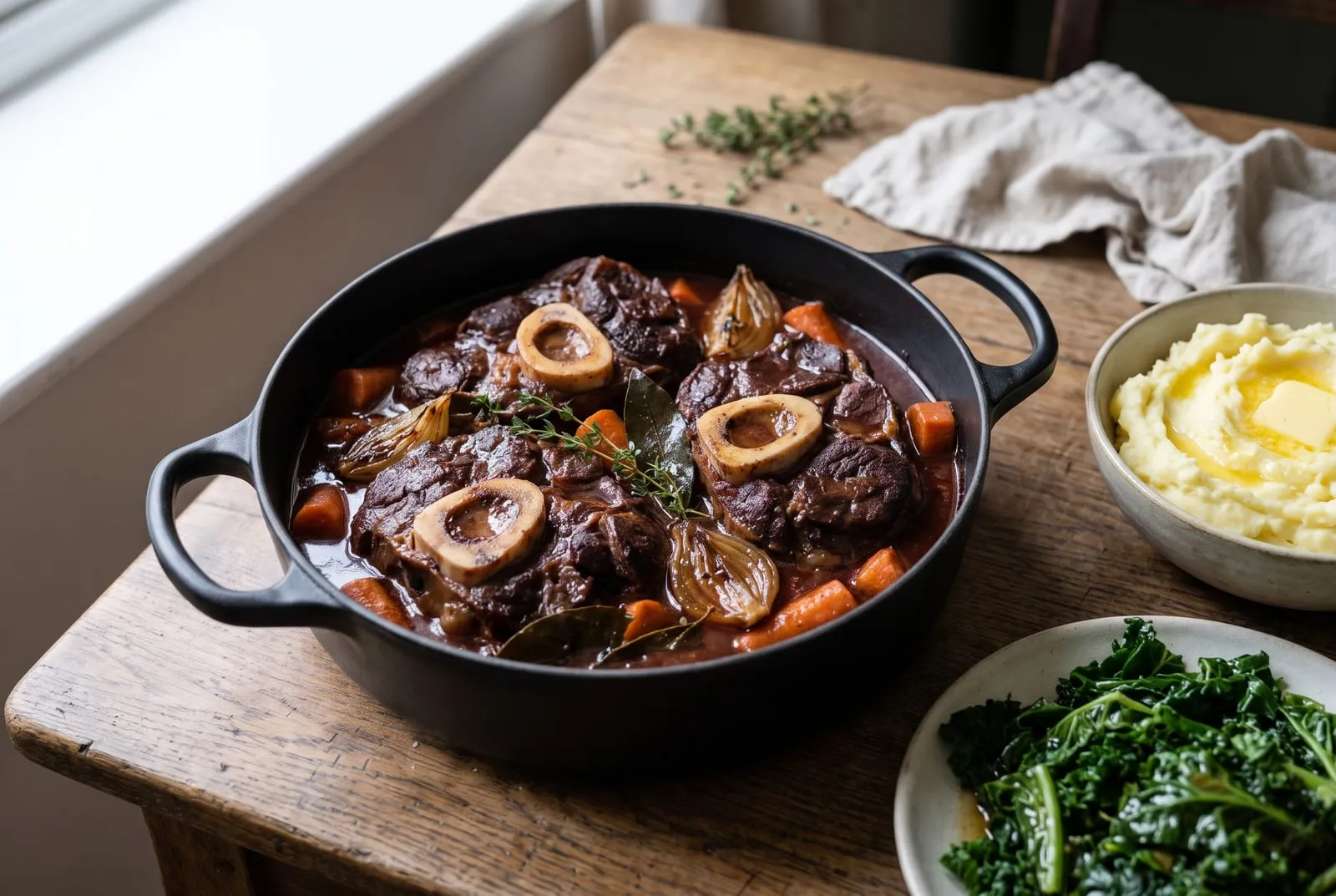
Braised beef shin with red wine
Beef shin, cut across the bone or boneless, browned and braised in red wine with onions, carrots and thyme for 3 to 3½ hours, until it falls apart.
-
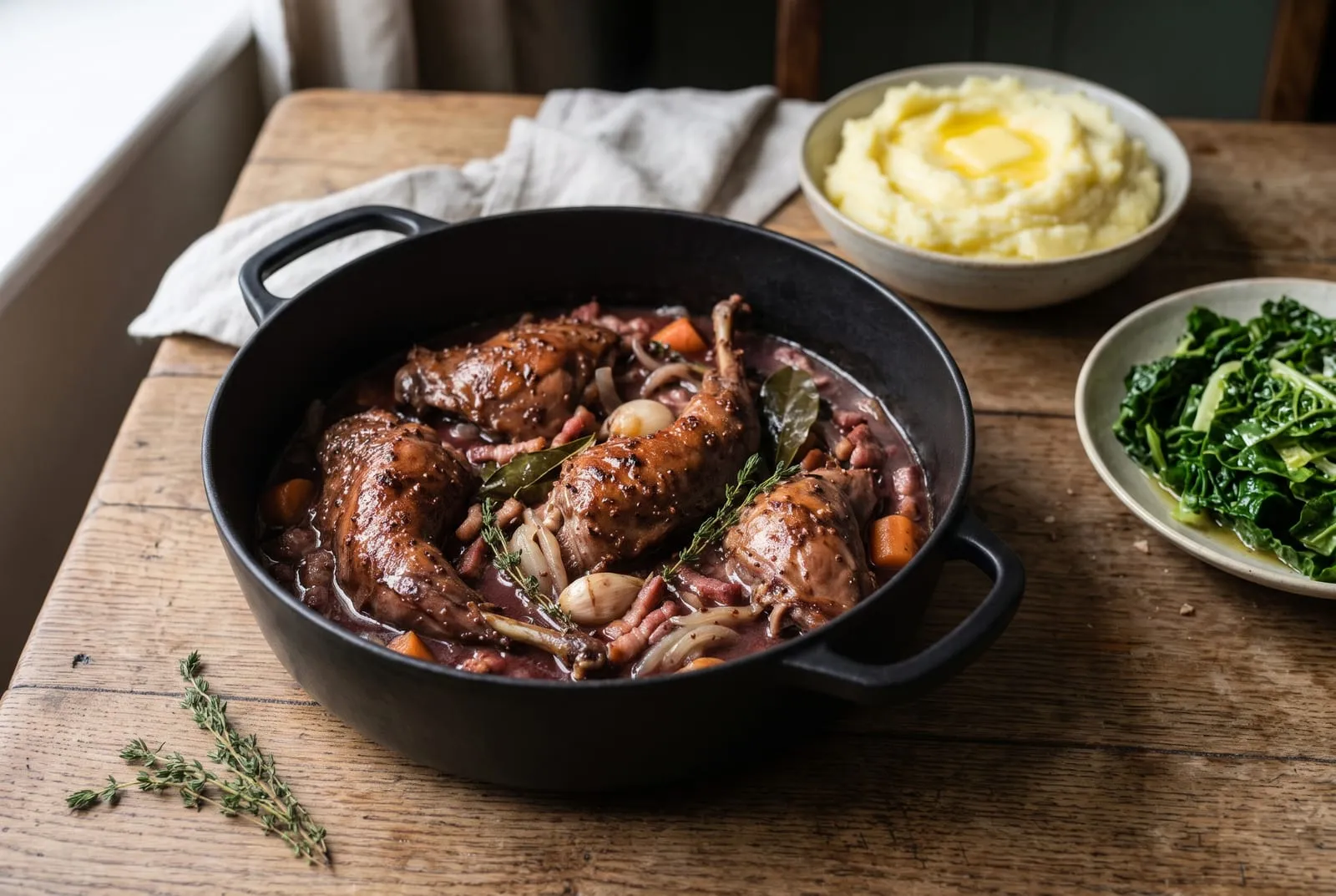
Braised pheasant legs with bacon and red wine
Eight pheasant legs braised in red wine with smoked bacon until the meat falls off the bone, with the hard tendons picked out. Cooked all the way through, as the FSA advises for game birds.
-
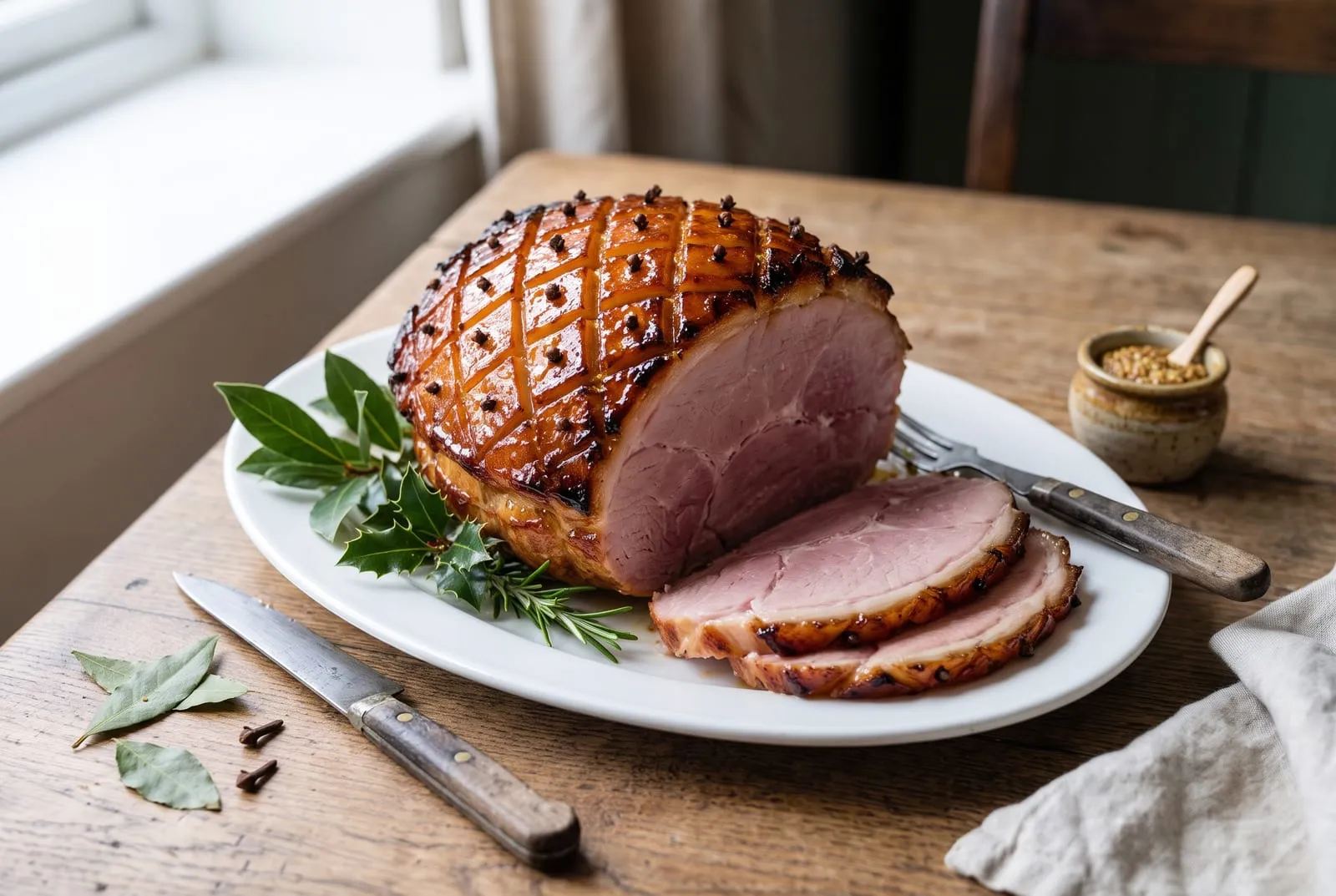
Christmas gammon: boiled and glazed
A cured gammon joint of 3 to 4 kg, simmered with onion, carrot, bay and cider, then scored, studded with cloves and baked with a honey and mustard glaze. Serves 10 to 12.