Slow-roast pork belly with crackling
A skin-on pork belly, dried overnight, salted and roasted low for about 2½ hours, then blasted hot for 20 to 30 minutes until the crackling blisters. Carve it skin side down.
- Serves 6
- Prep 20 min
- Cook 3 hr 10 min
- Total 3 hr 30 min
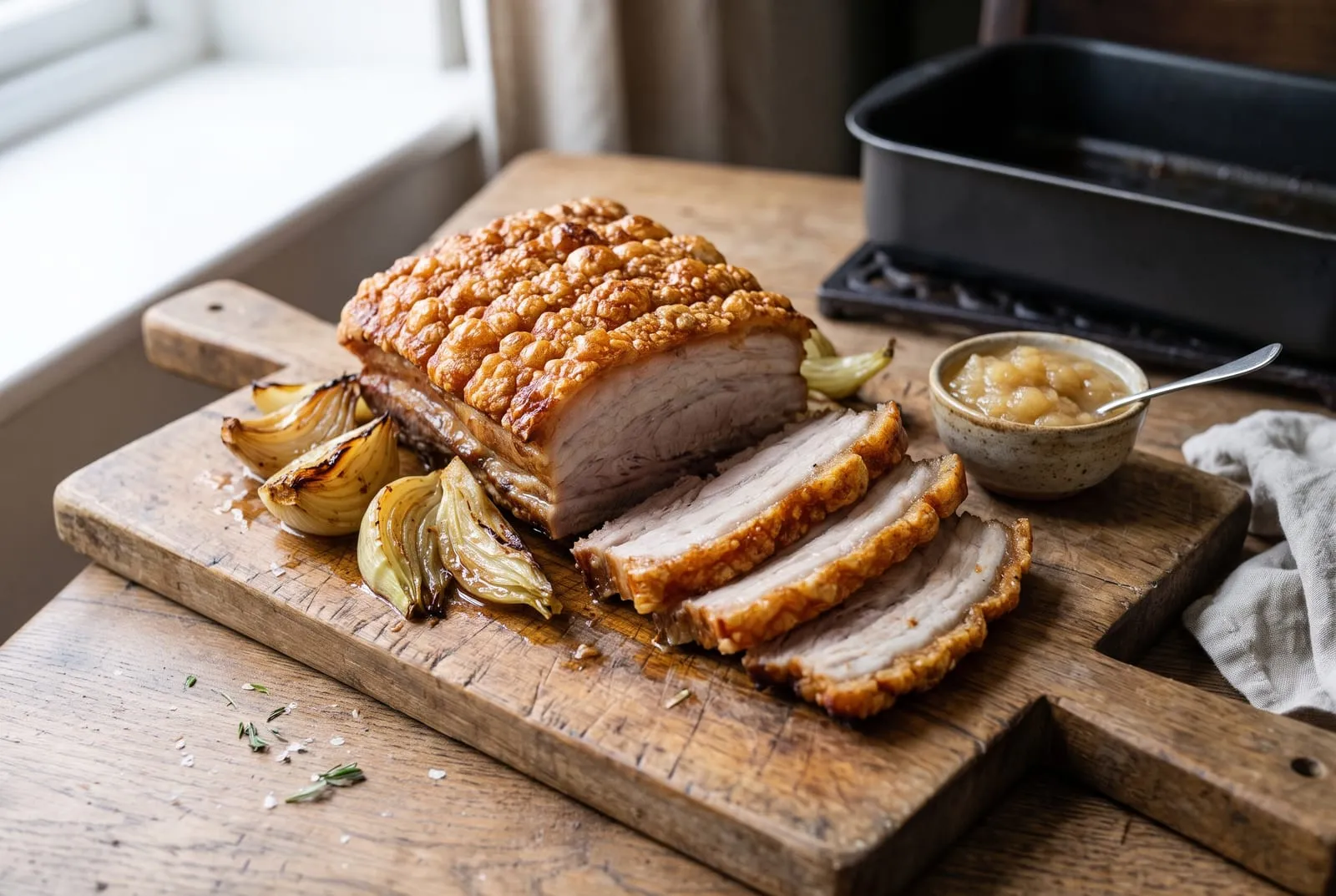
Crackling comes from dry skin, salt added just before roasting and a blast of high heat at the end. Roast the belly low until the meat is tender, then turn the oven up until the skin blisters. If the pork is from your own pig, the skin has to still be on when it comes back, so check how your abattoir treats it before you book.
Belly from your own pig
Belly is the underside of the pig, and Great British Chefs says a good piece is about half fat and half meat (Great British Chefs). On your cutting list it can be a joint, flat or rolled, slices, streaky bacon or spare ribs, and each part is cut only one way, so say which you want. For this recipe:
- Skin on. The skin stays on only if the abattoir scalds pigs and scrapes the hair off. Some skin them instead, which takes the rind away, so ask before you book the kill.
- A boneless joint. Ask for “belly joint, boneless, skin on”, with a weight in kg, such as 1.5 to 2 kg. If the belly is bigger than that, ask for it in two pieces, or for part of it as streaky bacon or slices. If the ribs come off, ask for them back as spare ribs before the belly is cut.
- Scored. Ask the butcher to score the skin. Great British Chefs suggests this if you’re unsure about doing it yourself (Great British Chefs).
The Country Victualler allows 250g of belly per person, and more if you want leftovers (The Country Victualler), so 1.5 kg serves 6 and 2 kg leaves a little over. To find somewhere to take your pigs, start with the abattoirs that take pigs.
If you’re buying a belly instead, ask for a piece with the skin on, already scored. Great British Chefs says to look for white, creamy fat and a fresh smell.
Getting crackling to work
Every source we read wants the skin dry. On the rest they vary, so here is what each says:
- Dry it. Pat it with kitchen paper: Marion’s Kitchen calls moisture the enemy of crackling (Marion’s Kitchen). Then leave it uncovered in the fridge overnight so no condensation forms (Olive). The cook time on the card doesn’t include this overnight drying.
- Salt it just before roasting. Olive says salt draws moisture from the surface. The Takeout says to salt just before the pork goes in, because salt applied ahead of time draws moisture into the fat, which steams in the oven (The Takeout). Nigella.com says salt matters less once the skin has dried in the fridge (Nigella.com).
- Score the skin, not the meat. Olive says scoring increases the surface exposed to the heat. The Takeout suggests a very sharp knife or a clean utility knife, cutting through the skin without going into the meat.
- Keep it dry in the tin. Pour the liquid around the belly, not over it, as Olive’s recipe does (Olive). Don’t cover the tin: The Country Victualler says covering creates steam, which softens the skin.
- Finish hot. Olive starts hot, because the heat lifts the rind away from the moist meat. Nigella.com says the blast at the end gives a really crisp skin. This recipe finishes hot, which lets you watch the skin blister and take it out when it has.
- If it still won’t blister, Nigella.com says to cut the skin off, put it on a baking sheet and roast it on high for another 5 minutes.
Drying the skin means leaving raw meat uncovered in the fridge. That goes against the FSA’s advice to keep raw meat in its packaging or a sealed container on the bottom shelf, so that it can’t touch or drip onto other food (FSA). To limit the risk, put the belly on a rimmed tray on the bottom shelf with nothing below it, and keep ready-to-eat food on the shelves above.
Cooking it through
The FSA says pork must be cooked all the way through, with no pink and clear juices, and that the middle should reach 70°C for 2 minutes, or 65°C for 10 minutes or 75°C for 30 seconds (FSA). Put a clean probe into the thickest part of the meat, away from any bone. Great British Chefs puts the internal temperature of a cooked belly at over 74°C.
The thermometer sets the minimum, and tenderness decides when to stop. Olive’s test is meat that’s very tender with crisp crackling, and Great British Chefs’ recipe pushes a fork into the flesh, which should feel tender and come away easily. Timing rules vary: The Country Victualler allows 45 minutes per 500g plus 45 minutes at 160°C (140°C fan), gas 2½, which is 3 hours for 1.5 kg and 3¾ hours for 2 kg. A thicker piece needs longer, so if the meat is still firm after 2½ hours, give it another 20 to 30 minutes at the low heat before the hot finish.
Carving it skin side down
Rest the belly for 15 minutes before you carve it, as Great British Chefs’ recipe does, and keep any foil off the crackling: Olive wraps the meat but leaves the crackling bare. Then turn the belly skin side down on the board and cut through the meat with a large, sharp knife, pressing on the back of the blade to get through the crackling at the end. A recipe in Food and Travel magazine does the same, with a large sharp knife or a cleaver (Food and Travel).
Leftovers
The FSA’s advice on leftovers (FSA):
- Cool them and get them into the fridge within one to two hours. Slices cool faster than a whole piece.
- Eat them within 48 hours, or freeze them. Frozen meat is best eaten within 2 to 3 months.
- Defrost them in the fridge and use them within 24 hours of fully thawing.
- Reheat them only once, until they’re steaming hot all the way through (FSA). Great British Chefs reheats belly in the oven, which takes 15 to 20 minutes, and says to avoid the microwave, which can toughen it.
- Some recipe sites give 3 to 4 days in the fridge for cooked belly. We follow the FSA’s 48 hours.
Cold slices make good sandwiches with mustard or apple sauce. For something hot, cube the belly and crisp it in a hot pan with potatoes for a hash, or add slices to a noodle soup until they’re steaming hot. Each of these is the belly’s one reheat, so don’t heat what’s left again.
Serving
Belly is rich, so serve it with something sharp: apple sauce, mustard or pickled red cabbage. Mash, or potatoes roasted in a spoonful of the fat from the tin, will soak up the juices. Skim the fat off the tin juices and serve them with the softened onions.
Slow-roast pork belly with crackling
- Serves 6
- Prep 20 min
- Cook 3 hr 10 min
- Total 3 hr 30 min
Ingredients
- 1 piece of pork belly, 1.5 to 2 kg, boneless, skin on, with the skin scored
- 1 tbsp olive oil
- 1 tbsp flaky sea salt
- Black pepper
For the tin
- 2 onions, or 2 fennel bulbs, thickly sliced
- 4 garlic cloves, unpeeled and lightly crushed
- 4 thyme sprigs
- 150 ml dry cider, dry white wine or chicken stock
To serve
- Apple sauce or mustard
Method
- The day before, pat the belly dry with kitchen paper. If the butcher has not scored the skin, score it with a very sharp knife or a clean utility knife, cutting lines about 1 cm apart through the skin but not into the meat.
- Put the belly skin side up on a rimmed tray, uncovered, on the bottom shelf of the fridge with nothing beneath it, and leave it overnight to dry the skin.
- Heat the oven to 160°C (140°C fan), gas 3. Spread the onions, garlic and thyme over the base of a roasting tin and pour in the cider or stock.
- Pat the skin dry again. Rub the oil into the skin and between the scores, then rub in the salt, working it into the cuts, and season the sides of the belly with pepper. Sit the belly skin side up on the onions, keeping the liquid off the skin. Do not cover the tin.
- Roast for 2½ hours, until the meat is very tender and a fork slides in with no resistance. If it is still firm, give it another 20 to 30 minutes.
- Turn the oven up to 220°C (200°C fan), gas 7. Roast for 20 to 30 minutes more, until the skin has puffed and blistered all over. Watch it from 20 minutes, because crackling burns quickly, and turn the tin round if one side is browning faster.
- Check that the belly is cooked through. Push a probe thermometer into the thickest part of the meat, away from any bone. The middle needs to hold 70°C for 2 minutes, or 75°C for 30 seconds, and the juices should run clear with no pink.
- Lift the belly onto a board and rest it for 15 minutes, with nothing covering the crackling. Meanwhile, spoon the fat off the juices in the tin.
- Turn the belly skin side down. Cut through the meat with a large, sharp knife, pressing on the back of the blade to cut through the crackling at the end. Serve with the onions and juices from the tin.
What you'll need
- Roasting tin with a rack Lifts the meat out of its fat, so the skin crisps all over.
- Pork scoring knife Cuts through the skin for crackling without cutting into the meat.
- Meat cleaver Cuts cleanly through crackling and small bones.
- Fat separator jug Pours the cooking liquid out from under the fat, quicker than skimming.
- Probe thermometer Checks the middle of the meat rather than guessing. Keep the tip away from the bone.
These are Amazon links. If you buy through them, Lairage may earn a small commission at no extra cost to you.
Questions people ask
How do you get pork belly crackling really crisp?
Dry the skin and keep it dry. Pat it with kitchen paper, leave it uncovered in the fridge overnight, then salt it just before roasting, because salt applied ahead of time draws moisture into the fat, which steams in the oven. Do not cover the tin or pour liquid over the skin, and finish with a short blast of high heat. If it still has not blistered, cut the skin off and roast it on a baking sheet on high for another 5 minutes.
How long does it take to slow-roast pork belly?
A 1.5 to 2 kg skin-on belly takes about 2½ hours at 160°C (140°C fan), gas 3, plus 20 to 30 minutes at 220°C (200°C fan), gas 7 to blister the skin. Go by tenderness rather than the clock: a fork should slide in with no resistance. Rules vary, and one retailer allows 45 minutes per 500g plus 45 minutes at 160°C (140°C fan), so a thicker piece needs longer.
How much pork belly do you need per person?
The Country Victualler allows 250g of raw belly per person, and more if you want leftovers, so a 1.5 kg piece serves 6 and a 2 kg piece leaves a little over.
What temperature should pork belly be cooked to?
The FSA says pork must be cooked all the way through, with no pink and clear juices. The middle should reach 70°C for 2 minutes, or 65°C for 10 minutes or 75°C for 30 seconds. Great British Chefs puts the internal temperature of cooked belly at over 74°C. Test the thickest part of the meat with a clean probe, away from any bone.
How long does leftover pork belly keep?
The FSA says to get leftovers into the fridge within one to two hours and to eat them within 48 hours, or freeze them. Some recipe sites give 3 to 4 days, but the FSA's advice is the one to follow. Reheat only once, until steaming hot all the way through. An oven works better than a microwave, which can toughen the meat.
Sources
- Food Standards Agency: Cooking your food
- Food Standards Agency: How to chill, freeze and defrost food safely
- Olive magazine: Get it right, roast pork belly
- Olive magazine: Epic crackling roast pork belly
- The Takeout: How to achieve maximum crackling crunch on your pork roasts (16 October 2019)
- Nigella.com: Salt on the skin of slow roast pork belly (5 December 2022)
- Great British Chefs: How to cook pork belly
- Great British Chefs: Slow-roast pork belly with green pepper relish
- Food and Travel: Crispy pork belly
- The Country Victualler: Pork belly
- Marion's Kitchen: How to perfect crackling roast pork
This recipe is general information. Follow the Food Standards Agency's advice on cooking meat safely, and on eating game shot with lead if you eat it often.
More recipes
-
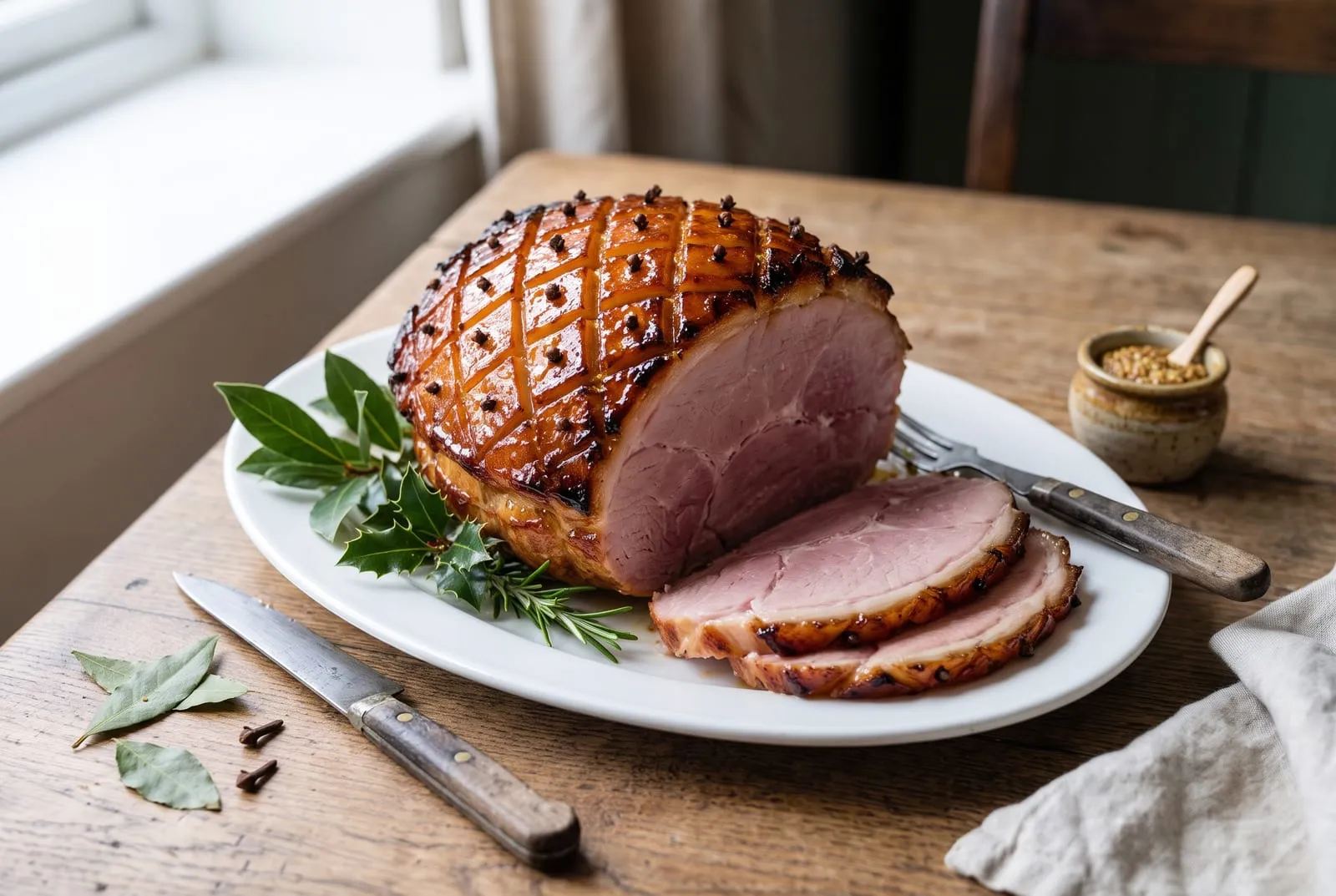
Christmas gammon: boiled and glazed
A cured gammon joint of 3 to 4 kg, simmered with onion, carrot, bay and cider, then scored, studded with cloves and baked with a honey and mustard glaze. Serves 10 to 12.
-
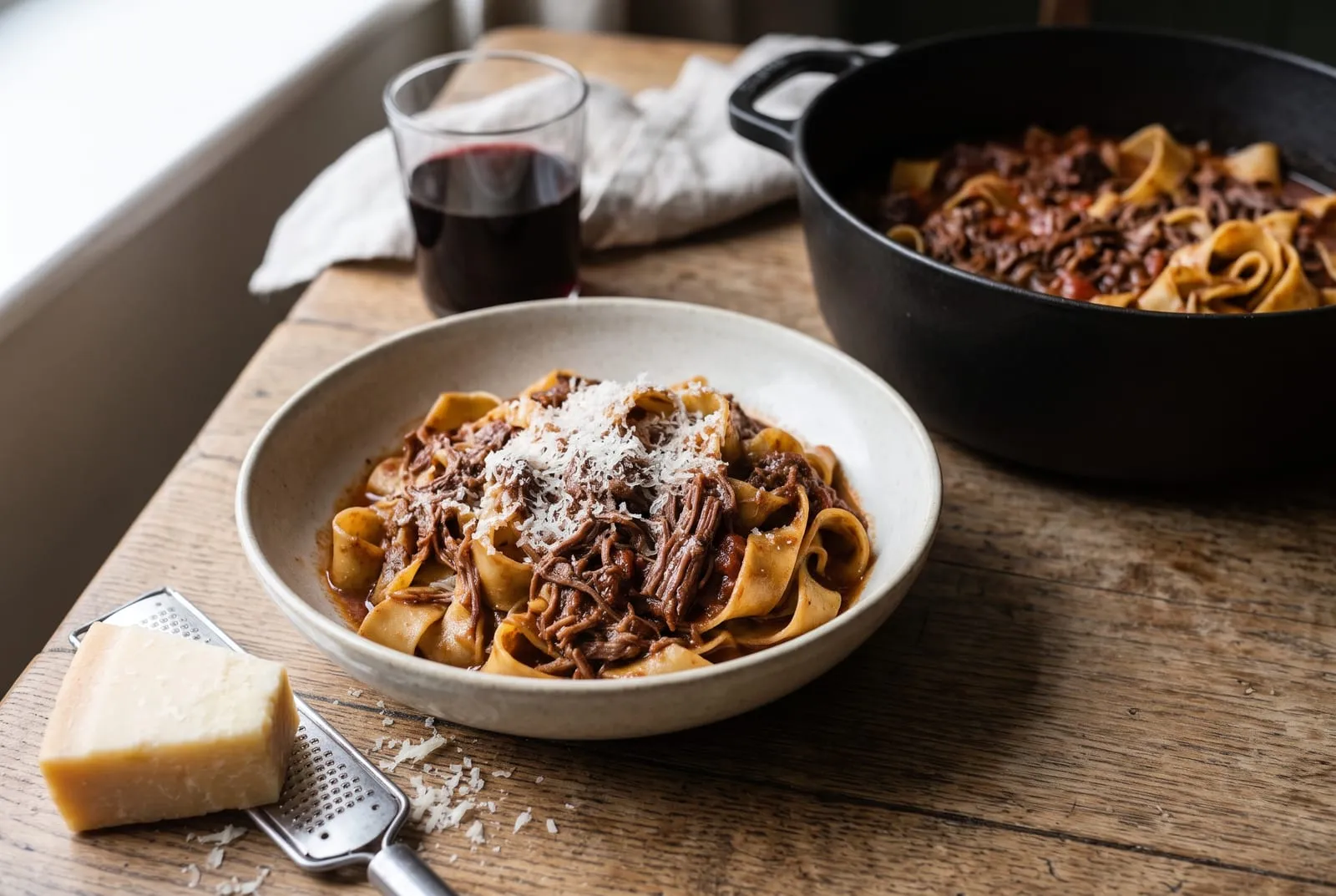
Wild boar ragu with pappardelle
Diced wild boar shoulder, simmered gently for 3 hours with pancetta, red wine and tomatoes until it shreds, then tossed with pappardelle. Cooked through, like pork.
-
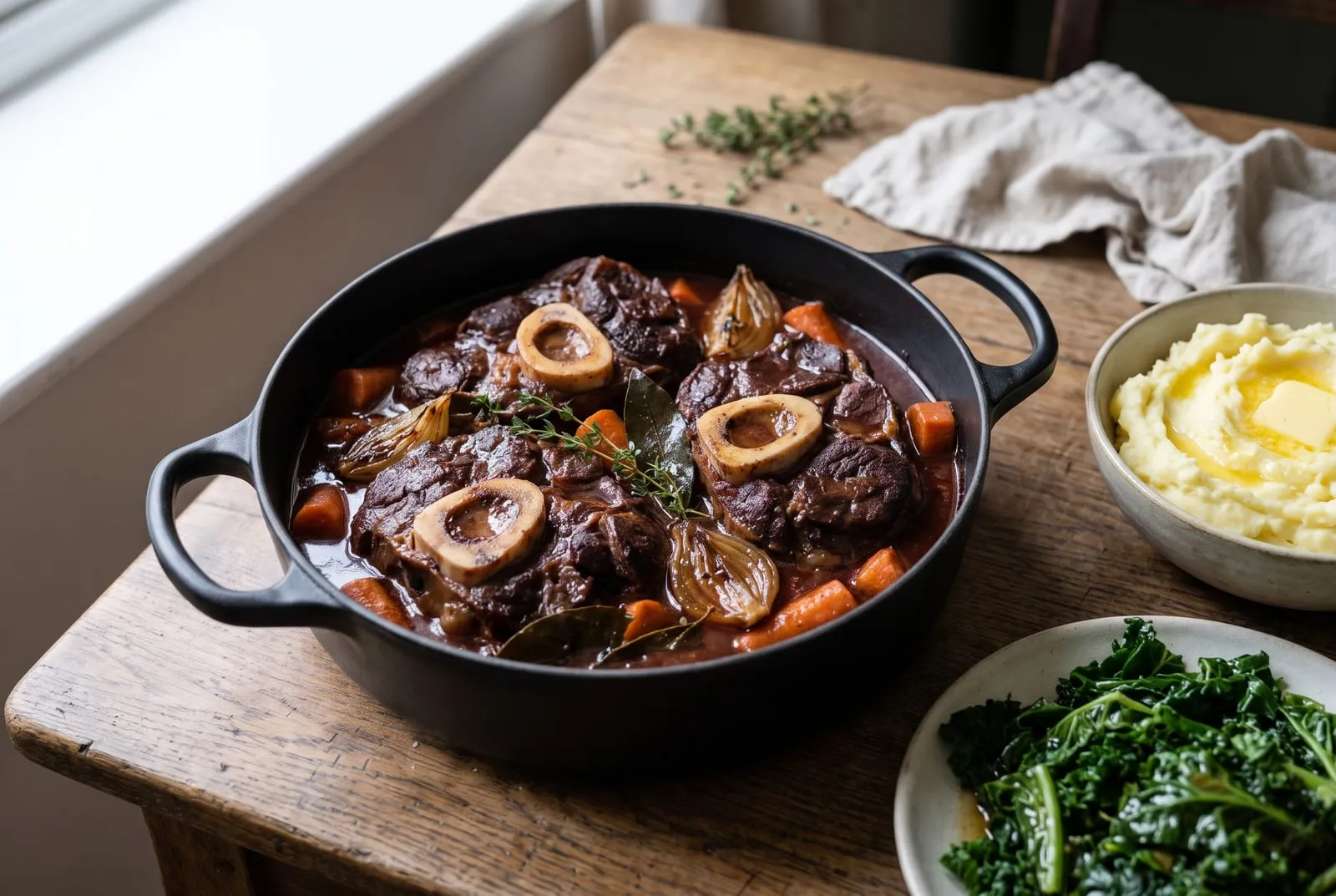
Braised beef shin with red wine
Beef shin, cut across the bone or boneless, browned and braised in red wine with onions, carrots and thyme for 3 to 3½ hours, until it falls apart.